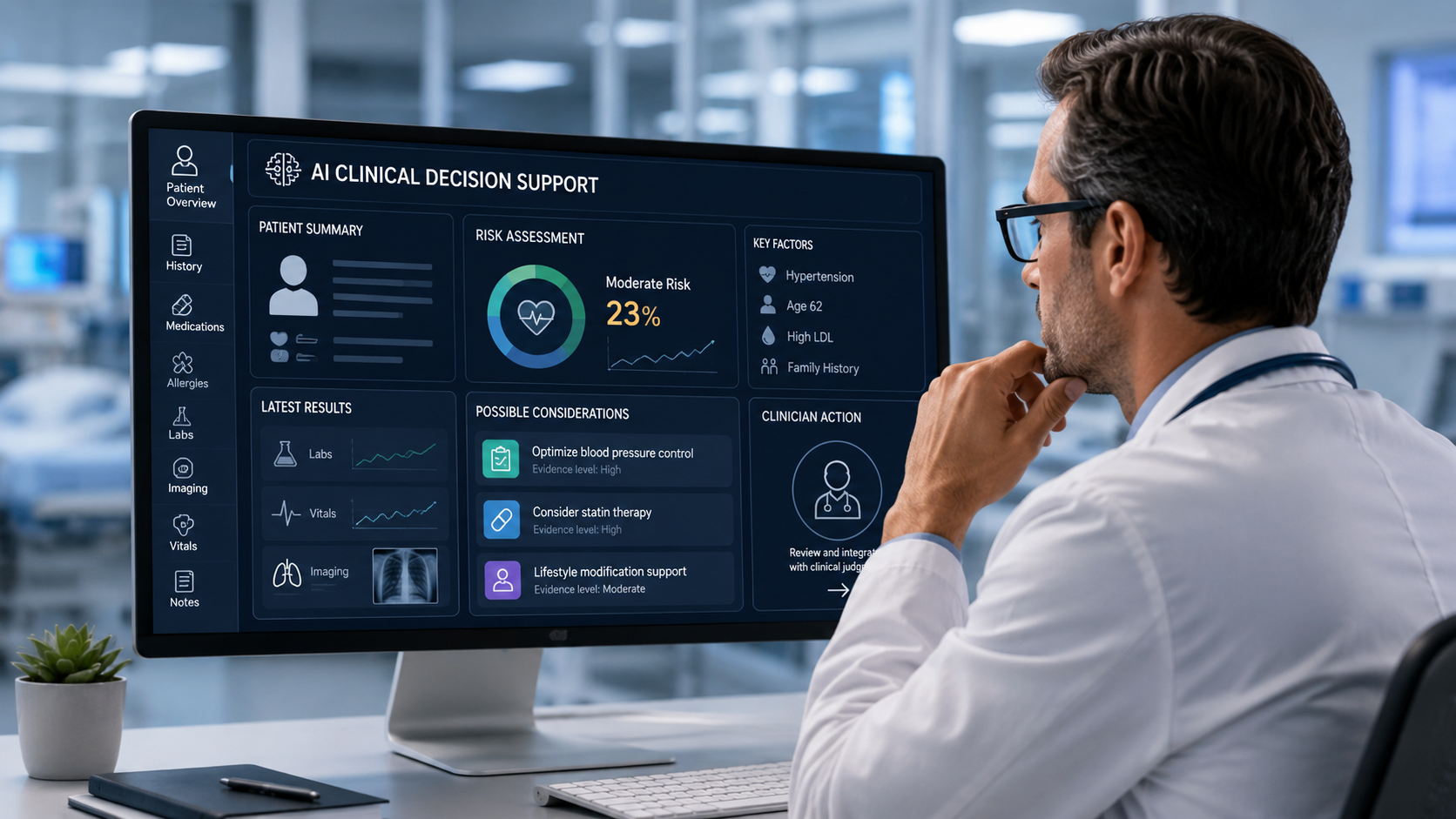
Digital Twins in Healthcare: How Virtual Patient Models Work, Uses, Benefits and Risks in 2026
Digital twins are patient-specific computational models that can be updated with real health data and used to simulate possible future outcomes. This guide explains how healthcare digital twins work, where they are being studied, current evidence in diabetes, cardiology, oncology and clinical trials, and the limitations, privacy risks and regulatory questions clinicians and patients should understand.
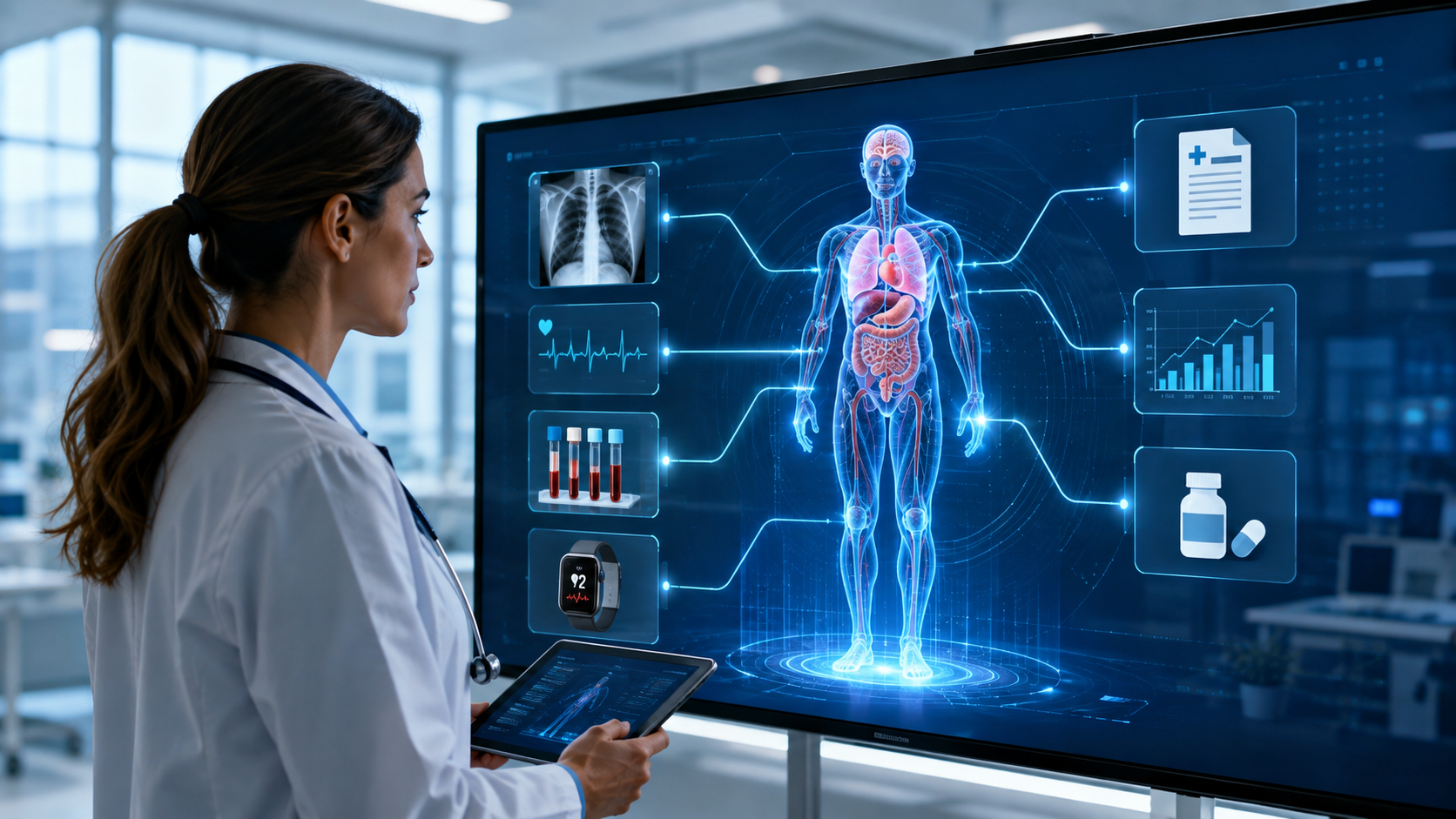
Digital twins are becoming one of the most ambitious ideas in precision healthcare. Instead of using a single snapshot of a patient, a digital twin attempts to build a patient-specific computational model that can be updated as new information arrives and used to simulate what may happen under different conditions.
The idea is attractive because many medical decisions are really counterfactual questions: What might happen if this patient receives treatment A rather than treatment B? How might blood glucose change tomorrow if diet and activity change today? Would a particular procedure be expected to work in this patient's anatomy? Could a clinical trial result apply to a patient who looks different from the average trial participant?
But the term digital twin is also used loosely. A static 3D model, a risk calculator and a machine-learning prediction are not automatically digital twins. The U.S. Food and Drug Administration describes a digital twin as a virtual information construct that reflects a physical counterpart, is dynamically updated with data from that counterpart and informs decisions, with interaction between the virtual and physical systems being central to the concept.
That distinction matters because the scientific evidence is still developing. A 2025 scoping review of human digital twins found that only 18 of 149 included studies fully met commonly cited digital-twin criteria involving personalization, dynamic updating and predictive capability. In other words, many systems described as digital twins are better understood as advanced digital models.
In 2026, however, the field is moving closer to real clinical testing. Researchers have published new work on digital twins for patient care, type 2 diabetes, cardiovascular modeling, oncology, remote patient monitoring and clinical trials. This guide explains what a healthcare digital twin actually is, how it works, where the evidence is strongest, what remains experimental and what patients and clinicians should understand before treating a virtual patient model as a clinical decision tool.
Digital twins in healthcare: 2026 at a glance
Question | Current answer |
|---|---|
What is a healthcare digital twin? | A patient-, organ- or system-specific computational model that is updated with real-world data and is intended to simulate or predict future states or responses. |
Is every patient simulation a digital twin? | No. A static model or one-time prediction may not meet stricter digital-twin definitions. |
Where are digital twins being studied? | Diabetes, cardiovascular disease, cancer, surgery planning, remote monitoring, hospital-at-home care, clinical trials and healthcare operations. |
Are they routine in everyday clinical care? | Not generally. Some digital-twin-like systems are being tested in real patients, but broad clinical adoption remains limited. |
What was an important 2026 clinical study? | A small randomized study tested a human-in-the-loop predictive digital twin for adults with type 2 diabetes and personalized daily lifestyle feedback. |
What are the major risks? | Incomplete data, model error, bias, poor generalizability, privacy concerns, false confidence in simulations and unclear clinical accountability. |
How are they regulated? | There is no single FDA regulatory category called “digital twin.” Regulatory requirements depend on the product's intended use and whether it functions as a medical device or supports regulated medical-product development. |
What is a digital twin in healthcare?
A healthcare digital twin is a virtual representation of a real patient, organ, physiological process or healthcare system that is designed to change as the real-world counterpart changes.
For a patient-level digital twin, the model may incorporate information such as:
medical history;
diagnoses;
medications;
laboratory results;
medical imaging;
genomic or molecular information;
physiological measurements;
wearable-device data;
diet and physical activity;
and other longitudinal health information.
The virtual model then attempts to represent some part of that individual's current state and predict how it may change.
A digital twin does not need to reproduce every biological process in the human body. In practice, most healthcare twins model a narrower problem: glucose and weight, blood flow, heart electrophysiology, tumor behavior, treatment response or another defined clinical system.
A digital twin is not necessarily a complete virtual copy of a person
The phrase “digital twin” can create the impression of a complete computerized duplicate of a human being. That is not where clinical technology stands in 2026.
A useful digital twin is better understood as a purpose-specific model of selected patient characteristics.
A cardiovascular twin may model anatomy, blood flow or electrical conduction without representing the patient's liver function. A diabetes twin may model relationships among diet, physical activity, body weight and glucose without reproducing every endocrine pathway. A cancer twin may focus on tumor characteristics and potential treatment response.
The twin is therefore only as complete as the question it is designed to answer.
Digital twin vs digital model vs digital shadow
These terms are often mixed together, but the distinction is useful.
Concept | How data move | Typical characteristic | Healthcare example |
|---|---|---|---|
Digital model | No automatic continuing connection | A static or manually updated computational representation | A 3D anatomical model created from one CT scan |
Digital shadow | Mainly physical system → digital model | New patient data update the model, but the connection is largely one-way | A monitoring dashboard continuously receiving wearable data |
Digital twin | Dynamic connection between physical and virtual systems | Personalized, updated and predictive model intended to inform decisions | A patient-specific model updated with new measurements and used to simulate possible future responses |
The boundaries are not universally standardized in medical literature, which is one reason claims about “digital twins” should be examined carefully.
How does a healthcare digital twin work?
Different digital twins use different technologies, but a simplified patient-level workflow includes several steps.
Define the clinical question. The team decides what the twin should predict or simulate.
Collect patient-specific data. Relevant information may come from electronic health records, laboratory tests, imaging, genomics, sensors or wearable devices.
Build or personalize the model. Mathematical models, machine learning, physiological simulations or hybrid approaches are adapted to the individual.
Estimate the patient's current state. The model uses available data to represent the part of the patient's biology or care pathway being studied.
Simulate possible futures. Different interventions, behaviors or disease trajectories can be explored computationally.
Compare predictions with real observations. As new patient data arrive, model performance can be checked.
Update the twin. The model may be recalibrated or retrained as the patient changes.
Support a decision. A clinician, researcher or healthcare team interprets the output in the context of other evidence.
The value of the twin depends on the quality of each step. A sophisticated model cannot compensate for important patient information that was never measured or for assumptions that do not reflect the real clinical situation.
What technologies make digital twins possible?
Electronic health records
Longitudinal clinical data can provide diagnoses, medications, laboratory measurements, procedures and previous outcomes.
Medical imaging
CT, MRI, ultrasound and other imaging can provide patient-specific anatomy for organ or procedure simulations.
For more about AI-assisted imaging, see AI in Medical Imaging: Uses, Benefits, Risks and FDA Oversight in 2026.
Wearables and connected medical devices
Continuous or frequent measurements can help a twin change with the patient rather than remaining a static snapshot.
Artificial intelligence
Machine-learning models can identify patterns in complex patient data, estimate future trajectories and personalize models when mechanistic equations alone are insufficient.
For broader context, see Artificial Intelligence in Healthcare: Uses, Benefits, Risks and Examples in 2026.
Mechanistic physiological models
Some digital twins use mathematical descriptions of biological processes such as blood flow, drug distribution or electrical conduction through heart tissue.
Hybrid models
A hybrid digital twin can combine biological or physics-based models with machine learning. This may provide some of the interpretability of mechanistic modeling while allowing the system to learn patterns from real patient data.
Cloud and high-performance computing
Complex simulations may require substantial computing power, particularly when models combine several types of data or simulate many alternative scenarios.
Why interoperability matters for healthcare digital twins
A digital twin becomes much more useful when it can receive reliable information from the systems clinicians already use.
That is difficult because healthcare data are often fragmented across electronic health records, imaging systems, laboratory databases, wearable devices and specialist software.
In 2026, researchers are increasingly focusing on interoperability frameworks that allow patient-specific models to connect with real clinical data streams in a structured way.
Important components can include:
standardized electronic-health-record interfaces;
FHIR-compatible data exchange;
consistent medical terminology;
model metadata and version tracking;
secure connections to imaging and laboratory systems;
and clear rules describing which model receives which patient data.
A highly accurate model that cannot reliably exchange information with the healthcare environment may remain a research prototype rather than a practical clinical digital twin.
What makes a healthcare model a “true” digital twin?
This remains one of the most important scientific questions in the field.
A 2025 npj Digital Medicine scoping review examined 149 studies described as human digital twins. Only 18 studies, or 12.08%, fully met the National Academies-based criteria used by the authors: the model had to be personalized, dynamically updated and predictive in a way that could inform decisions.
That finding is important because it separates the popularity of the phrase from the maturity of the technology.
Biomed Atlas therefore uses the term digital twin cautiously. When a study itself describes a model as a predictive digital twin but does not include every feature of a fully bidirectionally coupled twin, we make that distinction clear.
Where are digital twins being used or studied in healthcare?
Type 2 diabetes and metabolic care
Diabetes is a natural area for digital-twin research because glucose, diet, activity and body weight can be measured repeatedly over time.
In July 2026, researchers published a six-month randomized study of a human-in-the-loop predictive digital-twin intervention for adults with type 2 diabetes.
The parent study included 40 adults with type 2 diabetes. For the ancillary AI intervention, 19 participants with sufficient longitudinal data were randomized to receive AI-generated individualized daily feedback or no daily feedback: 10 participants were in the AI group and 9 in the control group.
The predictive model used information including weight, food logs, physical activity and glucose values and was retrained weekly. Importantly, recommendations were reviewed by a trained nurse or interventionist before they were sent to participants.
Participants receiving the AI-generated feedback lost more weight on average during the intervention period than controls: 5.87 lb versus 3.57 lb. Glucose levels remained stable.
The result is promising, but it should be interpreted cautiously. This was a very small study, and the authors described the model as a predictive digital twin rather than a fully realized digital twin with complete bidirectional coupling and mechanistic representation.
Cardiovascular digital twins
Cardiology is another major research area because imaging, electrical signals and blood-flow measurements can be incorporated into patient-specific models.
Potential uses include:
simulating blood flow;
modeling electrical conduction through the heart;
planning treatment for arrhythmias;
evaluating cardiovascular-device behavior;
and predicting how an intervention may affect an individual heart or circulatory system.
A 2026 Nature Reviews Bioengineering review described digital twins of human circulatory transport as a promising direction while emphasizing that translating them into routine clinical practice remains difficult because human physiology is complex and true twins require continuing interaction between the virtual model and physical patient.
Cancer and oncology
Oncology researchers are exploring digital twins as a way to combine tumor imaging, molecular information, patient characteristics and treatment history.
The long-term goal is to simulate how a particular cancer might evolve or respond to different treatments before exposing the patient to those treatments.
In practice, this remains an emerging research area. Tumors change over time, cancer biology differs between patients and treatment response can depend on molecular processes that may not be fully captured in the data available to the model.
Digital twins are therefore more appropriately viewed as potential decision-support tools than as virtual replacements for clinical trials or oncologists.
What are multi-scale digital twins?
Human biology operates across several levels at once.
A change in a gene can affect a protein, which can influence a cell, an organ and eventually the patient's symptoms or response to treatment.
Multi-scale digital twins attempt to connect several of these levels in one patient-specific model.
A future cancer twin, for example, might combine:
genomic information;
tumor pathology;
medical imaging;
laboratory results;
treatment history;
and longitudinal clinical outcomes.
This is technically much harder than modeling one organ or physiological process. More data also create more opportunities for missing information, bias and model error.
For that reason, multi-scale capability should not be interpreted as proof that a system can accurately reproduce the whole patient.
Surgery and procedure planning
Patient-specific anatomical models can help clinicians understand complex structures before a procedure. More advanced digital-twin approaches may add physiological simulation so that teams can explore how tissue, blood flow or another system may respond to a proposed intervention.
The term digital twin should not be applied automatically to every 3D surgical model. Dynamic updating and predictive behavior distinguish a twin from a static anatomical reconstruction.
Remote patient monitoring and hospital-at-home care
Remote patient monitoring generates continuous streams of information outside traditional hospitals. This makes it another potential environment for digital twins.
A July 2026 npj Health Systems perspective proposed using simple patient digital twins to improve the resilience of remote-monitoring and hospital-at-home systems, particularly when primary network or monitoring infrastructure becomes unavailable.
This is a proposed framework rather than evidence that digital twins have already been proven to improve hospital-at-home safety. The distinction between a conceptual design and a clinically tested intervention is important.
Healthcare operations and hospital design
Not every healthcare digital twin represents a patient.
Hospitals can create virtual models of facilities, patient movement, staffing, equipment use and clinical workflows. These system-level twins can be used to test changes before implementing them in the physical hospital.
This is closer to the industrial origin of digital-twin technology and may be easier to validate than a model intended to reproduce complex human biology.
Digital twins in clinical trials
Clinical trials are one of the most important potential applications because a digital twin can be used to explore a question that is usually impossible to observe directly: What might have happened to this particular participant under a different treatment?
A June 2026 npj Digital Medicine perspective described how digital twins and causal-inference methods could support:
patient stratification;
treatment-effect heterogeneity analysis;
dose or regimen exploration;
protocol design;
simulated patient trajectories;
hybrid control arms;
and assessment of how trial results may translate to different populations.
The authors also emphasized that the role of digital twins needs to depend on the context. Exploratory trial design allows more flexibility. Confirmatory or regulatory use requires tighter pre-specification, stronger validation and clear alignment with statistical and regulatory standards.
Can a digital twin replace a control group in a clinical trial?
Not routinely.
One proposed application is a synthetic or hybrid control in which model-generated patient trajectories supplement real control participants. This could potentially reduce recruitment requirements in some settings.
But replacing a randomized control group is a high evidentiary bar. A digital twin can reproduce only relationships represented in the data and assumptions used to build it. Unmeasured confounding, changes in standard care and incomplete patient information can make a simulated counterfactual wrong.
For confirmatory trials, simulated controls need rigorous validation and regulatory agreement. The technology should not be described as a general replacement for randomized clinical trials.
Can digital twins show whether a trial result applies to real patients?
Researchers are also using digital-twin strategies to examine transportability: whether results from a clinical trial are likely to apply to patients who were not represented well in the original study.
A March 2026 npj Digital Medicine study described a digital-twin strategy for examining the implications of randomized trial findings in broader real-world populations.
This type of work may eventually help clinicians understand treatment-effect variation more precisely, but the credibility of the answer depends on the quality and representativeness of both trial and real-world data.
What are the potential benefits of digital twins in healthcare?
More individualized predictions
Population averages can hide important differences between patients. A patient-specific model may help estimate how an intervention could affect a particular individual rather than only the average participant in a study.
Testing scenarios before acting
A twin can simulate several possible interventions computationally before one is chosen in the real world.
This is attractive when treatments are invasive, expensive or difficult to reverse.
Continuous adaptation
Unlike a one-time risk score, a digital twin can potentially change as new data arrive.
Better integration of multiple data types
Digital twins may combine information that clinicians usually review separately, such as imaging, laboratory values, wearable signals and medical history.
Support between clinic visits
The 2026 diabetes study illustrates one possible use: updating a predictive model with longitudinal data and using it to generate individualized recommendations between visits, with human review.
Research and trial efficiency
In silico simulation may help researchers explore designs, identify subgroups and test assumptions before committing to larger clinical studies.
How mature are healthcare digital twins in 2026?
The field is advancing quickly, but clinical maturity varies considerably by application.
Recent systematic reviews show that much of the published literature still involves simulation, retrospective analysis or prototype development rather than routine prospective clinical deployment.
Cardiovascular and metabolic applications are among the more developed areas, while oncology, neurology, immunology and whole-person digital twins generally remain earlier in translation.
This distinction matters for patients and clinicians. A technology can be scientifically promising and technically sophisticated without yet having enough evidence for routine healthcare decisions.
What does the evidence show in 2026?
Digital-twin research is expanding, but technical enthusiasm is ahead of routine clinical implementation.
A 2026 systematic review of primary healthcare digital-twin studies identified 26 studies across diagnostics, treatment optimization, physiological monitoring and system-level modeling. Simulation-based approaches dominated, while real-world clinical integration remained uncommon.
That finding is consistent with the earlier human-digital-twin scoping review showing that most published systems did not satisfy stricter digital-twin criteria.
Evidence area | 2026 maturity | What still needs to be shown |
|---|---|---|
Patient-specific computational modeling | Established research methodology | Whether models remain accurate when used prospectively in diverse clinical settings |
Cardiovascular twins | Active translational research | Prospective clinical utility and scalable workflow integration |
Diabetes predictive twins | Early clinical testing | Larger randomized studies, longer follow-up and clinically meaningful outcomes |
Oncology twins | Promising but largely emerging | Reliable prediction of individual treatment response and prospective validation |
Remote monitoring twins | Early frameworks and prototypes | Evidence that twin-enabled monitoring improves safety or outcomes |
Clinical-trial twins | Active methodological research | Regulatory acceptance, validation and protection against biased counterfactual predictions |
Whole-person digital twin | Long-term aspiration | Far greater biological coverage, data integration, validation and governance |
The current evidence therefore supports a balanced conclusion: digital twins are scientifically credible for selected, narrowly defined problems, but the idea of a continuously accurate virtual replica of an entire patient remains much more ambitious than current routine clinical capability.
Why can a digital twin be wrong?
The patient may be incompletely represented
No dataset captures everything that matters about a human being.
A model may contain glucose, weight and activity while missing stress, sleep, medication adherence or another clinically important influence.
Data may be inaccurate or missing
Wearables can fail, patients can forget to log information, clinical records can contain errors and measurements can be taken under different conditions.
The underlying model may be wrong
A computational model is an approximation of reality. Its equations, assumptions or learned relationships may not accurately represent a particular patient's biology.
Correlation may be mistaken for causation
A model can predict that two events occur together without proving that changing one will cause the other to change.
This is one reason causal-inference methods are increasingly being discussed alongside digital twins.
The future may contain something the twin has never seen
A new medication, acute infection, pregnancy, surgery or major lifestyle change can move the patient outside the conditions represented during model development.
The model can become stale
A twin that stops receiving accurate new data becomes less like the current patient over time.
What is “model fidelity” in a healthcare digital twin?
Model fidelity describes how faithfully a computational representation captures the aspects of the real system that matter for its intended purpose.
Higher complexity does not automatically mean higher clinical value.
A highly detailed model that predicts poorly is less useful than a simpler model that reliably answers a narrow clinical question.
The appropriate level of fidelity should therefore be determined by the decision the model is intended to support.
How should a digital twin be validated?
Validation should address more than whether the model fits the data used to build it.
Technical verification: Is the software solving the computational problem correctly?
Physiological validity: Does the model behave in ways that are biologically plausible?
Predictive validation: Does it accurately forecast outcomes that were not used during model development?
External validation: Does performance hold in other patients, hospitals or populations?
Prospective validation: Does the model work when predictions are generated before the real outcome occurs?
Clinical utility: Does using the twin improve a meaningful decision or outcome?
Monitoring: Does performance remain acceptable as the patient, model and clinical environment change?
The FDA has separate guidance on assessing the credibility of computational modeling and simulation used in medical-device submissions. Although this is not a digital-twin-specific approval framework, it illustrates an important regulatory principle: the credibility required of a model should be linked to the decision the model is being used to support.
Are digital twins regulated by the FDA?
There is no single FDA pathway called “digital twin approval.”
The FDA includes digital twin in its Digital Health and Artificial Intelligence Glossary and notes possible uses in personalized medicine, clinical decisions and in silico clinical trials.
Whether a particular patient-facing digital-twin product is regulated as a medical device depends on its intended use and functionality.
A model used internally by researchers to explore trial design raises different regulatory questions from software marketed to clinicians to predict a patient's treatment response.
Computational models can also be used as evidence in medical-device submissions. FDA guidance recognizes computational modeling and simulation as established tools that may support device development and regulatory evaluation when the models are sufficiently credible for the context of use.
For regulatory submissions, the level of credibility required from a computational model depends on the importance and risk of the decision the model is being used to support. A model used for exploratory research does not require the same evidentiary confidence as one being used to support a consequential clinical or regulatory decision.
For background on AI medical-device pathways, see FDA AI-Enabled Medical Devices: 2026 List, Uses and Regulation.
Digital twin vs generative AI
Feature | Healthcare digital twin | Generative AI |
|---|---|---|
Main goal | Represent and predict the state or behavior of a specific patient, organ or system | Generate new content such as text, summaries, images or structured output |
Typical data relationship | Designed around a specific physical counterpart and often updated as that counterpart changes | Usually responds to prompts or supplied context |
Typical output | Predicted trajectory, simulation or response under different scenarios | Generated text, explanation, summary or other content |
Need for continuous updating | Central to stricter digital-twin definitions | Not inherently required |
Healthcare example | Simulating how glucose or blood flow may change under different conditions | Drafting a clinical note or patient explanation |
The technologies can also be combined. Generative AI could help users interact with a digital twin or explain model outputs, while the twin itself provides the patient-specific simulation.
See Generative AI in Healthcare: Uses, Risks and Regulation in 2026.
Digital twin vs agentic AI
A digital twin represents and simulates a real-world counterpart. An AI agent is designed to pursue a goal by selecting steps, using tools or initiating approved actions.
The two technologies could eventually work together.
For example, an AI agent might retrieve new laboratory results, update a digital twin, run several permitted simulations and prepare a summary for clinician review.
That could be powerful, but it would also create a chain of dependencies. A data error could alter the twin, the twin could generate an incorrect prediction, and the agent could then carry that prediction into a downstream workflow.
For more on those risks, see Agentic AI in Healthcare: How AI Agents Work, Uses, Risks and Regulation in 2026.
What are the privacy and security risks?
A high-quality patient digital twin may require unusually rich information about one individual.
That can include medical history, imaging, genomics, continuous physiological data, behaviors and information collected outside the hospital.
Organizations therefore need to consider:
what patient information is actually necessary;
where it is stored and processed;
who can access the twin;
whether data are reused for model development;
how wearable or home-monitoring devices are secured;
what happens when information is corrected or deleted;
how model outputs and access are logged;
and how a cybersecurity incident could affect clinical decisions.
A digital twin can also reveal predicted future information about a patient, which raises questions beyond ordinary record storage. A prediction about future disease risk may affect the patient even when it later proves incorrect.
Could digital twins increase healthcare inequality?
Yes, if they work best for people who generate the most complete data.
Patients with reliable internet access, connected devices, frequent testing and comprehensive electronic records may be easier to model than patients with fragmented care or limited access to digital technology.
If the underlying datasets underrepresent certain populations, the twin may also produce less reliable predictions for those groups.
Equity therefore depends on both the training data and the practical ability of different patients to participate in the data collection needed to keep a twin current.
Can patients see or control their digital twin?
There is no universal model for patient access in 2026.
In principle, patients should be told when a digital-twin system materially contributes to their care and should be able to understand what information is being used and what role the model plays in the decision.
Useful questions include:
What part of my health does this twin represent?
What data are being used to update it?
How often is it updated?
What outcome is it trying to predict?
Has it been tested in patients like me?
How uncertain is the prediction?
Does a healthcare professional review the result?
What happens if the prediction conflicts with other clinical evidence?
Who can access my twin and its predictions?
Should a doctor follow a digital twin's recommendation?
Not automatically.
A digital twin is a decision-support model, not a substitute for clinical responsibility.
Clinicians need to understand the model's intended use, evidence, uncertainty and limitations. They also need access to enough of the underlying information to identify when a simulation does not fit the real patient.
A precise-looking prediction can still be wrong.
How should healthcare organizations evaluate a digital twin?
Clinical purpose: What exact decision is the twin supposed to support?
Definition: Is this truly a dynamically updated patient-specific twin or mainly a static/predictive model?
Data requirements: What information is required to keep the twin reliable?
Missing data: How does the model behave when important information is unavailable?
Validation: Has it been tested prospectively and outside the development dataset?
Generalizability: Does evidence cover the patients in whom it will be used?
Uncertainty: Does the system communicate how uncertain a prediction is?
Clinical utility: Does using it improve decisions, efficiency or outcomes?
Human oversight: Who reviews the simulation before a consequential action?
Update process: How is the twin recalibrated when new data arrive?
Cybersecurity: How are the data streams and connected systems protected?
Regulatory status: Does the intended use make the software a regulated medical device?
Auditability: Can the organization reconstruct which data and model version produced a recommendation?
Digital twins and personalized medicine
Digital twins are often described as a next step in personalized or precision medicine.
Precision medicine uses individual characteristics to improve decisions. A digital twin adds another layer by attempting to simulate how those characteristics interact over time and under different interventions.
The ambition is therefore not simply:
“Which treatment tends to work best for people like this patient?”
but:
“Based on this patient's evolving data, what is predicted to happen under each relevant option?”
That is a much harder question, and it requires stronger evidence than personalized risk classification alone.
Could everyone eventually have a whole-body digital twin?
It is possible to imagine a future system integrating genomics, imaging, laboratory measurements, physiology, medications, lifestyle, environment and continuous wearable data into one evolving virtual patient.
That is not routine medical reality in 2026.
A 2026 review of circulatory digital twins explicitly notes that realizing clinically meaningful twins remains challenging because human physiology is complex and continuously connected virtual-physical modeling is difficult.
The more realistic near-term path is likely to involve many specialized twins: cardiovascular twins, metabolic twins, tumor models and procedure-specific simulations rather than one perfect digital copy of an entire human being.
What should patients understand about digital-twin claims?
The term itself should not be treated as proof of sophistication or clinical usefulness.
If a company or healthcare organization says it has created a “digital twin,” ask what the model actually does.
A credible explanation should identify:
the patient-specific data used;
how often the model updates;
what it predicts;
how prediction accuracy was tested;
what happens when data are missing;
how uncertainty is communicated;
and how clinicians use the output.
If those questions cannot be answered, the word twin may be doing more work than the evidence.
What comes next?
More prospective clinical trials
The field needs studies in which predictions are made prospectively and their effect on real clinical decisions and outcomes is measured.
Better integration of causal inference
Prediction alone does not show what will happen if treatment changes. Causal methods may help digital twins answer intervention questions more credibly.
Stronger uncertainty estimates
Clinicians need to know not just what a twin predicts, but how reliable that prediction is for the individual patient.
Standards for what counts as a digital twin
Clearer terminology would make it easier to separate true continuously updated predictive twins from static models marketed under the same label.
More evidence of patient benefit
The ultimate question is not whether a twin can reproduce a laboratory value or physiological signal. It is whether using the twin leads to better, safer or more efficient healthcare.
The bottom line
Digital twins represent a serious and rapidly developing area of precision healthcare, but the term should be used with discipline.
The most credible systems in 2026 are not complete virtual copies of human beings. They are patient-specific computational models built to answer defined questions using selected clinical, physiological or behavioral data.
Recent studies—including a small randomized diabetes intervention—show that these models are beginning to move from theory toward real patient care. At the same time, systematic reviews show that real-world integration remains limited and many published “digital twins” do not yet meet stricter definitions of a true dynamically updated twin.
The opportunity is substantial: simulate before acting, personalize treatment, extend monitoring and make better use of clinical-trial data. The risk is equally clear: a convincing simulation can create false confidence if the model does not accurately represent the patient.
The future of digital twins in healthcare will therefore depend less on how realistic the virtual patient looks and more on whether the model can make reliable, clinically useful predictions that continue to hold when tested in the real world.
Key takeaways
A healthcare digital twin is a patient-, organ- or system-specific computational model designed to update with real-world information and predict or simulate future states.
Not every static model, 3D reconstruction or AI prediction is a true digital twin.
A 2025 scoping review found that only 18 of 149 studies described as human digital twins fully met stricter criteria for personalization, dynamic updating and prediction.
Digital twins are being studied in diabetes, cardiovascular disease, oncology, surgery, remote monitoring, clinical trials and hospital operations.
A small 2026 randomized diabetes study tested a human-in-the-loop predictive twin in 19 participants and found greater average weight loss in the AI-feedback group, but larger studies are needed.
Digital twins may help simulate treatment options and counterfactual patient trajectories, but they do not routinely replace randomized control groups.
Model quality depends on the patient data, biological assumptions, external validation and continued updating.
There is no single FDA regulatory category for digital twins; regulatory requirements depend on intended use.
Privacy, cybersecurity, bias, incomplete data and false confidence in simulated outcomes are important risks.
Interoperability with electronic health records, imaging, laboratory systems and wearable data is a major requirement for clinically useful digital twins.
Multi-scale digital twins aim to connect information across molecular, cellular, organ and whole-patient levels, but this increases model complexity and validation requirements.
Whole-person digital twins remain a long-term goal rather than routine clinical reality in 2026.
Frequently asked questions
What is a digital twin in healthcare?
A healthcare digital twin is a personalized computational representation of a patient, organ or healthcare system that is designed to update with real-world data and simulate or predict future behavior.
What is a patient digital twin?
A patient digital twin is a model built around information from a specific person. It may use medical records, imaging, laboratory results, wearable data, genomics or other measurements depending on the problem being modeled.
Is a digital twin the same as an AI model?
No. AI may be one component of a digital twin, but a digital twin is defined by its relationship to a specific physical counterpart, continuing updates and predictive or simulation role.
Is a 3D model of an organ a digital twin?
Not necessarily. A static 3D model created from a scan is generally better described as a digital model unless it is dynamically connected to the real organ or patient and updated in a way that supports prediction or decisions.
Are digital twins already used in hospitals?
Digital-twin concepts are used in research, specialized modeling and healthcare operations, and some patient-level systems are entering clinical studies. Broad routine use of true patient digital twins remains limited.
Can a digital twin predict which treatment will work?
That is one of the intended applications, but the reliability depends on the disease, data and model. A simulated treatment response should not be treated as certain without strong clinical validation.
Can digital twins be used for diabetes?
Yes. Researchers have developed patient-specific predictive models using glucose, weight, diet and activity data. A small randomized 2026 study tested daily digital-twin-guided lifestyle feedback in adults with type 2 diabetes.
Can digital twins be used for cancer?
Researchers are studying tumor and patient-specific models to simulate disease progression and treatment response. Clinical translation remains an emerging area and requires prospective validation.
Can digital twins replace clinical trials?
No. Digital twins may support trial design, simulated trajectories or hybrid control strategies, but they do not generally replace the need for well-designed human clinical trials.
Are digital twins FDA approved?
There is no general FDA approval category called “digital twin.” A specific software product may be regulated as a medical device depending on its intended use, while computational models may also be used as evidence in regulated product development.
What is the biggest limitation of a digital twin?
A twin can model only the information and relationships captured in its data and assumptions. Important missing variables or incorrect assumptions can produce a convincing but inaccurate prediction.
Why is interoperability important for digital twins?
A digital twin depends on reliable patient data. Interoperability allows information from electronic health records, imaging systems, laboratories, wearables and other sources to be exchanged consistently so the model can be updated without introducing avoidable data errors.
What is a multi-scale digital twin?
A multi-scale digital twin attempts to connect information from several biological levels, such as genes, cells, organs, physiology and behavior, in one patient-specific model. This may improve biological context but also makes the model harder to build and validate.
Will everyone have a digital twin in the future?
That is a long-term possibility, but current healthcare twins are generally narrower models of particular organs, diseases or physiological processes rather than complete virtual copies of a person.
Related Biomed Atlas guides
Artificial Intelligence in Healthcare: Uses, Benefits, Risks and Examples in 2026
Generative AI in Healthcare: Uses, Risks and Regulation in 2026
Agentic AI in Healthcare: How AI Agents Work, Uses, Risks and Regulation in 2026
AI in Medical Imaging: Uses, Benefits, Risks and FDA Oversight in 2026
FDA AI-Enabled Medical Devices: 2026 List, Uses and Regulation
Sources and further reading
U.S. Food and Drug Administration. Digital Health and Artificial Intelligence Glossary — Digital Twin.
U.S. Food and Drug Administration. Assessing the Credibility of Computational Modeling and Simulation in Medical Device Submissions.
Nitschke AK, et al. Design for a digital twin in clinical patient care. npj Health Systems. 2026.
Wang J, et al. Human-in-the-loop AI predictive digital twin to extend virtual precision diabetes care between visits. npj Health Systems. 2026.
Ruhrberg Estévez S, et al. Causal inference and digital twins: a roadmap for the future of clinical trials. npj Digital Medicine. 2026.
Thangaraj PM, et al. A novel digital twin strategy to examine the implications of randomized clinical trials for real-world populations. npj Digital Medicine. 2026.
Ostermann M, et al. Enhancing the resilience of remote patient monitoring and hospital-at-home systems: a digital-twin-based framework. npj Health Systems. 2026.
Wu R, et al. Digital twins and digital models of the human circulatory system. Nature Reviews Bioengineering. 2026.
Görtz M, et al. Digital twins for personalized treatment in uro-oncology in the era of artificial intelligence. Nature Reviews Urology. 2026.
A scoping review of human digital twins in healthcare applications and usage patterns. npj Digital Medicine. 2025.
AI-powered patient digital twins: interoperability, knowledge graphs and clinical data integration. 2026.
Multi-scale digital twins in healthcare: connecting molecular, organ and patient-level models. Frontiers in Digital Health. 2026.
Clinical maturity and translational challenges of healthcare digital twins. Frontiers in Digital Health. 2026.
Evidence reviewed: August 21, 2026. Digital-twin terminology, clinical evidence and regulatory expectations are evolving rapidly. Biomed Atlas provides general educational information and does not replace professional medical, legal or regulatory advice.
Medical information notice
Atlas content is intended for education and general information. Seek advice from a qualified healthcare professional for personal symptoms, treatment decisions, or urgent medical concerns.
How this article is maintained
Atlas uses editorial review, evidence checks, visible update dates and a public correction route. Educational content does not replace professional medical advice.
Continue reading
Continue your recent reading
Pick up another medical or biomedical article you opened earlier on this device.
Continue exploring
More medical and biomedical reading
Continue with editorially selected and category-matched articles designed to help readers explore the subject in greater depth.
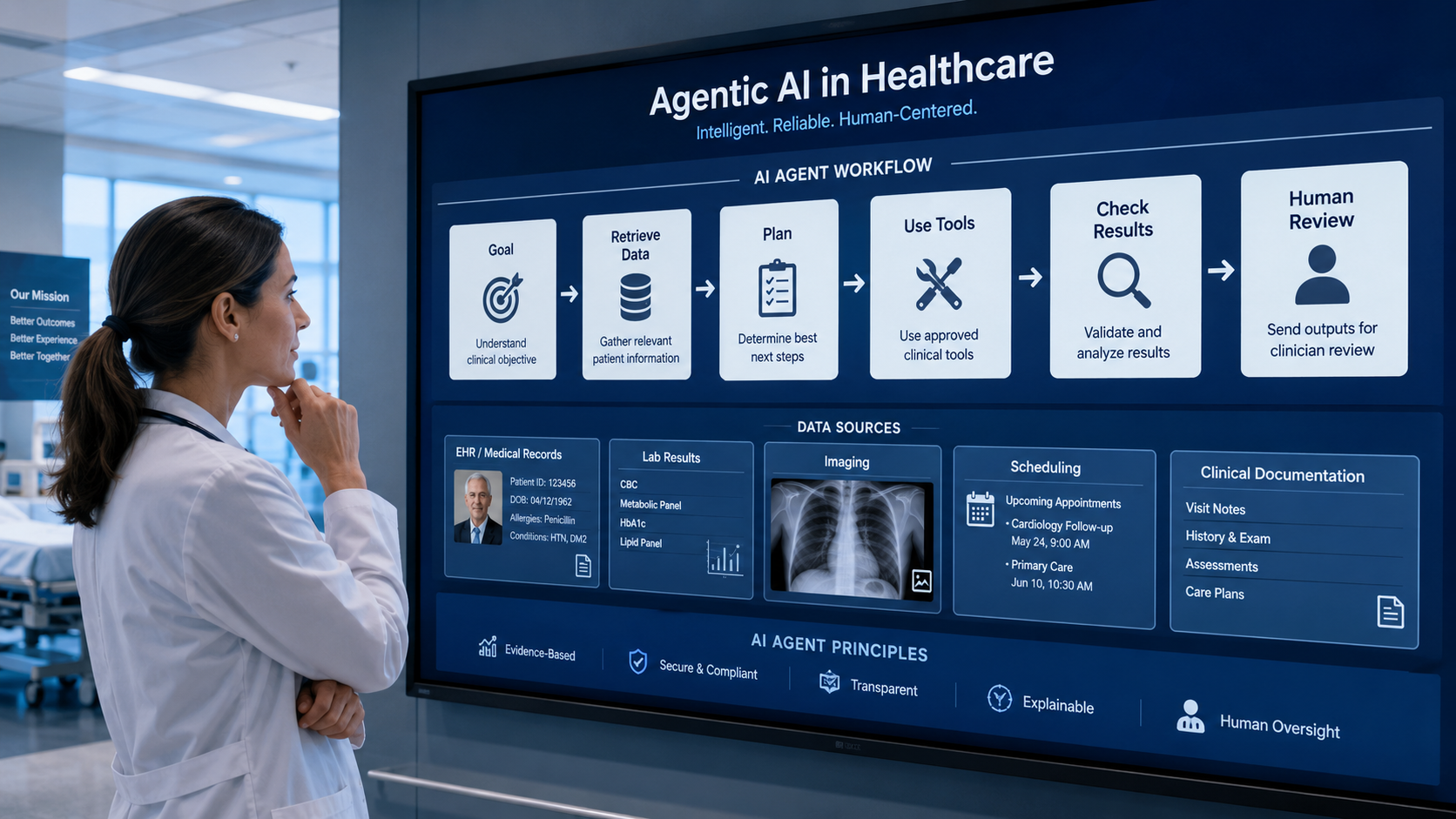
Agentic AI in Healthcare: How AI Agents Work, Uses, Risks and Regulation in 2026
Agentic AI can go beyond generating answers by planning steps, using tools and carrying out approved actions across healthcare workflows. This guide explains how healthcare AI agen...
AI in Medical Imaging: What Patients and Clinicians Should Know
Learn how artificial intelligence supports X-rays, CT, MRI, ultrasound and cancer screening, including its potential benefits, limitations, safety risks and FDA oversight.
AI Medical Scribes: How Ambient AI Works, Benefits, Risks and Privacy in 2026
AI medical scribes can listen during clinical consultations and turn conversations into draft medical notes, letters and other documentation. This guide explains how ambient AI scr...
Generative AI in Healthcare: Uses, Risks and Regulation in 2026
Generative AI is moving into clinical documentation, patient communication, medical research and decision-support workflows. This guide explains how it is being used in healthcare,...
FDA AI-Enabled Medical Devices: 2026 List, Uses and Regulation
The FDA maintains a growing list of artificial intelligence-enabled medical devices authorized for marketing in the United States. This guide explains what the FDA list means, the...

AI in Healthcare: Uses, Benefits, Risks and Patient Questions (2026)
Artificial intelligence supports medical imaging, documentation, monitoring, research and hospital operations. This evidence-based 2026 guide explains its uses, potential benefits,...
Questions & Reader Feedback
Help improve this Atlas article
Ask a general question, comment on the article, suggest a correction, or propose a new topic. Nothing is published automatically. Every submission is reviewed by the Atlas editorial team first.
Was this article helpful?
0 helpful · 0 needs improvement