AI in Healthcare: Uses, Benefits, Risks and Patient Questions (2026)
Artificial intelligence supports medical imaging, documentation, monitoring, research and hospital operations. This evidence-based 2026 guide explains its uses, potential benefits, safety risks, regulation and the questions patients should ask.

At a glance
Artificial intelligence is already part of healthcare in 2026, but “AI in healthcare” covers very different technologies. Some systems help reconstruct medical images or detect patterns in scans. Others estimate clinical risk, draft notes from consultations, monitor physiological signals, organize records or support administrative work.
Area | What AI may do | Important limitation |
|---|---|---|
Medical imaging | Reconstruct images, measure structures, detect or prioritize findings | Performance depends on the device, intended use, scanner, population and workflow |
Clinical decision support | Identify risks, organize evidence or support a clinician's review | A prediction or recommendation is not automatically a diagnosis |
Clinical documentation | Create draft notes, summaries and correspondence | Generated text can contain omissions or fabricated details |
Patient monitoring | Analyze physiological signals and flag patterns that may need attention | False alarms, missed events and performance drift remain possible |
Research and drug development | Analyze complex data, identify candidates and generate hypotheses | Model outputs still require experimental and clinical validation |
Administration | Support scheduling, coding, routing, documentation and capacity planning | Efficiency gains can be offset by poor workflow design or automation errors |
The common thread is that an AI system should be judged by the specific job it is expected to perform, the evidence supporting that job and the consequences of an error. A general-purpose chatbot, an ambient medical scribe and an FDA-authorized imaging device should not be treated as though they are the same technology.
What changed in healthcare AI in 2026?
Healthcare AI has moved further from isolated demonstrations into routine clinical and operational workflows. At the same time, regulators, health systems and professional organizations are paying more attention to what happens after an AI tool leaves the laboratory: who supervises it, how performance is monitored, what information it can access and what happens when the system is wrong.
2026 development | Why it matters |
|---|---|
FDA final Clinical Decision Support Software guidance | Issued in January 2026, it clarifies which CDS software functions may fall outside the medical-device definition and which remain subject to FDA device policies. |
FDA AI-enabled medical-device list continues to expand | The FDA maintains a periodically updated, non-comprehensive list of AI-enabled devices authorized for marketing in the United States. |
FDA discussion paper on generative-AI-enabled medical devices | Released August 18, 2026, it seeks feedback on risk assessment, premarket evaluation, postmarket monitoring, foundation models and agentic AI. It is not final guidance. |
WHO reports a gap between AI deployment and governance | WHO/Europe reported in July 2026 that nearly two thirds of surveyed countries were already deploying AI in diagnostics, while only 8% had a health-specific AI strategy and 8% had liability standards for AI failures. |
Ambient and agentic AI are becoming more visible | AI medical scribes are moving into real clinical workflows, while agentic AI is emerging as a way to coordinate multi-step tasks. The evidence for autonomous clinical agents remains much less mature. |
These developments do not mean that every healthcare AI product is regulated, clinically validated or proven to improve patient outcomes. The intended use, patient population, evidence, human oversight and real-world monitoring still need to be examined for each system.
Healthcare AI can organize and highlight information, but qualified professionals must interpret its output in the context of the individual patient. Credit: Biomed Atlas editorial illustration.
What is artificial intelligence in healthcare?
Artificial intelligence in healthcare refers to computer systems that use data to perform defined tasks such as recognizing patterns, generating predictions, processing language, analyzing images or creating new content.
The term covers several related technologies:
Machine learning: systems that learn statistical patterns from data and use those patterns to make predictions or classifications.
Deep learning: a form of machine learning commonly used with images, signals, language and other complex datasets.
Natural language processing: technology for processing clinical notes, reports, messages and conversations.
Computer vision: systems that analyze medical images or video.
Predictive analytics: models that estimate the probability of outcomes such as deterioration, readmission or treatment response.
Generative AI: systems that create new content such as text, summaries, images or structured information.
Multimodal AI: models that work with more than one form of data, for example text together with images, laboratory results or physiological signals.
Agentic AI: systems designed to pursue a goal through several steps, potentially using external tools, data sources and approved actions.
These categories overlap, but they are not interchangeable. A machine-learning algorithm that measures a structure on an MRI scan raises different clinical and regulatory questions from a large language model drafting a patient message or an AI agent coordinating several workflow steps.
How is AI being used in healthcare today?
Medical imaging and screening
Medical imaging remains one of the most established areas of regulated healthcare AI. AI-enabled tools are used with X-rays, CT, MRI, mammography, ultrasound, retinal imaging, nuclear medicine and other image-based workflows.
Depending on the device, AI may:
reconstruct or improve image quality;
identify a pattern that deserves closer review;
measure a structure or lesion;
segment organs or other anatomy;
prioritize potentially urgent studies;
compare findings across examinations;
or support planning and workflow.
The U.S. Food and Drug Administration maintains a public list of AI-enabled medical devices that it has identified as authorized for marketing in the United States. The list is useful, but the FDA explicitly states that it is not comprehensive and is updated periodically.
For a detailed explanation, see AI in Medical Imaging: Uses, Benefits, Risks and FDA Oversight and FDA AI-Enabled Medical Devices: 2026 List, Uses and Regulation.
Clinical decision support
Clinical decision-support systems can organize information from medical records, laboratory results, medications, vital signs and other sources to help healthcare professionals assess a patient or identify something that may require attention.
Examples include:
risk estimates;
deterioration alerts;
drug-interaction warnings;
diagnostic or treatment-support information;
and identification of patients who may need follow-up.
The regulatory status of CDS software depends on what it is intended to do. The FDA's January 2026 final guidance explains that certain decision-support functions may meet statutory criteria for exclusion from the medical-device definition, while other software functions remain regulated as devices.
This is why “clinical AI” is not itself a regulatory category. The intended function matters more than the marketing label.
Clinical documentation and ambient AI scribes
One of the most visible uses of generative AI in healthcare is documentation.
Ambient systems can capture a clinical conversation, process the speech and prepare a draft note, letter or other documentation for professional review. This can reduce repetitive clerical work, but the generated note may still contain omissions, incorrect speaker attribution or details that were never said.
A clinician therefore needs to be able to review and correct the output before it becomes part of the medical record.
For the evidence, privacy issues and NHS implementation context, see AI Medical Scribes: How Ambient AI Works, Benefits, Risks and Privacy in 2026.
Generative AI for summarization and communication
Generative AI is also being used to summarize records, draft patient messages, explain technical information, support literature review and prepare administrative material.
The technology is flexible, but that flexibility creates a distinctive risk: generated language can sound authoritative even when part of it is unsupported or wrong.
For a deeper explanation of large language models, hallucinations, regulation and current healthcare uses, see Generative AI in Healthcare: Uses, Risks and Regulation in 2026.
Patient monitoring and remote care
AI can analyze information from bedside monitors, ECG systems, wearable devices and home-monitoring technologies. It may help identify patterns that deserve attention or support continuous monitoring outside traditional clinical settings.
An alert should not be confused with a diagnosis. Monitoring systems can generate false positives, miss clinically important events or perform differently when the patient population or operating environment changes.
Drug discovery and biomedical research
Researchers use AI to analyze molecular and biological data, explore protein structures, identify possible drug targets, select research candidates, organize scientific literature and support clinical-trial design.
AI can speed up parts of research, but a model-generated molecule, hypothesis or scientific interpretation remains a starting point until it is independently tested.
Agentic AI and multi-step workflows
Agentic AI extends the idea of generative AI by allowing a system to work through a goal in several steps. An agent may retrieve permitted data, select tools, check intermediate results and prepare an action for approval.
Potential healthcare uses include pre-visit preparation, information retrieval, administrative coordination, research and other multi-step workflows.
This field is moving quickly, but autonomous clinical deployment remains much less mature than the broader volume of AI-agent research might suggest. The more authority an agent receives, the more important permissions, audit trails, escalation rules and human approval become.
See Agentic AI in Healthcare: How AI Agents Work, Uses, Risks and Regulation in 2026.
Administrative and operational work
Some of the most practical uses of healthcare AI may have little to do with diagnosis.
Healthcare organizations use or evaluate AI for:
appointment scheduling;
coding and billing support;
staffing and capacity planning;
supply and inventory management;
patient-message routing;
record organization;
prioritizing administrative work;
and preparing routine correspondence.
These workflows may offer meaningful efficiency gains without giving AI direct authority over a diagnosis or treatment decision.
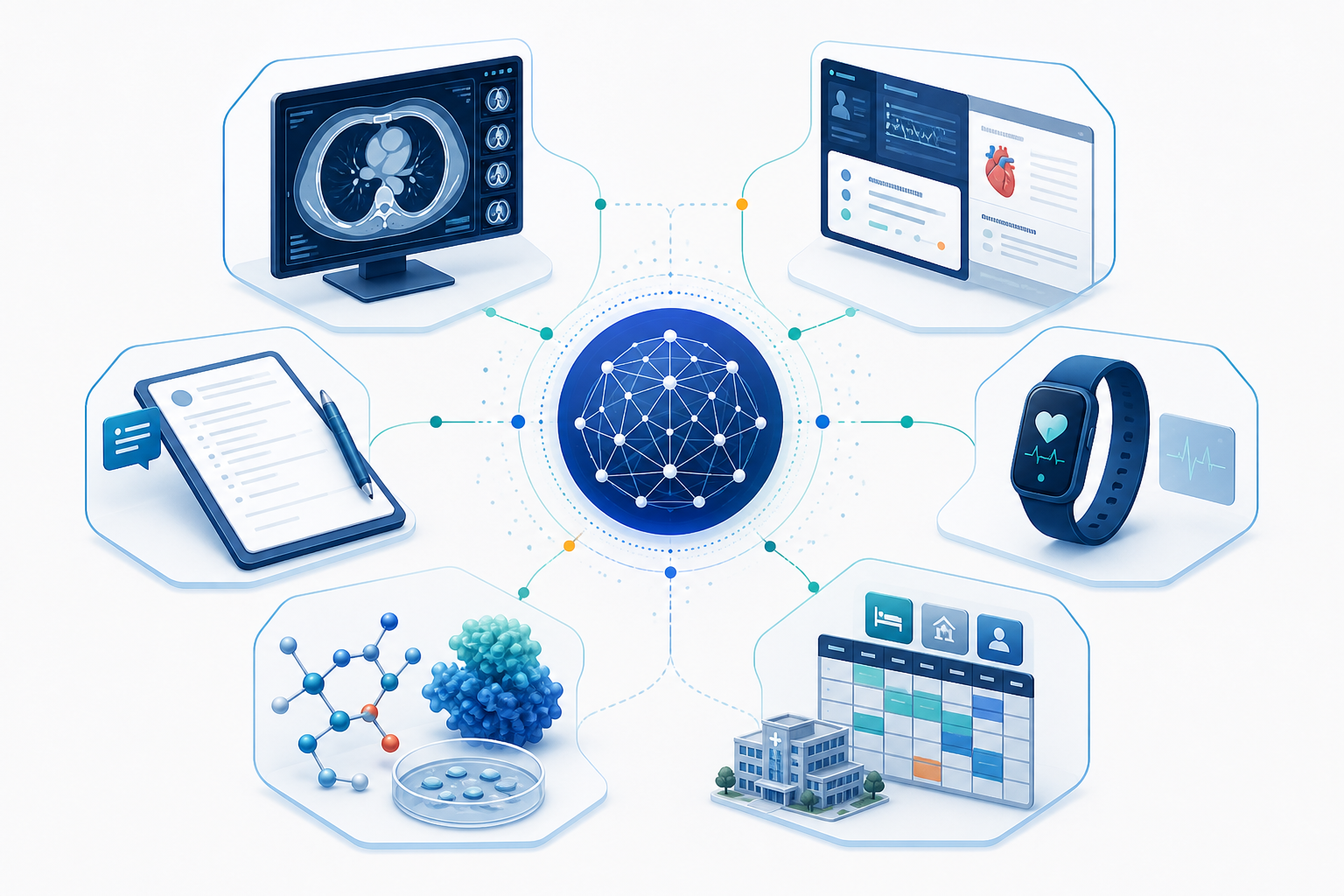
Common healthcare AI applications include imaging support, documentation, monitoring, biomedical research and hospital operations. Credit: Biomed Atlas editorial illustration.
Where is the evidence strongest?
Healthcare AI is often discussed as though all applications have reached the same level of maturity. They have not.
Application | Relative maturity in 2026 | What still needs attention |
|---|---|---|
Medical imaging | One of the most established regulated areas | External validation, local performance, workflow impact and ongoing monitoring |
Clinical risk prediction | Widely studied and deployed in selected settings | Calibration, false alerts, population differences and proof of real-world benefit |
Ambient documentation | Rapidly moving into routine workflows | Accuracy, omission rates, privacy, consent and clinician correction burden |
General-purpose generative AI | Rapid adoption for information and drafting tasks | Hallucinations, privacy, evidence traceability and inappropriate reliance |
Agentic AI | Emerging | Clinical validation, permissions, error propagation, auditability and accountability |
Autonomous diagnosis or treatment | Not a general model of routine healthcare delivery | High-quality evidence, regulation, safety, responsibility and patient acceptance |
This distinction helps explain why a claim such as “AI works in healthcare” is too broad to be meaningful. An FDA-authorized imaging tool and an experimental agentic system can both contain AI while having very different levels of evidence and clinical risk.
What are the potential benefits of AI in healthcare?
Faster information processing
AI can process large datasets quickly and may help healthcare teams identify important information sooner.
More consistent measurements
Automated measurement can reduce some forms of variation, particularly for repetitive image- or signal-based tasks.
Earlier identification of risk
Some predictive tools can identify patterns associated with deterioration or other clinical risks before they become obvious during routine review. Whether this improves outcomes depends on how accurately the alert performs and what the care team can do with it.
Reduced documentation burden
Ambient and generative tools can prepare drafts and summaries, potentially giving clinicians more time for direct patient care. Poorly implemented systems can also create additional checking work, so time savings should be measured rather than assumed.
Support for more individualized care
AI may help combine clinical, imaging, laboratory, genetic and other information. Personalized outputs are only useful when the underlying data and model are appropriate for the patient concerned.
Research acceleration
AI can help researchers work with complex biomedical datasets, organize literature and generate hypotheses more efficiently.
Operational efficiency
Administrative AI may reduce repetitive work, improve routing and help health systems manage capacity. These benefits can matter even when the AI never makes a clinical decision.
What are the main risks and limitations?
Incorrect or fabricated information
Generative AI can produce fluent, convincing statements that are unsupported or false. In healthcare, confident wording should never be treated as evidence of accuracy.
Omissions
An AI-generated summary can be unsafe even when everything it says is technically correct if it leaves out something clinically important, such as an allergy, previous adverse reaction or relevant diagnosis.
Bias and unequal performance
An AI system trained on unrepresentative data may perform differently across patient populations. Differences can involve age, sex, race and ethnicity, disability, geography, socioeconomic circumstances, disease prevalence or access to high-quality data.
WHO continues to emphasize equity, transparency, accountability and human oversight as central issues in responsible AI for health.
Performance changes across settings
A model developed in one hospital may not perform equally well somewhere else. Different scanners, documentation practices, disease prevalence, patient populations and workflows can change performance.
Automation bias
People can place excessive confidence in an automated result because it appears precise or objective. Human oversight is meaningful only when professionals have enough information and authority to question or override the system.
Privacy and data governance
Healthcare data is highly sensitive. Organizations need to understand what data an AI tool can access, where information is processed, how long it is retained, who can see it and whether it is used for model improvement.
Patients should not assume that a public consumer chatbot has the same privacy controls as an AI system deployed under a healthcare organization's approved infrastructure.
Cybersecurity
AI can expand the number of systems that connect to clinical data and workflows. Security therefore needs to cover not only the model but also the software, credentials, interfaces, connected tools and medical devices around it.
Model and software changes
AI-enabled software may evolve after deployment. For regulated AI-enabled devices, the FDA has issued final guidance on predetermined change control plans that can address certain planned future modifications while maintaining appropriate safety and effectiveness controls.
Unclear accountability
When AI contributes to a mistake, responsibility may involve the healthcare professional, hospital, software developer or device manufacturer. Governance should establish who is responsible for reviewing outputs, monitoring performance and responding to incidents before the technology is deployed.
What does human oversight actually mean?
“Human in the loop” is often used as a reassuring phrase, but it can describe very different levels of control.
A human may review an output before it reaches the patient, approve an action before it is executed, monitor only unusual cases or investigate problems after they occur.
The appropriate oversight depends on the consequence of an error. A draft administrative email does not need the same safeguards as a recommendation that could alter treatment.
In June 2026, the American Medical Association adopted policies emphasizing that AI should support rather than replace physician judgment and that transparency, accountability and physician oversight are important when AI is used in patient care.
Is AI used to diagnose patients?
Yes, some regulated AI-enabled technologies assist with diagnostic tasks, particularly in imaging and physiological-signal analysis. But the phrase “AI diagnosis” can be misleading because it covers very different functions.
One device may identify a specific pattern on an image. Another may generate a risk score. A general-purpose chatbot may offer a list of possible explanations for symptoms without having been evaluated as a diagnostic medical device.
Those are not equivalent.
For personal symptoms, treatment choices or potentially urgent conditions, a general-purpose AI chatbot should not replace appropriate professional medical care.
Will AI replace doctors and nurses?
The current evidence does not support the simple idea that AI will replace healthcare professionals as a group.
AI is better understood as changing particular tasks: measuring, sorting, searching, summarizing, detecting patterns, preparing drafts or coordinating defined workflows.
Healthcare also requires physical examination, communication, ethical judgment, knowledge of the patient's circumstances, decision-making under uncertainty and responsibility for the consequences of care.
The more realistic direction is AI-assisted healthcare: qualified professionals using increasingly capable tools while retaining responsibility for patient care.
How is healthcare AI regulated in the United States?
In the United States, regulation depends on what a product is intended to do.
Some AI-enabled software functions are medical devices and fall under FDA oversight. Others may be administrative tools, general-purpose software or decision-support functions that do not meet the device definition.
The FDA's AI-enabled medical-device list provides a useful view of regulated AI technology, but the agency states that the list is not comprehensive and is updated periodically.
FDA authorization should also not be interpreted as a guarantee that a product is perfect or appropriate for every setting. It applies to a specific device and intended use under the applicable regulatory pathway.
How is AI in healthcare being governed outside the United States?
Healthcare AI is governed through a combination of medical-device regulation, AI-specific rules, privacy law, professional standards and health-system policies. The exact framework differs by country.
European Union
In the European Union, healthcare AI can fall under multiple legal frameworks, including the EU AI Act, medical-device rules and data-protection requirements. The applicable obligations depend on the system's function, risk classification and how it is placed on the market or used.
WHO/Europe's 2026 work highlights a broader implementation challenge: AI deployment is moving faster than many countries' health-specific governance and liability frameworks.
United Kingdom
AI used in UK healthcare may be affected by medical-device requirements, information-governance rules and health-system implementation standards. NHS England's 2026 guidance for AI-enabled ambient scribing illustrates how governance, clinical safety, procurement and regulation increasingly need to be considered together.
Canada
Health Canada published updated pre-market guidance for machine-learning-enabled medical devices in April 2026, covering areas such as design, data, validation, transparency, risk management and post-market monitoring.
These approaches are not identical, but they share an important direction: regulators increasingly expect AI to be evaluated across its lifecycle rather than only at the moment of launch.
How can you evaluate a healthcare AI claim?
Statements such as “AI matches doctors,” “AI is 95% accurate” or “AI improves diagnosis” can hide important details.
What exact task was tested? Detecting one finding is not the same as making a complete diagnosis.
What comparison was used? Performance against one clinician, a panel of specialists or usual care can produce very different interpretations.
Was the system tested on independent data? Results from development data can overstate real-world performance.
Was there external or multicenter validation? Testing across different hospitals, devices and populations gives stronger evidence of generalizability.
Who was represented? Overall accuracy can hide poorer performance in particular patient groups.
What kinds of errors occurred? False positives, false negatives, omissions and hallucinations have different clinical consequences.
Was the AI tested inside a real workflow? A benchmark does not show whether the technology saves time, changes clinical decisions or improves outcomes.
Who reviews the output? The level of human oversight should match the consequence of a mistake.
What happened after deployment? Monitoring matters because patient populations, software and workflows change.
Technical accuracy is not the same as better patient outcomes
This is one of the most important distinctions in healthcare AI.
An algorithm can achieve a high score on a benchmark without improving patient care. To demonstrate real clinical value, researchers may need to show that using the system changes something meaningful: time to treatment, diagnostic errors, clinician workload, complications, patient experience, health outcomes or another relevant measure.
That is why the strongest healthcare-AI evidence increasingly needs to move beyond retrospective datasets toward prospective and real-world evaluation.
Questions patients can ask when AI is involved in their care
What is the AI being used to do?
Is it helping a professional or making an automated decision?
Does a healthcare professional review the result?
Has the system been evaluated for patients like me?
Is it regulated or authorized for this particular use?
What happens if the AI result conflicts with the clinician's assessment?
What information does the system access?
Is my information stored, shared or used to improve another model?
Can I request clarification or human review?
How does the organization detect and correct errors?
What should healthcare organizations evaluate before deployment?
Organizations should begin with the clinical or operational problem rather than the attractiveness of the technology.
Intended use: What exact task is the AI expected to perform?
Clinical consequence: What happens if the result is wrong?
Evidence: Does the supporting research match the proposed use?
Local validation: Does performance hold in the organization's patient population and workflow?
Equity: Are clinically relevant subgroups represented and evaluated?
Human oversight: Who reviews, overrides or escalates an output?
Privacy: What information can the system access and where is it processed?
Cybersecurity: How are the model, connected systems and credentials protected?
Workflow impact: Does the tool reduce work or create new checking and documentation burdens?
Training: Do users understand what the system can and cannot do?
Monitoring: How will errors, drift, near misses and performance changes be identified?
Change control: How are software, model and workflow updates reviewed?
Accountability: Who remains responsible for the final decision or action?
What is the future of AI in healthcare?
The next phase of healthcare AI is likely to be defined less by individual algorithms and more by integration.
Multimodal systems can combine text, images, physiological signals and structured records. Generative AI is being embedded into documentation and information workflows. Agentic systems are beginning to coordinate multiple tools and steps. AI-enabled medical devices continue to expand beyond imaging into cardiovascular, neurological, surgical and other clinical areas.
That does not mean healthcare is moving toward one universal “AI doctor.” The more likely future is a collection of specialized systems embedded throughout healthcare: some regulated as medical devices, some used for documentation or administration, and some operating as infrastructure behind existing clinical workflows.
The central question will therefore not be whether a system contains AI. It will be whether the technology performs a useful job safely, fairly and reliably enough to justify using it in that particular part of healthcare.
Key takeaways
Artificial intelligence is already used across imaging, decision support, documentation, monitoring, research and healthcare operations.
“Healthcare AI” is an umbrella term covering technologies with very different purposes, evidence and regulatory status.
Medical imaging is among the most mature regulated AI applications, while agentic AI remains an emerging area.
Generative AI and ambient documentation are moving rapidly into real workflows but still require checks for hallucinations, omissions and privacy problems.
FDA authorization applies to a particular device and intended use; it does not mean every AI system is FDA-authorized or error-free.
The FDA issued final Clinical Decision Support Software guidance in January 2026 and opened a separate discussion on generative-AI-enabled medical devices in August 2026.
WHO's 2026 work shows that healthcare AI adoption is advancing faster than health-specific governance in many countries.
Technical accuracy does not automatically prove that an AI system improves patient outcomes.
Bias, privacy, cybersecurity, performance drift, automation bias and unclear accountability remain important risks.
The strongest near-term model is AI-assisted healthcare in which qualified professionals remain responsible for consequential clinical decisions.
Frequently asked questions
What is AI in healthcare?
AI in healthcare refers to computer systems that use data to perform defined tasks such as recognizing patterns, generating predictions, processing language, analyzing medical images or creating new content.
What are the main examples of AI in healthcare?
Common examples include medical imaging analysis, clinical decision support, ambient medical scribes, patient monitoring, record summarization, drug research and administrative automation.
What is the most established use of AI in healthcare?
Medical imaging is one of the most mature regulated areas, with many AI-enabled devices used for image reconstruction, measurement, detection, triage and other defined tasks. Administrative and predictive systems are also widely used in selected settings.
Is AI in healthcare safe?
There is no single answer because healthcare AI includes many different technologies. Safety depends on the tool, intended use, evidence, patient population, workflow, human oversight and monitoring after deployment.
Can AI diagnose disease better than a doctor?
Some AI systems perform very well on narrowly defined diagnostic tasks, but this does not mean they can replace a complete clinical assessment. Results may change across populations and settings, and the consequences of errors need to be considered.
Can ChatGPT or another chatbot diagnose me?
General-purpose chatbots can provide educational information but may generate incorrect or incomplete answers. They should not replace professional diagnosis, treatment decisions or urgent medical assessment.
What is generative AI in healthcare?
Generative AI creates new content such as clinical notes, summaries, patient messages or research material. Its main healthcare risks include hallucinations, omissions, privacy problems and inappropriate reliance on generated text.
What is agentic AI in healthcare?
Agentic AI refers to systems designed to work through several steps toward a defined goal, potentially using external tools, data and approved actions. It is an emerging area with less mature clinical evidence than established imaging or documentation applications.
Are AI medical devices FDA approved?
Some are FDA approved through Premarket Approval, but many devices on the FDA AI-enabled medical-device list were cleared through 510(k) or authorized through De Novo pathways. “FDA-authorized” is a more accurate broad term for the list as a whole.
Will AI replace doctors and nurses?
Current evidence points more strongly toward AI changing individual tasks than replacing healthcare professions. Clinical care still requires professional judgment, communication, accountability and decisions that incorporate the patient's broader circumstances.
How can patients protect their privacy when using AI?
Avoid entering identifiable medical information into public AI services unless you understand how the information will be handled and the service is appropriate for that use. When AI is used by a healthcare organization, ask how data are stored, shared and protected.
How do I know whether AI was used in my care?
You can ask whether automated software helped analyze an image, calculate a risk score, prepare documentation, monitor a signal or support a recommendation. You can also ask who reviewed the output and how errors are handled.
Related Biomed Atlas guides
AI in Medical Imaging: Uses, Benefits, Risks and FDA Oversight
Generative AI in Healthcare: Uses, Risks and Regulation in 2026
AI Medical Scribes: How Ambient AI Works, Benefits, Risks and Privacy in 2026
FDA AI-Enabled Medical Devices: 2026 List, Uses and Regulation
Agentic AI in Healthcare: How AI Agents Work, Uses, Risks and Regulation in 2026
References and further reading
U.S. Food and Drug Administration. Artificial Intelligence-Enabled Medical Devices.
U.S. Food and Drug Administration. Clinical Decision Support Software: Final Guidance (January 2026).
U.S. Food and Drug Administration. Marketing Submission Recommendations for a Predetermined Change Control Plan for Artificial Intelligence-Enabled Device Software Functions (August 2025).
U.S. Food and Drug Administration. Considerations for the Regulation of Generative AI-Enabled Medical Devices (August 2026 discussion paper).
World Health Organization. Ethics and Governance of Artificial Intelligence for Health.
World Health Organization. Ethics and Governance of Artificial Intelligence for Health: Guidance on Large Multi-Modal Models.
WHO Regional Office for Europe. Artificial Intelligence Is Reshaping Health Systems: State of Readiness Across the European Union (2026).
World Health Organization. Artificial Intelligence and Evidence-Informed Policy: Emerging Challenges and Opportunities (2026).
American Medical Association. AMA Policies to Ensure AI Supports—Not Replaces—Physician Judgment (June 2026).
National Institute of Standards and Technology. Artificial Intelligence Risk Management Framework.
Evidence reviewed: August 21, 2026. Healthcare AI, medical-device regulation and implementation guidance are changing quickly. Biomed Atlas provides general educational information and does not replace professional medical, legal or regulatory advice.
Medical information notice
Atlas content is intended for education and general information. Seek advice from a qualified healthcare professional for personal symptoms, treatment decisions, or urgent medical concerns.
How this article is maintained
Atlas uses editorial review, evidence checks, visible update dates and a public correction route. Educational content does not replace professional medical advice.
Continue reading
Continue your recent reading
Pick up another medical or biomedical article you opened earlier on this device.
Continue exploring
More medical and biomedical reading
Continue with editorially selected and category-matched articles designed to help readers explore the subject in greater depth.
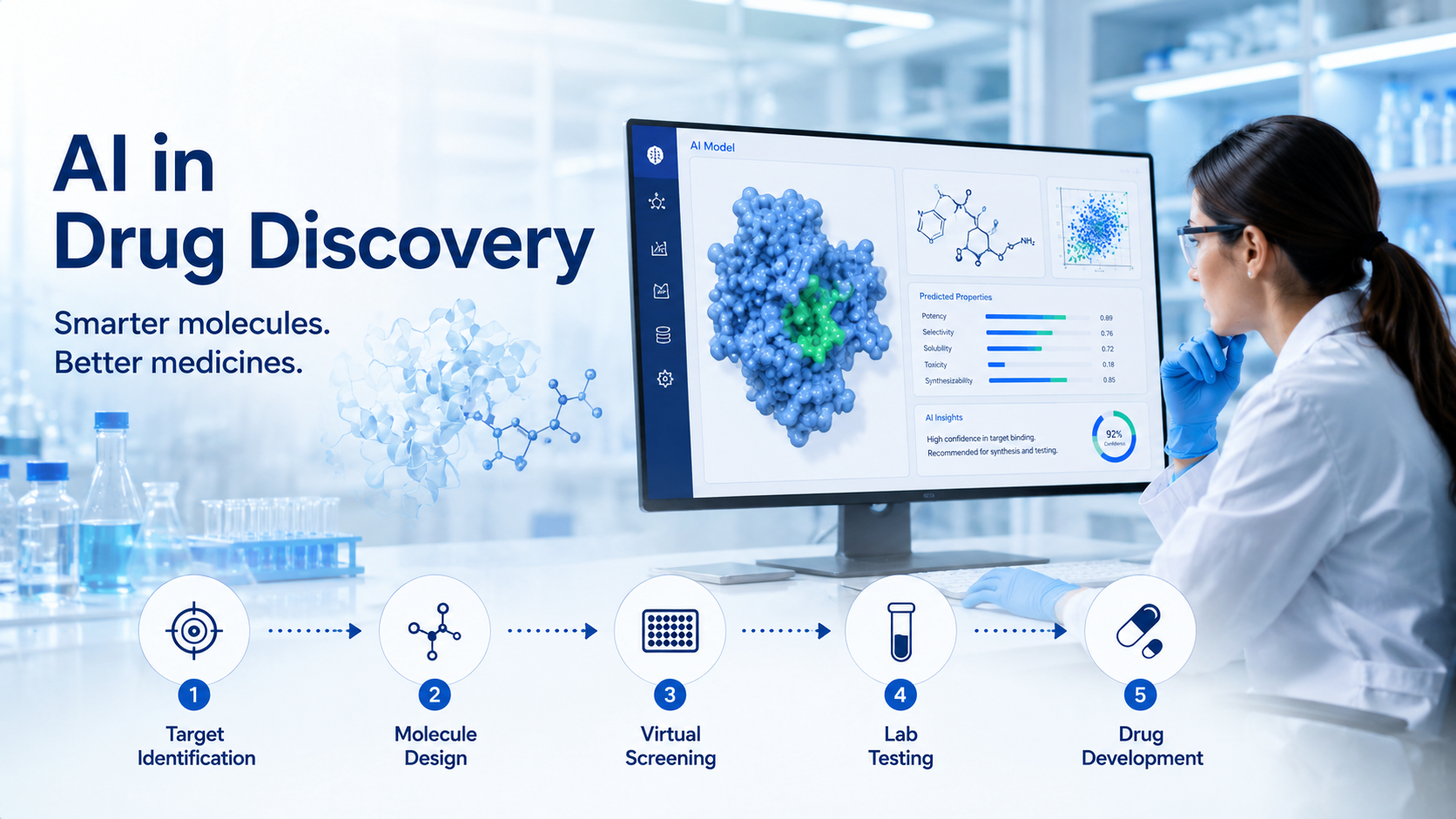
AI in Drug Discovery: How Artificial Intelligence Is Changing Drug Development in 2026
Artificial intelligence is being used to identify drug targets, screen compounds, design new molecules, predict toxicity and support clinical development. This guide explains how A...
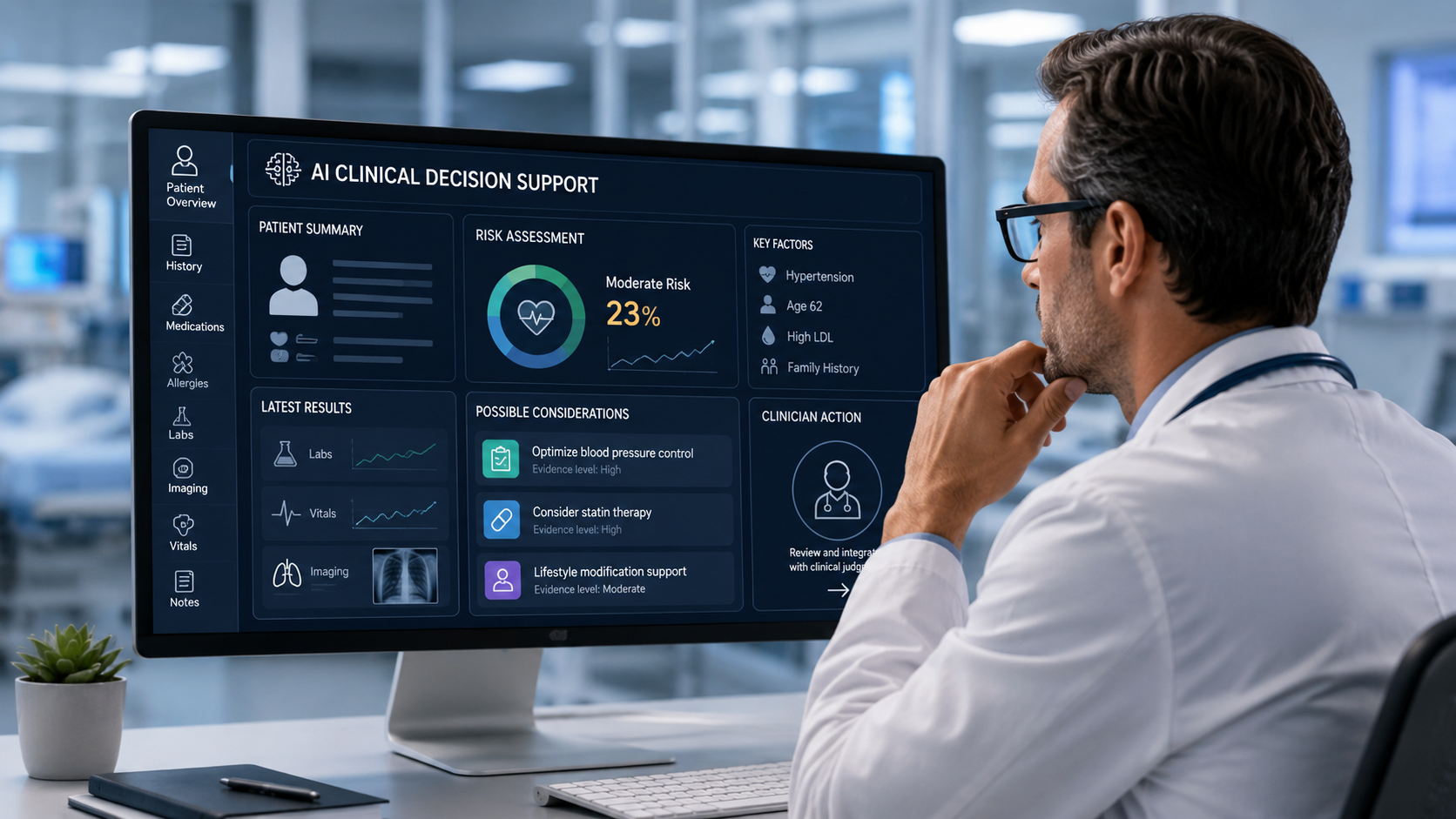
AI Clinical Decision Support: How It Works, Uses, Risks and FDA Regulation in 2026
AI clinical decision support can help clinicians interpret patient information, estimate risk, consider diagnoses and review treatment options. This guide explains how AI-powered C...

Digital Twins in Healthcare: How Virtual Patient Models Work, Uses, Benefits and Risks in 2026
Digital twins are patient-specific computational models that can be updated with real health data and used to simulate possible future outcomes. This guide explains how healthcare...
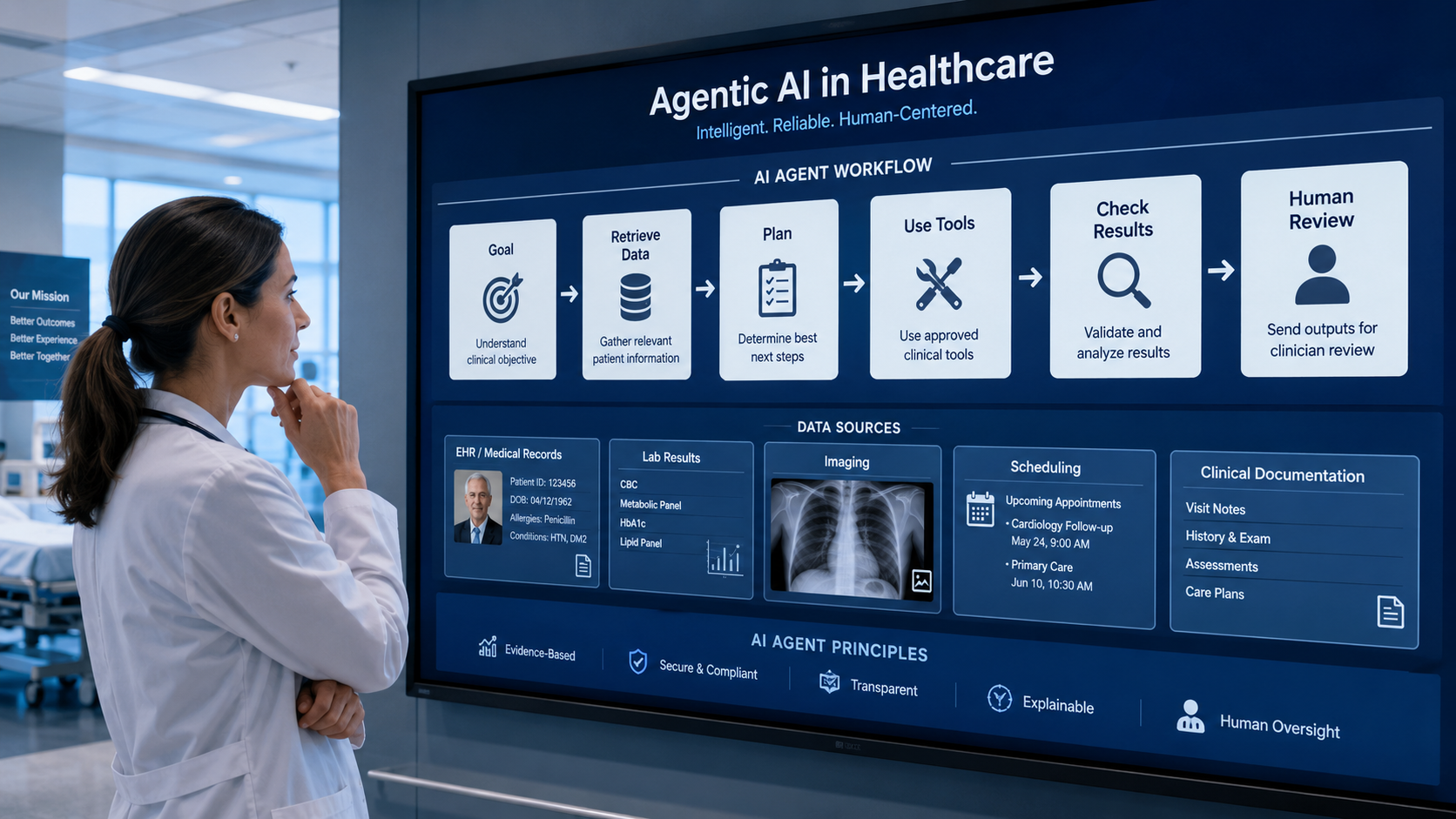
Agentic AI in Healthcare: How AI Agents Work, Uses, Risks and Regulation in 2026
Agentic AI can go beyond generating answers by planning steps, using tools and carrying out approved actions across healthcare workflows. This guide explains how healthcare AI agen...
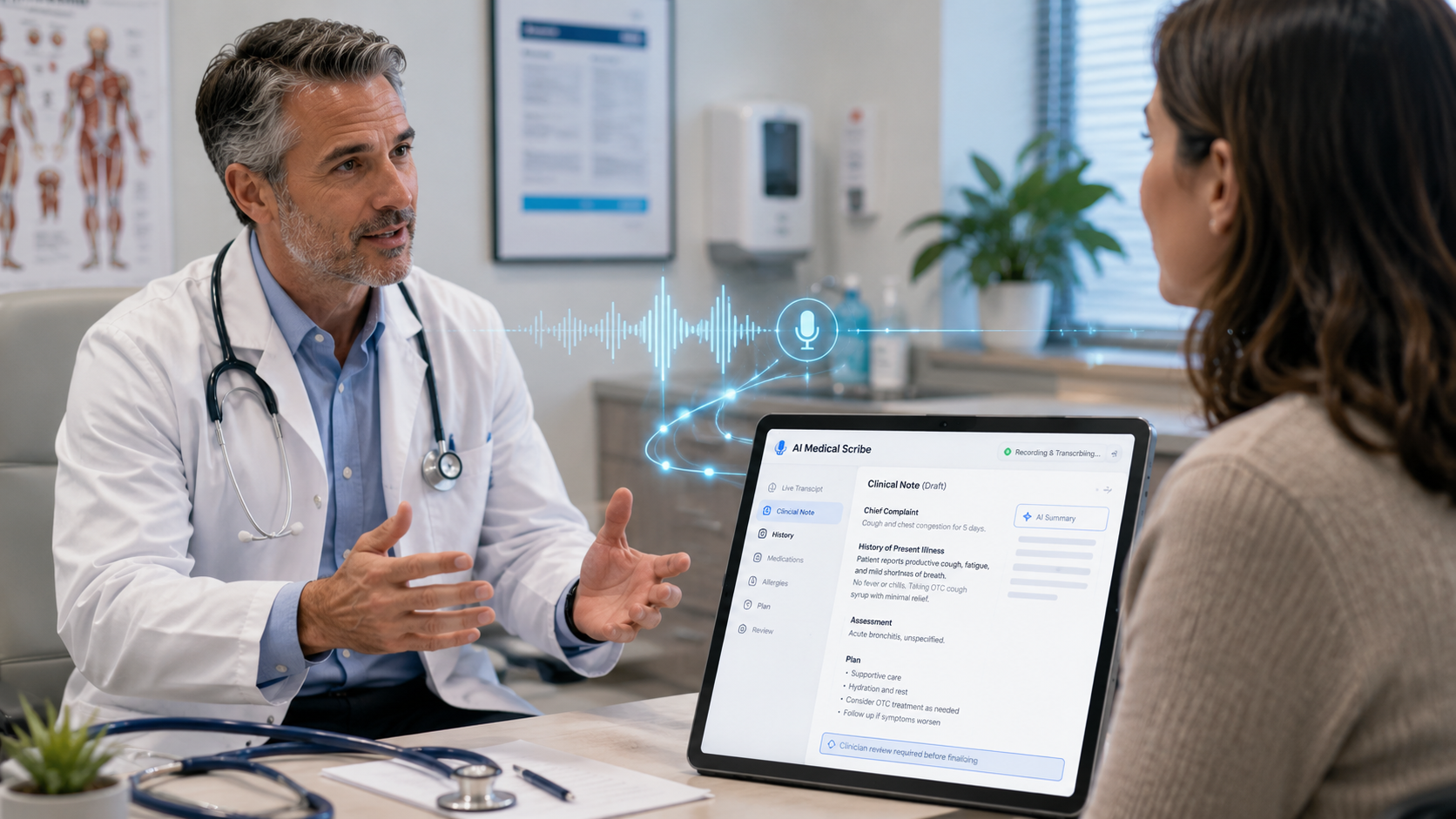
AI Medical Scribes: How Ambient AI Works, Benefits, Risks and Privacy in 2026
AI medical scribes can listen during clinical consultations and turn conversations into draft medical notes, letters and other documentation. This guide explains how ambient AI scr...

FDA AI-Enabled Medical Devices: 2026 List, Uses and Regulation
The FDA maintains a growing list of artificial intelligence-enabled medical devices authorized for marketing in the United States. This guide explains what the FDA list means, the...
Questions & Reader Feedback
Help improve this Atlas article
Ask a general question, comment on the article, suggest a correction, or propose a new topic. Nothing is published automatically. Every submission is reviewed by the Atlas editorial team first.
Was this article helpful?
0 helpful · 0 needs improvement
Approved questions & discussion
This article is very nice and more informative.