AI Medical Scribes: How Ambient AI Works, Benefits, Risks and Privacy in 2026
AI medical scribes can listen during clinical consultations and turn conversations into draft medical notes, letters and other documentation. This guide explains how ambient AI scribes work, what current research shows, their potential benefits and risks, patient privacy and consent, and how their use is evolving in the United States and NHS.
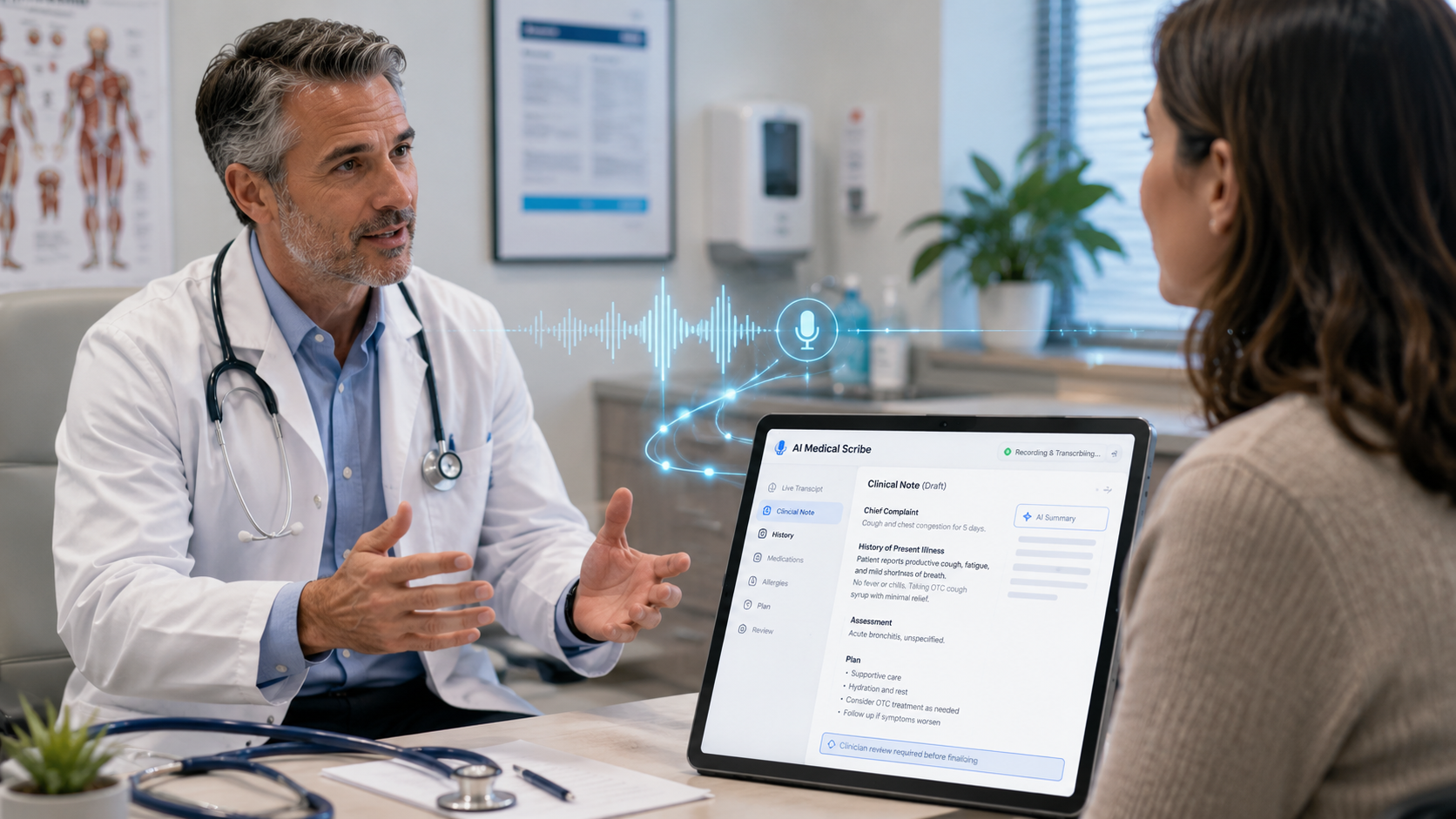
AI medical scribes are becoming one of the most visible uses of generative artificial intelligence in everyday healthcare. Instead of asking a doctor to type throughout a consultation or complete every note afterward, an ambient AI system can process the clinical conversation and prepare a draft medical note for the clinician to review.
The attraction is easy to understand. Documentation takes up a large amount of clinical time, and reducing some of that work may allow healthcare professionals to concentrate more fully on the patient sitting in front of them.
But an AI-generated note is still a generated note. It can leave out an important symptom, misunderstand who said what, turn an uncertain statement into a definite one or occasionally add information that was never supported by the conversation.
That is why the most useful question is no longer simply, “Do AI medical scribes work?”
The more important questions are: Do they actually reduce documentation burden? How accurate are the notes? What happens to the patient's conversation? Does the clinician still check the record? And what changes when a documentation assistant begins offering clinical recommendations?
AI medical scribes in 2026: at a glance
What they do: AI medical scribes use speech recognition, language processing and increasingly generative AI to turn clinical conversations into draft documentation.
Other names: They may be described as ambient AI scribes, ambient clinical documentation systems, AI notetaking tools or ambient voice technologies.
Main purpose: Reduce the time and cognitive effort clinicians spend creating notes.
Human review still matters: Generated notes can contain omissions, transcription mistakes, attribution errors and unsupported generated content.
Evidence is increasingly encouraging: Studies have reported improvements in documentation burden, after-hours work, clinician attention and burnout, although results vary and much of the evidence remains observational.
Patient privacy is central: Healthcare organizations need clear policies covering audio capture, transcription, storage, retention, model training and access to patient information.
NHS adoption has accelerated: NHS England updated national ambient-scribing guidance in July 2026, while large-scale deployment is expanding across parts of England.
Regulatory status is not identical for every product: A tool that only drafts documentation can raise different medical-device questions from software that diagnoses disease or recommends treatment.
What is an AI medical scribe?
An AI medical scribe is software designed to help healthcare professionals create clinical documentation.
Modern systems usually operate in the background during an appointment. The software processes the conversation between the clinician and patient, converts speech into text and uses language-processing technology to organize relevant information into a draft note.
Depending on the product and healthcare setting, the generated documentation might include:
reason for the visit;
history of the present illness;
symptoms;
relevant medical history;
medications discussed;
assessment;
clinical plan;
follow-up instructions;
referral letters;
or other structured documentation.
The exact output differs between systems.
The important word is draft. A professionally formatted note should not be assumed to be accurate simply because it reads naturally.
Why are AI scribes called “ambient”?
The term ambient describes the way these systems can work during the normal flow of a consultation without requiring the clinician to constantly interact with the software.
Traditional medical dictation usually requires a doctor to deliberately dictate a note:
“Patient reports three days of fever and cough...”
The software then converts those dictated words into text.
An ambient AI scribe has a more complicated task. It processes an ordinary conversation in which the patient and clinician may discuss symptoms, medications, family circumstances, unrelated comments, previous diagnoses, possible explanations and future plans.
The system then attempts to determine which parts belong in the medical record.
That extra interpretation is what makes ambient systems potentially more useful than conventional transcription. It is also where some of the additional risk comes from.
How does an ambient AI medical scribe work?
Products differ technically, but a typical workflow looks something like this.
1. The consultation is captured or processed
The system receives audio from an eligible clinical encounter.
Depending on the technology, this may involve recording audio, temporarily processing audio, streaming the conversation to a processing service or another architecture approved by the healthcare organization.
2. Speech recognition converts conversation into text
Automatic speech-recognition technology identifies the spoken words.
This can become more difficult when an encounter includes:
several speakers;
background noise;
accents;
overlapping speech;
medical abbreviations;
drug names;
specialist terminology;
or a mixture of languages.
3. AI interprets the conversation
Modern systems can use natural-language processing and large language models to work out which parts of the conversation are clinically relevant.
This step is different from simple transcription.
A patient may say:
“My mother had breast cancer, but I've never had it.”
The system needs to understand that the cancer belongs in the family history rather than incorrectly documenting it as the patient's diagnosis.
4. A structured draft is generated
The relevant information is organized into a clinical-note format.
The system may use different templates for primary care, cardiology, orthopedics, psychiatry or other clinical settings.
5. The clinician reviews the note
This is one of the most important parts of the workflow.
The clinician checks whether the draft accurately represents the encounter and corrects missing, inaccurate or unsupported information before approving the final record.
AI scribe vs transcription vs medical dictation
Technology | Input | Main job | Level of interpretation |
|---|---|---|---|
Traditional dictation | Clinician deliberately dictates a note | Convert dictated speech into documentation | Relatively limited |
Speech-to-text transcription | Spoken audio | Convert speech into written text | Usually limited |
Ambient AI scribe | Natural clinical conversation | Identify clinically relevant information and prepare structured documentation | Higher |
AI clinical decision support | Clinical information | Support diagnosis, prognosis or treatment decisions | Potentially much greater clinical influence |
The distinction matters because an ambient documentation system is not automatically the same thing as a diagnostic or treatment-support AI system. A product that summarizes what was said during an appointment raises different clinical and regulatory questions from software that recommends what should happen next.
Why are hospitals and clinics adopting AI medical scribes?
Clinical documentation has become a substantial part of healthcare work.
Notes may need to be completed during appointments, between patients or after the formal workday has ended. For some clinicians, the burden is not simply the number of minutes spent typing. It is the mental effort required to listen to a patient, think clinically, navigate the electronic health record and document the encounter at the same time.
Ambient AI is attractive because it targets that particular problem.
If the first draft of the note is prepared automatically, the clinician can potentially spend more of the encounter listening rather than documenting every detail manually.
This does not automatically make the consultation better. It does, however, explain why ambient documentation has become one of the fastest-growing practical applications of generative AI in healthcare.
What does the evidence show about AI medical scribes?
The research is growing quickly, but the findings need to be read carefully.
Studies differ in the type of clinician involved, clinical environment, AI platform, length of follow-up and the outcome being measured.
Some studies examine time. Others measure burnout, clinician experience, documentation quality or patient perceptions.
No single study answers every question.
A 1,547-clinician study: documentation and productivity
A 2026 study in JAMA Network Open examined ambient AI use among 1,547 clinicians in a large healthcare system.
The researchers compared documentation, productivity and efficiency measures before and after clinicians became active users of ambient AI.
The results suggested improvements in some documentation measures, but the study also provides an important reality check: reducing note-writing burden does not necessarily eliminate the wider burden of working in an electronic health record.
Time saved on writing may be redirected toward reviewing results, answering patient messages, examining previous records or completing other clinical work.
Burnout and clinician experience
A multicenter quality-improvement study published in JAMA Network Open evaluated 263 ambulatory clinicians across six U.S. healthcare systems after 30 days of using the same ambient AI platform.
Among clinicians included in the burnout analysis, the proportion meeting the study's burnout threshold fell from 51.9% before implementation to 38.8% afterward.
The study also reported improvements in note-related cognitive workload, after-hours documentation and clinicians' ability to give patients focused attention.
The findings are encouraging, but they should not be presented as definitive proof that AI scribes prevent burnout.
The study used a before-and-after quality-improvement design rather than random allocation. Participation was voluntary, and several outcomes were self-reported.
A more accurate interpretation is that ambient scribes may reduce an important source of administrative strain for some clinicians.
General practice: less documentation time does not necessarily mean shorter appointments
A prospective multicentre study published in npj Digital Medicine in 2026 followed 535 consultations involving 12 GPs and GPs in training.
Use of an ambient scribe reduced documentation time by an average of about 42.7 seconds per consultation. However, total consultation time did not change significantly.
The study also showed why evaluating an AI scribe is more complicated than measuring how quickly a note appears. AI-generated notes were generally longer, but fewer symptom-related variables were documented. Clinicians reported that physical-examination findings often required manual correction because those findings were not necessarily spoken aloud during the consultation.
The researchers also identified possible concerns around sensitive conversations and whether delegating note-taking could remove a moment of reflection that normally contributes to clinical reasoning.
These findings do not mean ambient scribes are ineffective. They show that the benefit is more specific: the technology may reduce part of the documentation burden without automatically shortening the whole consultation or improving every aspect of the medical record.
Can AI scribes give doctors more attention for patients?
Potentially.
One of the strongest arguments for ambient documentation is that the clinician does not need to look at a keyboard as often while the patient is talking.
NHS experience is beginning to provide real-world evidence of this effect.
NHS England reported in July 2026 that a major study of ambient voice technology found a 23.5% increase in direct patient-interaction time during appointments and an 8.2% reduction in overall appointment length.
Other implementations have reported that clinicians feel better able to maintain eye contact and concentrate on the conversation.
Those are meaningful outcomes, but they should not be confused with evidence that AI automatically improves diagnosis or patient health outcomes.
How widely are AI scribes being used in UK primary care?
By 2026, ambient AI scribes were no longer a niche technology in UK general practice.
A national survey published in npj Digital Medicine in May 2026 included 598 UK GPs. Forty percent reported currently using an AI scribe, while a further 23% said they had used one previously.
Among current users, the proportion of consultations in which a scribe was used ranged from 5% to 100%, with an average of about 60%.
Clinicians commonly associated AI scribes with improved efficiency and more timely documentation. At the same time, safety and medicolegal concerns remained important, particularly among non-users.
The figures show how quickly ambient documentation is moving into routine practice, but adoption should not be confused with proof that every product, specialty or workflow has been equally well validated.
NHS adoption is moving beyond small pilots
By 2026, ambient AI in England was no longer confined to isolated experiments.
In July, NHS England announced that the Midlands had created a regional procurement route for ambient voice technology covering:
1,239 GP practices;
more than 70,000 clinicians;
15 acute and community trusts.
Other NHS organizations have also expanded ambient notetaking after local pilots.
This is important because the questions change when AI moves from a trial involving a few enthusiastic clinicians to infrastructure available across entire healthcare systems.
At that scale, organizations need consistent standards for procurement, safety, information governance, patient communication, training and performance monitoring.
How should the quality of an AI-generated medical note be measured?
Note quality is more complicated than whether the final text sounds polished or professional.
An ambient scribe can fail at several stages. It may hear the wrong word, attribute a statement to the wrong speaker, misunderstand the meaning of the conversation or generate a well-written summary that leaves out something clinically important.
Useful evaluation therefore needs to separate several questions:
Transcription accuracy: Were the spoken words captured correctly?
Speaker attribution: Did the system distinguish the patient, clinician and other speakers correctly?
Factuality: Is each clinical statement supported by the encounter?
Completeness: Were important symptoms, findings, medications, allergies or follow-up instructions omitted?
Clinical structure: Was information placed in the correct part of the note?
Preservation of uncertainty: Did the note keep tentative diagnoses tentative?
Usability: How much editing does the clinician need before approval?
A note can be grammatically excellent and still be clinically unsafe if it omits an allergy, reverses a negation or converts a possible diagnosis into a confirmed one.
Can AI medical scribes make mistakes?
Yes.
Ambient AI can fail in several different ways, and not all of them look like an obvious transcription error.
Transcription errors
A word or phrase may be heard incorrectly.
Drug names, doses and specialist terminology deserve particular attention because small differences can be clinically important.
Omissions
The system may fail to include something that was discussed.
For example, a note might correctly summarize a symptom while omitting an important negative finding, allergy or follow-up instruction.
Speaker-attribution errors
Information said by a family member, interpreter or clinician may be incorrectly attributed to the patient.
Negation errors
“The patient does not have chest pain” and “the patient has chest pain” differ by one word but have completely different meanings.
Historical-context errors
A previous diagnosis may accidentally be represented as a current condition.
Uncertainty errors
A clinician may say:
“This could be reflux, but we still need to exclude a cardiac cause.”
A poor summary might turn that discussion into a definite diagnosis.
Generated or unsupported information
Because many modern scribes use generative AI, a system can occasionally produce wording or details that were not supported by the encounter.
This is often described as a hallucination.
What is an AI-scribe hallucination?
In generative AI, a hallucination is information produced by the model that is unsupported, inaccurate or fabricated even though it may sound coherent.
In clinical documentation, that could mean:
a medication that was never mentioned;
a symptom the patient did not report;
an incorrect examination finding;
a diagnosis expressed more definitively than the clinician intended;
or a follow-up instruction that was never given.
This is why note quality cannot be judged only by how polished the language looks.
A shorter, plain note that accurately reflects the encounter is safer than an impressive document containing unsupported clinical detail.
Do doctors need to review AI-generated notes?
Yes.
Current responsible-use frameworks treat clinician verification as a core part of ambient AI use.
The American Medical Association's 2026 educational material on ambient AI scribes emphasizes manual verification of AI-generated clinical documentation as well as appropriate disclosure, consent and preservation of patient autonomy.
In practice, clinicians should pay particular attention to:
medications and doses;
allergies;
diagnoses;
important positive and negative findings;
assessment;
treatment plan;
follow-up instructions;
and anything that could materially affect future care.
Human review should not become a meaningless final click.
The workflow needs to make it realistic for a clinician to detect and correct important errors.
Could AI scribes change the medical record itself?
This is one of the most interesting questions emerging from recent research.
A medical note is not simply an administrative record of what happened. It influences later clinicians, coding, quality measurement, communication, research and sometimes legal decisions.
If a documentation system consistently emphasizes some information and minimizes other information, it may subtly alter the record even when the individual sentences are technically correct.
A 2026 JAMA Psychiatry study examined more than 20,000 routine annual-visit notes, including approximately 5,000 visits documented with ambient AI scribes.
Visits using AI scribes showed differences in documented neuropsychiatric symptoms compared with visits using human scribes or no scribe. The researchers also found differences in depression-related intervention or diagnostic coding.
The study does not establish that ambient AI caused poorer care.
It does show that documentation technology can potentially influence what appears in a patient's record and how that information is represented.
That deserves continued study as ambient AI becomes more common.
Do AI scribes record the patient's conversation?
Ambient systems need access to spoken information, but they do not all handle audio in the same way.
A system may:
record audio temporarily;
process it as a stream;
create a transcript;
retain a transcript for a defined period;
delete audio after processing;
or use another approved workflow.
Patients should therefore not assume either that their conversation is permanently stored or that nothing is recorded.
The answer depends on the particular product and healthcare organization.
Questions patients can ask about recording and data
Is my consultation being recorded?
Is a full transcript created?
How long is the audio kept?
How long is the transcript kept?
Where are the data processed?
Who can access them?
Is my information sent to another company?
Is it used to train or improve an AI model?
Will my clinician review the final note?
Can I decline use of the AI scribe?
Patient consent, disclosure and autonomy
The exact legal requirements for recording, disclosure and consent depend on jurisdiction, the healthcare setting and how the technology works.
There is also a broader issue of trust.
A patient should not have to discover halfway through a consultation that an AI system has been processing the conversation.
A good disclosure should explain in plain language:
that ambient technology is being used;
why it is being used;
what it does;
whether audio is recorded;
that the clinician remains responsible for reviewing the note;
and what options exist if the patient does not want the system used.
Transparency is particularly important because clinical conversations often involve information a patient would not share anywhere else.
Could an AI scribe change what patients are willing to say?
Possibly.
This issue receives less attention than note accuracy but may matter just as much.
Some conversations involve mental health, sexual health, domestic violence, substance use, immigration concerns, finances or difficult family circumstances.
A patient who knows an automated system is processing the consultation may feel differently about discussing sensitive details.
The 2026 general-practice study of ambient scribing identified potential barriers to discussing sensitive information among its possible unintended effects.
Healthcare organizations should therefore evaluate not only whether the AI hears patients accurately, but whether its presence changes what patients feel comfortable saying.
Privacy and confidentiality
Ambient AI systems may process some of the most sensitive information held by a healthcare organization.
Privacy assessment needs to go beyond a general promise that a product is “secure.”
Organizations should understand:
encryption;
access controls;
audio retention;
transcript retention;
data residency;
subprocessors;
model-training practices;
secondary data use;
audit logs;
incident-response procedures;
identity and access management;
and integration with the electronic health record.
A consumer AI application and a system formally procured and governed by a health system should not be assumed to have the same data protections.
AI medical scribes and HIPAA in the United States
In the United States, the privacy position depends on the organization, the data involved and the relationship between the healthcare provider and technology supplier.
When a HIPAA-covered entity or business associate handles protected health information, applicable HIPAA requirements can be relevant.
But saying that a product is “HIPAA compliant” does not answer every practical privacy or safety question.
A healthcare organization still needs to understand:
what information is shared;
where it goes;
what agreements govern it;
how access is controlled;
and whether the workflow meets the organization's own security and clinical-governance requirements.
AI medical scribes in the NHS
England has become one of the clearest examples of healthcare systems developing national guidance around ambient documentation.
NHS England describes these products as ambient scribing products or ambient voice technologies (AVTs).
Its national guidance covers areas including:
product selection;
information governance;
clinical safety;
implementation;
workflow integration;
monitoring;
responsibility and accountability;
and medical-device considerations.
The guidance was updated on July 29, 2026 to reflect revised standards and MHRA guidance.
Are AI scribes medical devices in the UK?
Not every ambient voice product has the same regulatory status.
The answer depends on its intended purpose and functionality.
On July 29, 2026, NHS England and the MHRA published further information addressing medical-device regulation for ambient voice technology products.
A system that records and summarizes a consultation can raise a different regulatory question from software that:
suggests a diagnosis;
predicts disease;
recommends treatment;
or otherwise performs a medical-device function.
The label “AI scribe” alone is therefore not enough to determine regulatory status.
Can an AI medical scribe diagnose a patient?
A conventional medical scribe is intended to assist with documentation rather than replace clinical diagnosis.
Some products are beginning to offer additional features such as:
coding suggestions;
order suggestions;
clinical summaries;
patient instructions;
and decision-support functions.
Each additional function changes the question.
A product does not become clinically validated for diagnosis simply because the same language model can generate a diagnostic suggestion.
Documentation assistance and clinical decision support should be evaluated separately.
Do AI scribes reduce clinician burnout?
They may reduce one important contributor to burnout: documentation burden.
The 263-clinician multicenter study found a substantial improvement in self-reported burnout after 30 days of use.
Other research has reported improvements in after-hours documentation, cognitive workload or clinician experience.
At the same time, larger studies suggest that reductions in measurable EHR workload can be more modest than some promotional claims imply.
Both findings can be true.
A clinician may feel much better because one frustrating part of work has become easier while still spending considerable time in the electronic health record.
AI medical scribes should therefore not be described as a solution to clinician burnout as a whole.
Burnout also reflects staffing, workload, scheduling, workplace culture, inbox burden, administrative requirements and many other factors that an AI note generator cannot solve.
Do AI scribes save healthcare organizations money?
The business case is still developing.
Potential financial benefits can include:
less clinician documentation time;
reduced after-hours work;
greater clinical capacity;
faster note completion;
or less reliance on some forms of manual scribing.
There are also costs:
software licensing;
implementation;
EHR integration;
cybersecurity review;
clinical governance;
staff training;
monitoring;
contract management;
and support.
A 2026 JAMA Network Open commentary described return on investment as an important unanswered question even as ambient AI was becoming widely implemented.
Healthcare organizations should therefore measure more than the number of notes generated.
How should a healthcare organization evaluate an AI scribe?
A useful evaluation should look at clinical quality, workflow, patient experience, security and cost together.
Documentation quality
How often are facts wrong?
How often is important information omitted?
How frequently does the clinician need to edit the note?
Are medications and doses handled accurately?
Does the system understand negation and uncertainty?
Clinical environment
Has the technology been evaluated in this specialty?
How does it perform with specialist terminology?
How does it handle multiple speakers?
How does it perform with accents and different speaking styles?
How does it perform in noisy environments?
Patient experience
Are patients told clearly that AI is being used?
Do patients understand what happens to the audio?
Can they decline?
Does the technology affect willingness to discuss sensitive topics?
Privacy and security
Where are the data processed?
How long are audio and transcripts retained?
Which subprocessors receive information?
Can patient data be used to train models?
What happens after a security incident?
Workflow
Does it actually save clinician time?
Does it create more editing work?
Does it integrate safely with the EHR?
What happens during an outage?
Can the original clinical information be checked when necessary?
Governance
Who approves the technology?
Who monitors recurring errors?
Who can suspend its use?
How are software updates assessed?
Who remains responsible for the final note?
What should clinicians check before approving an AI-generated note?
A practical review should pay particular attention to the parts of a record most likely to influence later care.
Patient identity: Is the documentation attached to the correct patient and encounter?
Symptoms: Does the note accurately represent what the patient reported?
Negatives: Are important absent symptoms recorded correctly?
Medications: Are drug names, doses and changes correct?
Allergies: Has anything been added, omitted or misinterpreted?
History: Are family history and patient history distinguished?
Assessment: Does the wording match the clinician's level of diagnostic certainty?
Plan: Does the final note accurately describe what was decided?
Follow-up: Are safety-net and follow-up instructions correct?
Unsupported text: Has the AI added anything that was never discussed or clinically determined?
What should patients ask when an AI scribe is used?
Patients do not need to understand how a large language model works to ask sensible questions about their information.
Useful questions include:
Why are you using an AI scribe?
Is my conversation being recorded?
Is a transcript created?
Where does my information go?
How long will the audio or transcript be stored?
Can the AI company use my information for training?
Will you personally check the note?
What happens if the AI makes a mistake?
Can I choose not to use it?
What AI medical scribes cannot solve
Ambient documentation solves a relatively specific problem.
It can help reduce the effort required to create clinical notes.
It cannot by itself fix:
staff shortages;
overbooked clinics;
poor interoperability;
excessive patient-inbox work;
fragmented healthcare systems;
inadequate appointment time;
or poor clinical reasoning.
Its most realistic role is as a workflow assistant, not a substitute for the clinician.
When does an AI scribe become an agentic workflow tool?
The boundary between documentation software and a broader AI agent is beginning to matter.
A scribe that listens to an encounter and prepares a draft note is primarily a documentation tool. A system that also retrieves previous records, prepares follow-up tasks, drafts patient messages, checks whether investigations were ordered and initiates approved workflow actions is moving toward an agentic model.
That change can make the software more useful, but it also raises the stakes. An error in a draft note can usually be corrected during review. An agent that carries an incorrect assumption into several downstream actions can propagate the error.
Healthcare organizations therefore need to define what the system is allowed to access, which actions require human approval and how each step is logged and audited.
For a broader explanation, see Agentic AI in Healthcare: How AI Agents Work, Uses, Risks and Regulation in 2026.
What happens next with ambient AI?
The next generation of these systems is unlikely to stop at writing the consultation note.
Ambient platforms are increasingly moving toward connected tasks such as:
drafting referral letters;
preparing patient instructions;
summarizing previous records;
suggesting coding;
organizing follow-up work;
and integrating more deeply with electronic health records.
This could make the technology more useful. It also changes the risk.
There is an important difference between an AI system that records what a clinician has decided and one that begins recommending what the clinician should decide next.
Healthcare organizations will increasingly need to separate three categories:
documentation assistance;
administrative automation;
clinical decision support.
The underlying model may look similar, but the clinical consequences are not.
Key takeaways
AI medical scribes use speech-recognition and language-processing technology to turn clinical conversations into draft medical documentation.
Ambient systems differ from traditional dictation because they attempt to understand a natural conversation and decide what belongs in the medical record.
Research increasingly suggests that ambient AI can reduce aspects of documentation burden and improve clinician experience, although results vary by study and setting.
A multicenter study of 263 clinicians found a reduction in self-reported burnout after 30 days, but the study was observational rather than a randomized trial.
A 2026 study involving 1,547 clinicians found changes in documentation burden, productivity and efficiency after ambient-AI adoption.
A 2026 general-practice study found shorter documentation time but also highlighted risks such as inaccurate summaries and possible effects on sensitive conversations.
Generated notes can contain transcription mistakes, omissions, incorrect attribution, loss of diagnostic uncertainty and unsupported generated information.
Clinician verification remains an important safety step before AI-generated documentation becomes part of the medical record.
Patient disclosure, privacy, audio handling, transcript retention and model-training practices should be addressed explicitly rather than assumed.
NHS England updated national ambient-scribing guidance in July 2026 and ambient voice technology is now being deployed at substantial scale in parts of England.
Not every AI scribe has the same medical-device status. Regulatory considerations depend on what the software is intended to do.
A 2026 national survey found that 40% of 598 UK GPs were currently using AI scribes, showing that adoption is moving quickly even while evidence and governance continue to evolve.
Ambient AI should be thought of primarily as a clinical workflow and documentation technology, not as a replacement for medical judgment.
Frequently asked questions
What is an AI medical scribe?
An AI medical scribe is software that processes a clinical conversation and creates draft documentation for a healthcare professional to review, edit and approve.
What is an ambient AI scribe?
An ambient AI scribe works in the background during a clinical encounter. It uses speech recognition and language-processing technology to turn a natural clinician-patient conversation into structured documentation without requiring the clinician to dictate the entire note.
Are AI medical scribes accurate?
They can produce useful clinical drafts, but they are not perfectly accurate. Errors may include incorrect transcription, omitted information, speaker-attribution mistakes, loss of context and unsupported generated statements. Clinician verification remains important.
Do AI scribes record patient conversations?
Many ambient systems require access to consultation audio, but recording, processing, storage and retention differ between products. Patients should ask their healthcare organization how its specific system handles audio and transcripts.
Can a patient refuse an AI medical scribe?
Consent and patient-choice requirements vary by jurisdiction and healthcare setting. Organizations should have clear disclosure processes and explain what options are available if a patient does not want ambient technology used.
Do doctors have to check AI-generated notes?
Responsible clinical use includes review of generated documentation before it becomes an authoritative medical record. Clinicians should correct inaccurate, missing or unsupported information and ensure that the final assessment and plan reflect their actual professional judgment.
What is an AI-scribe hallucination?
A hallucination is information generated by an AI model that is unsupported or incorrect even though it may sound plausible. In a medical note, this could involve an invented symptom, medication, diagnosis, examination finding or follow-up instruction.
Do AI scribes reduce doctor burnout?
Several studies have reported improvements in documentation burden, after-hours work or clinician-reported burnout. However, ambient AI addresses only one part of the wider causes of clinician burnout, and outcomes differ between healthcare settings.
Do AI scribes give doctors more time with patients?
Some studies and healthcare implementations report greater clinician attention during consultations and reduced documentation time. Whether that translates into better clinical outcomes requires further research.
Does the NHS use AI medical scribes?
Yes. NHS England has national guidance for ambient scribing and ambient voice technologies, and deployment has expanded substantially in 2026 across several NHS regions and trusts.
Are AI scribes medical devices?
Not necessarily. Regulatory status depends on the software's intended purpose and functionality. A product intended only to assist documentation may have a different regulatory position from software that performs diagnostic, prognostic or treatment-related functions.
Can an AI scribe diagnose a disease?
A conventional ambient medical scribe is intended to assist documentation, not replace clinical diagnosis. Products that add diagnostic or treatment-recommendation features need those functions evaluated separately.
Is an AI scribe the same as ChatGPT?
No. Although some AI scribes may use large language models or related generative-AI technology, a healthcare ambient-scribing system is designed around a specific clinical workflow, organizational controls and data-handling arrangements. A general-purpose chatbot should not be treated as equivalent.
Who is responsible if an AI-generated note is wrong?
The exact legal position varies by jurisdiction and circumstances. Healthcare organizations should define accountability clearly, while clinicians should not assume that using AI transfers responsibility for the accuracy of the final medical documentation to the software.
Related Biomed Atlas guides
Generative AI in Healthcare: Uses, Risks and Regulation in 2026
Artificial Intelligence in Healthcare: Uses, Benefits, Risks and Examples in 2026
FDA AI-Enabled Medical Devices: 2026 List, Uses and Regulation
AI in Medical Imaging: Uses, Benefits, Risks and FDA Oversight
Agentic AI in Healthcare: How AI Agents Work, Uses, Risks and Regulation in 2026
Sources and further reading
NHS England — Medical Device Regulation for Ambient Voice Technology Products
NHS England Midlands — Midlands Leads the Way on Ambient Voice Technology
NHS England — NHS Accelerates Artificial Intelligence Rollout to Cut Waiting Times and Improve Care
npj Digital Medicine — National Survey of AI Scribe Use Among UK General Practitioners
American Medical Association — Ethical AI Use in Medicine: A Clinical Practice Toolkit
Evidence reviewed: August 21, 2026. Ambient AI technology, regulatory guidance and healthcare implementation are evolving rapidly. Product capabilities, privacy practices and regulatory status should be verified for the specific product and healthcare setting. Biomed Atlas provides educational information and does not replace professional medical or legal advice.
Medical information notice
Atlas content is intended for education and general information. Seek advice from a qualified healthcare professional for personal symptoms, treatment decisions, or urgent medical concerns.
How this article is maintained
Atlas uses editorial review, evidence checks, visible update dates and a public correction route. Educational content does not replace professional medical advice.
Continue reading
Continue your recent reading
Pick up another medical or biomedical article you opened earlier on this device.
Continue exploring
More medical and biomedical reading
Continue with editorially selected and category-matched articles designed to help readers explore the subject in greater depth.

AI in Drug Discovery: How Artificial Intelligence Is Changing Drug Development in 2026
Artificial intelligence is being used to identify drug targets, screen compounds, design new molecules, predict toxicity and support clinical development. This guide explains how A...
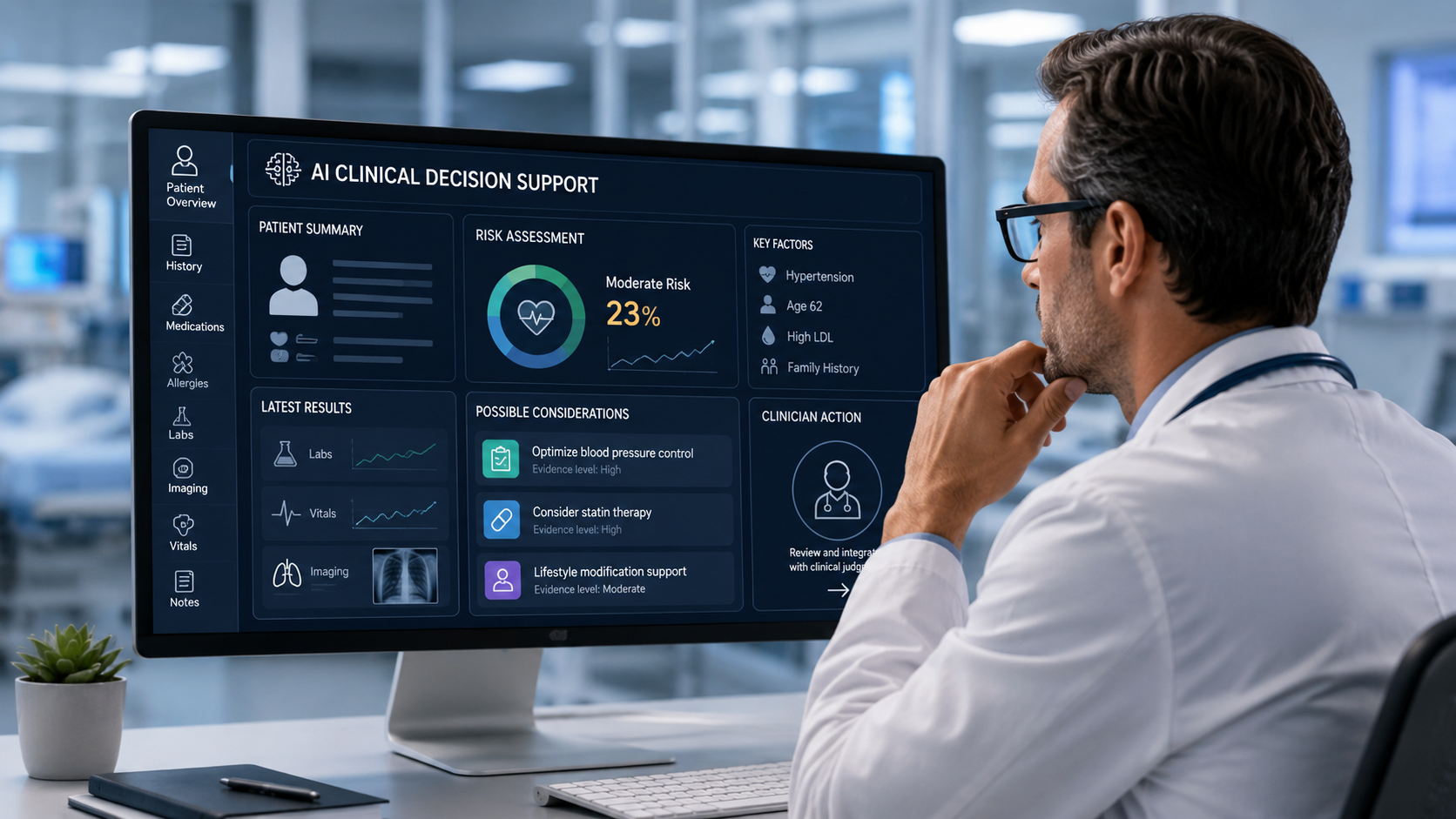
AI Clinical Decision Support: How It Works, Uses, Risks and FDA Regulation in 2026
AI clinical decision support can help clinicians interpret patient information, estimate risk, consider diagnoses and review treatment options. This guide explains how AI-powered C...

Digital Twins in Healthcare: How Virtual Patient Models Work, Uses, Benefits and Risks in 2026
Digital twins are patient-specific computational models that can be updated with real health data and used to simulate possible future outcomes. This guide explains how healthcare...
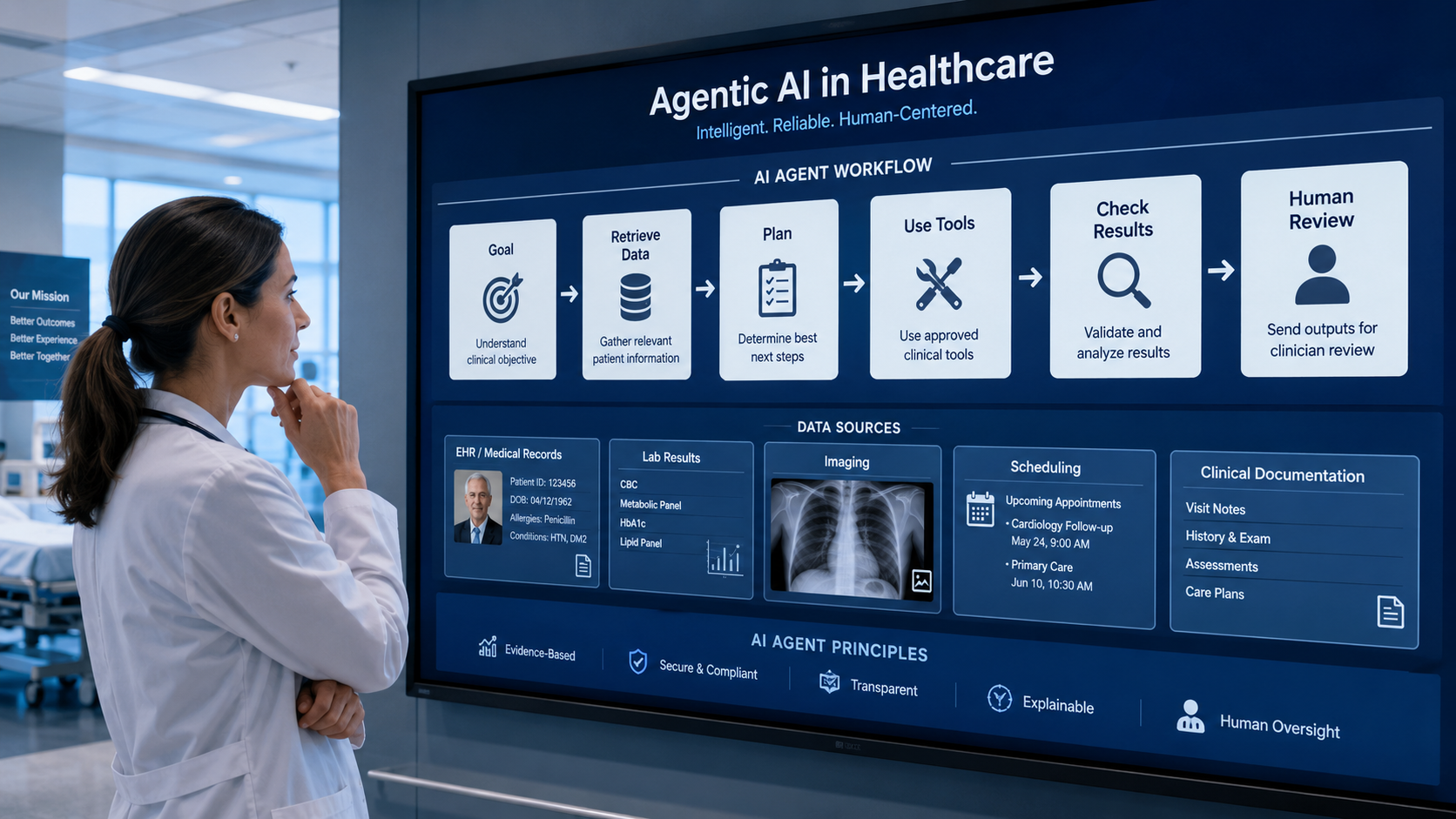
Agentic AI in Healthcare: How AI Agents Work, Uses, Risks and Regulation in 2026
Agentic AI can go beyond generating answers by planning steps, using tools and carrying out approved actions across healthcare workflows. This guide explains how healthcare AI agen...
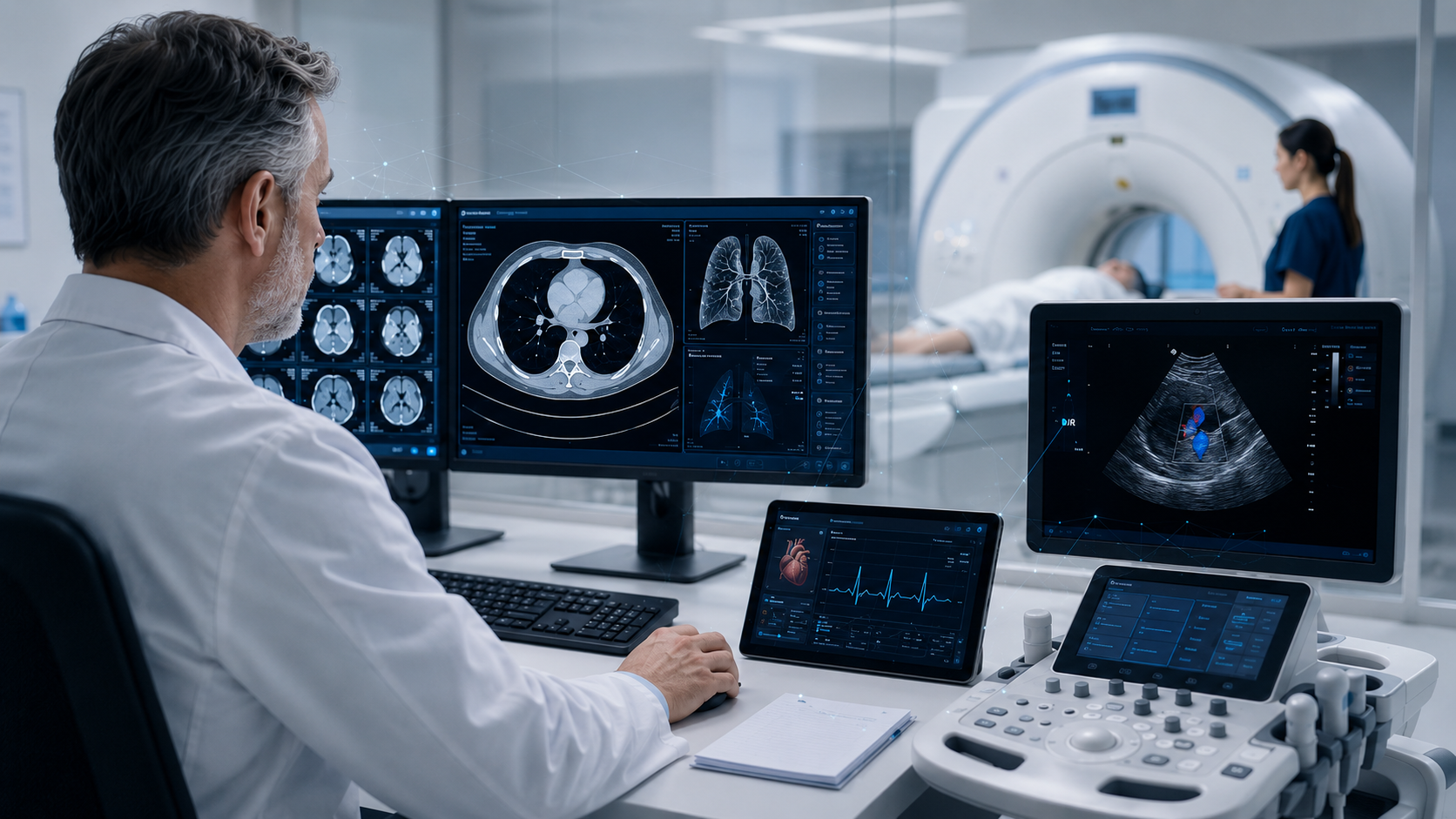
FDA AI-Enabled Medical Devices: 2026 List, Uses and Regulation
The FDA maintains a growing list of artificial intelligence-enabled medical devices authorized for marketing in the United States. This guide explains what the FDA list means, the...

Generative AI in Healthcare: Uses, Risks and Regulation in 2026
Generative AI is moving into clinical documentation, patient communication, medical research and decision-support workflows. This guide explains how it is being used in healthcare,...
Questions & Reader Feedback
Help improve this Atlas article
Ask a general question, comment on the article, suggest a correction, or propose a new topic. Nothing is published automatically. Every submission is reviewed by the Atlas editorial team first.
Was this article helpful?
0 helpful · 0 needs improvement