AI Clinical Decision Support: How It Works, Uses, Risks and FDA Regulation in 2026
AI clinical decision support can help clinicians interpret patient information, estimate risk, consider diagnoses and review treatment options. This guide explains how AI-powered CDS works, what 2026 clinical studies show, its benefits and risks, and how FDA regulation distinguishes certain non-device decision support from regulated medical-device software.
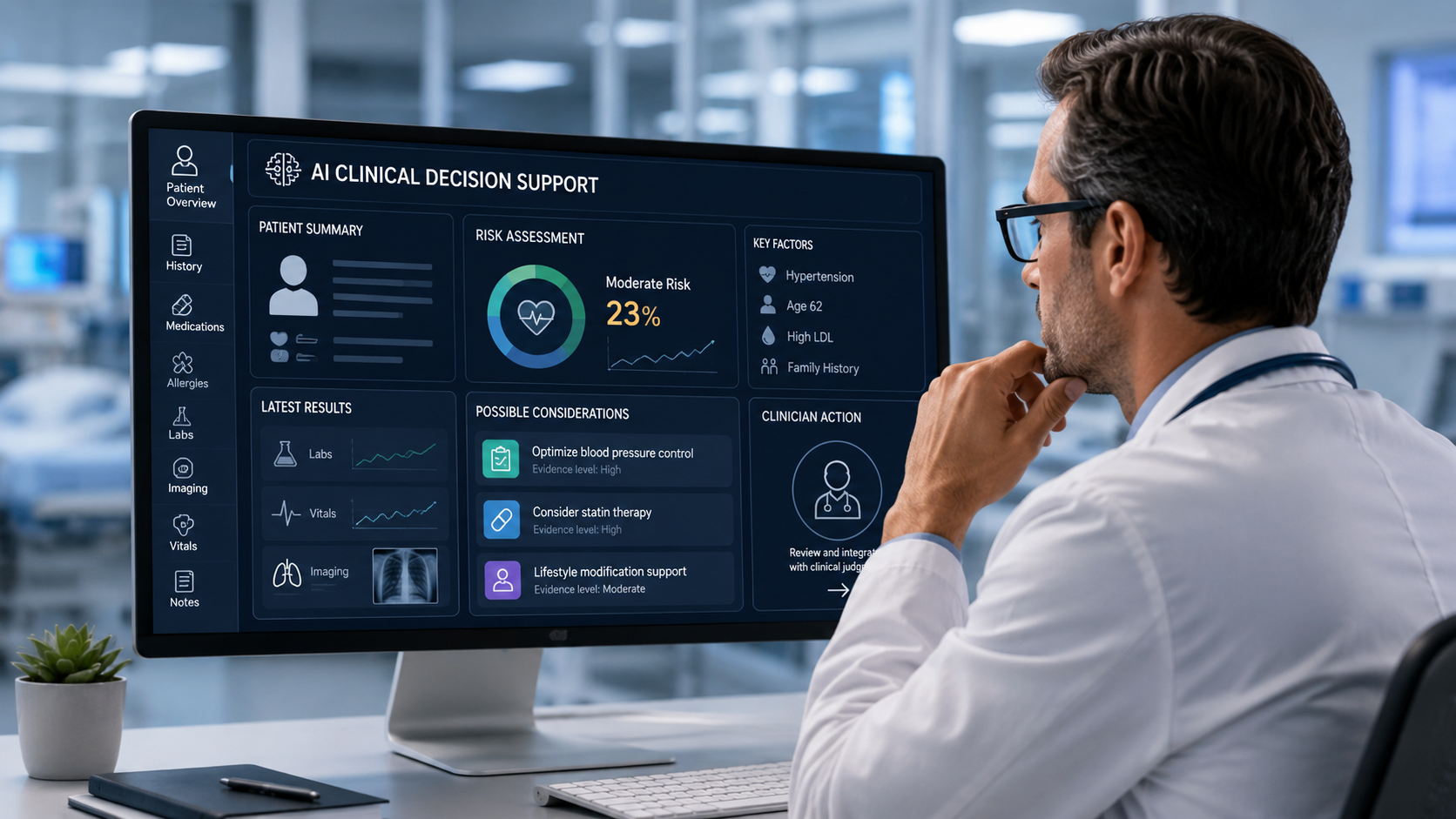
Clinical decision support is one of the oldest ideas in digital healthcare, but artificial intelligence is changing what these systems can do. Traditional clinical decision support might warn about a drug interaction or remind a clinician that a screening test is due. Newer AI-enabled systems can combine larger amounts of patient information, estimate risk, suggest possible diagnoses, summarize evidence or generate treatment options for professional review.
That wider capability can be useful, but it also makes the safety question more important. A recommendation can be technically impressive and still be clinically unhelpful if the system uses incomplete data, performs poorly in the local population, hides uncertainty or interrupts the workflow at the wrong moment.
In 2026, clinical decision support is receiving renewed attention for another reason: large language models and multimodal AI are moving into real clinical environments. A pragmatic randomized trial in Kenyan primary care tested an LLM-enabled decision-support system in 9,691 patients. A prospective emergency-department study published in August 2026 evaluated an LLM-based CDS system across 1,138 patients. These studies are important because they move beyond benchmark accuracy and examine what happens when clinicians actually use AI during care.
Regulation is also clearer than it was a few years ago. The U.S. Food and Drug Administration issued final Clinical Decision Support Software guidance in January 2026, explaining when certain CDS functions may be excluded from the medical-device definition and when software remains subject to FDA device policies.
This guide explains what AI clinical decision support is, how it differs from traditional CDS, where it is being used, what the latest evidence shows, how the FDA approaches these systems and why human judgment, workflow design and real-world monitoring matter as AI becomes more influential in clinical decisions.
AI clinical decision support in 2026: at a glance
Question | Current answer |
|---|---|
What is clinical decision support? | Software or digital functionality that provides patient-specific or evidence-based information to help healthcare professionals make decisions. |
What does AI add? | AI can identify complex patterns, generate predictions, combine multiple data types and increasingly produce natural-language recommendations or summaries. |
Where is it used? | Diagnosis support, risk prediction, medication safety, deterioration alerts, treatment planning, imaging, oncology, cardiology, emergency medicine and primary care. |
Does AI CDS improve outcomes? | Sometimes it improves process measures or clinician preparation, but patient-outcome benefits are inconsistent and often less certain than technical accuracy. |
What is a major 2026 evidence gap? | Many systems are still evaluated retrospectively or with technical metrics rather than prospectively inside real clinical workflows. |
What did the FDA clarify in 2026? | The FDA issued final Clinical Decision Support Software guidance clarifying the criteria for certain non-device CDS functions and regulated device software. |
Can AI replace clinical judgment? | No. Current evidence supports supervised decision support rather than replacing accountable professional judgment. |
What is clinical decision support?
Clinical decision support, or CDS, is a broad term for digital tools that help clinicians make decisions using medical knowledge, patient information or both.
Examples include drug-interaction warnings, allergy alerts, preventive-care reminders, evidence-based order sets, clinical calculators, risk scores, diagnostic suggestions, guideline-based treatment options, patient-specific summaries and alerts about possible deterioration.
Clinical decision support is not new. What is changing is the amount and type of information the software can process and the complexity of the recommendations it can produce.
What is AI clinical decision support?
AI clinical decision support uses machine learning, deep learning, natural language processing, generative AI or related methods to help produce information that can influence a healthcare decision.
Instead of relying only on manually written rules, an AI system may learn patterns from large datasets or generate an output from several forms of clinical information.
For example, AI could estimate the risk that a hospitalized patient will deteriorate, identify patterns associated with a diagnosis, rank possible differential diagnoses, predict treatment response, summarize relevant history, retrieve evidence related to a clinical question or suggest management options for clinician review.
The term should still be used carefully. An AI model can be part of a clinical decision-support system without being responsible for the final decision.
Traditional CDS vs AI-powered CDS
Feature | Traditional CDS | AI-powered CDS |
|---|---|---|
Main logic | Often based on predefined rules, thresholds or guidelines | May learn patterns from data or generate outputs from complex models |
Typical example | Drug-allergy alert | Prediction of patient-specific deterioration risk |
Inputs | Usually structured and predefined | May combine structured data, text, images, signals or other modalities |
Output | Alert, reminder, recommendation or rule-based suggestion | Prediction, ranking, generated recommendation, summary or multimodal interpretation |
Transparency | Often relatively easy to trace back to a rule | Can be harder to interpret, especially with complex neural networks or LLMs |
Update pattern | Rule or guideline updates | May require retraining, recalibration, version control and drift monitoring |
Traditional CDS remains useful. If a clinical problem can be handled safely with a simple rule, adding a complex AI model may increase cost and uncertainty without improving the decision.
How does AI clinical decision support work?
Patient information enters the system. This may include symptoms, laboratory results, medications, vital signs, imaging, clinical notes or other relevant data.
The CDS system processes the information. A rules engine, predictive model, large language model or combination of methods is applied.
An output is generated. This could be an alert, probability, ranked list, evidence summary or recommended option.
The clinician interprets the output. The recommendation is considered alongside the patient's history, examination, preferences and other evidence.
A clinical decision is made. The professional decides whether to accept, modify or reject the recommendation.
Performance should be monitored. Healthcare organizations need to track errors, overrides, drift and unexpected consequences after deployment.
The system is useful only if each stage works. Correct mathematics cannot rescue incorrect input data, and a good prediction can still fail if it is presented at the wrong moment in the workflow.
Where is AI clinical decision support being used?
Diagnostic support
AI can help identify patterns associated with possible diagnoses and may rank conditions that deserve consideration. A diagnostic suggestion is not equivalent to a diagnosis; the clinician still needs to determine whether the suggested condition fits the patient.
Risk prediction
Predictive models can estimate the probability of events such as deterioration, readmission, sepsis, complications or treatment failure. Risk estimates can help prioritize attention, but they can also create false reassurance or unnecessary escalation if calibration is poor.
Treatment planning
AI may compare patient characteristics with guidelines, prior outcomes or learned patterns to suggest treatment options. The safety requirement becomes greater as the output moves from general information toward a patient-specific treatment recommendation.
Medication safety
Decision-support systems have long been used for medication alerts. AI may make those alerts more patient-specific by considering laboratory values, kidney function, concurrent drugs and other context. The challenge is avoiding alert fatigue.
Deterioration and early-warning systems
Hospital AI systems may continuously analyze vital signs, laboratory trends and other information to identify patients at higher risk of clinical deterioration. A prediction is only useful if the healthcare team can act on it in time and if false alerts do not overwhelm the workflow.
Emergency medicine
Emergency departments are a demanding environment for AI because decisions are time-sensitive, patient information is incomplete and workload changes rapidly.
An August 2026 prospective Nature Medicine study evaluated an LLM-based CDS system called SHAKED across 1,138 emergency-department patients. Expert review rated 99 of 100 sampled outputs as clinically appropriate and no adverse events were detected. However, use of the system fell from 68% to 30% over the study period, and emergency-department length of stay was unchanged at 4.9 hours in both groups.
The study's most important lesson may therefore be about implementation rather than model accuracy: a system can produce appropriate outputs and still struggle if clinicians do not find it easy or worthwhile to use during busy shifts.
Primary care
A 2026 pragmatic cluster-randomized trial across 16 primary-care facilities in Kenya tested an LLM-enabled CDS system in 9,691 patients managed by 103 clinical officers.
Treatment failure within 14 days occurred in 2.2% of patients in the intervention group and 2.0% in the control group. The difference was not statistically significant. No serious adverse event was judged related to the intervention.
This is an important counterweight to claims that adding generative AI automatically improves care. The system was safe in the trial, but the primary patient outcome did not improve significantly.
Intensive care
ICUs generate large amounts of continuously changing data and involve high-stakes decisions. A 2026 systematic review of randomized trials of AI and computerized decision support in adult intensive care found that clinical impact remains uncertain because relatively few systems have been evaluated in randomized real-world studies.
Cardiology
AI decision support can combine ECG signals, imaging, laboratory results and clinical history to help assess cardiovascular risk or support treatment decisions.
Oncology
Oncology CDS may help organize molecular results, treatment guidelines, imaging findings and patient characteristics. The potential value is high because cancer treatment increasingly involves complex combinations of tumor biology, staging, prior therapies and patient-specific factors.
Radiology
Imaging AI can act as decision support when it detects findings, prioritizes studies or provides measurements that influence interpretation. For a detailed discussion, see AI in Medical Imaging: Uses, Benefits, Risks and FDA Oversight in 2026.
What does the latest evidence show?
The strongest 2026 evidence does not support a simple conclusion that AI decision support either “works” or “does not work.”
A March 2026 systematic review and meta-analysis of predictive AI-CDSS included 50 studies across 17 medical specialties. The pooled area under the receiver-operating-characteristic curve was 0.652, with specificity of 0.819 and accuracy of 0.765. Performance varied substantially between studies.
Only 24% of the studies involved prospective deployment, while 64% reported technical metrics without clinical workflow data.
That is a crucial distinction. A model may discriminate between high- and low-risk patients in a retrospective dataset without showing that it improves decisions when clinicians actually use it.
Evidence question | What 2026 studies suggest |
|---|---|
Can AI produce clinically useful predictions? | Yes, in many defined tasks, but performance is heterogeneous across specialties and populations. |
Does prospective deployment always improve care? | No. Real-world trials have shown mixed effects on patient outcomes and workflow. |
Can LLM-based CDS be safe? | Early studies show that safe supervised use is possible, but harmful recommendations can still occur. |
Is clinician adoption automatic? | No. Workflow burden, trust and timing can strongly affect whether clinicians continue using a system. |
Are fairness and subgroup performance well studied? | Not consistently. A 2026 systematic review found fairness was rarely evaluated in multimodal CDS research. |
Can an AI CDS be accurate but still fail clinically?
Yes. A system can achieve strong statistical performance and still fail because clinicians do not trust it, the recommendation arrives too late, the alert interrupts workflow, the patient population differs from the development dataset, the output does not explain enough for professional review, the healthcare team cannot act on the recommendation or the system increases cognitive workload.
The August 2026 emergency-department study is a useful example. The sampled outputs were judged highly appropriate, but clinician adoption declined substantially during busy shifts.
Clinical usefulness therefore depends on the human-AI system, not only the algorithm.
Does AI clinical decision support improve patient outcomes?
Sometimes, but evidence is inconsistent.
Clinical decision support can improve intermediate outcomes such as guideline adherence, clinician preparedness, medication safety, prioritization or documentation quality. But a better process measure does not automatically translate into fewer complications, lower mortality or better long-term health.
The 2026 Kenyan randomized trial illustrates this difference clearly. The LLM-based CDS system was used at scale and did not show a significant safety signal, but it also did not significantly reduce the trial's primary treatment-failure outcome.
For Biomed Atlas, this distinction is important: technical performance, workflow improvement and patient benefit are three separate levels of evidence.
What are the main risks?
False positives and false negatives
A system may identify a risk or diagnosis that is not actually present, or fail to identify a patient who genuinely needs attention. Both types of error can affect testing, treatment and clinician workload.
Hallucinations
Generative CDS systems can produce unsupported or fabricated statements.
A 2026 retrospective evaluation of an LLM-based CDS system across 16 primary-care clinics in Kenya found hallucinations in 3.4% of reviewed encounters. Most involved misexpanded acronyms or drug names. The same study identified actively harmful model recommendations in 7.8% of encounters, although the system also mitigated risks in some cases.
This illustrates why generative AI should not be judged only by how often its language appears fluent or guideline-aligned.
Automation bias
Clinicians may accept an automated recommendation too readily because it appears objective or data-driven. Human oversight is useful only when professionals have the information, time and authority to disagree with the software.
Alert fatigue
Too many warnings can reduce attention to the warnings that matter. The safest CDS is not necessarily the one that produces the most alerts.
Bias and unequal performance
AI models can perform differently across age groups, sexes, ethnic groups, disease prevalence or healthcare settings. A July 2026 systematic review of fairness in multimodal clinical decision-support systems found that fairness was rarely evaluated.
Poor calibration and model drift
A model can rank patients correctly while assigning unreliable probabilities, and performance can change as clinical practice, patient populations, coding patterns, equipment or data systems evolve.
Missing context
Important information may exist outside the structured data supplied to the model. Social circumstances, patient preferences, examination findings and subtle changes in presentation may not be represented adequately.
What is multimodal clinical decision support?
Multimodal CDS combines more than one type of information, such as clinical notes, laboratory results, medical images, ECG or physiological signals, medication history, genomic information and wearable-device data.
This may help an AI system approximate the broader context clinicians use in real decisions. But multimodal systems are harder to validate. Each data source can introduce bias, missing information or technical failure, and the combined system may perform differently when one modality is absent.
What is generative AI clinical decision support?
Generative AI changes the user experience of CDS. Instead of displaying only an alert or number, a large language model can summarize history, generate a differential diagnosis, retrieve and synthesize evidence, explain why a treatment option may be considered or draft a management plan for clinician review.
This can make complex information easier to use, but generated explanations also create new risks. A coherent rationale can make an incorrect recommendation appear more trustworthy.
See Generative AI in Healthcare: Uses, Risks and Regulation in 2026.
What is agentic clinical decision support?
Agentic AI goes one step further by allowing a system to work through several tasks toward a goal. An agent might retrieve prior records, consult approved guidelines, calculate a risk score, compare treatment options and prepare a recommendation.
If the system is permitted to initiate actions, the risk changes again. A wrong recommendation can become a chain of wrong actions.
For that reason, agentic CDS needs tightly controlled permissions, audit trails, escalation rules and human approval for consequential steps.
See Agentic AI in Healthcare: How AI Agents Work, Uses, Risks and Regulation in 2026.
What should “human in the loop” mean in CDS?
Human review should not be a ceremonial final click.
A meaningful human-in-the-loop design should make it possible for the clinician to understand what the system is recommending, see the patient information that contributed to it, understand important limitations and uncertainty, compare the output with other evidence, override the recommendation and document disagreement when necessary.
The amount of review required should depend on the consequence of an error. A reminder about preventive screening does not require the same controls as a treatment recommendation for a critically ill patient.
What happens when AI and the clinician disagree?
Disagreement should not automatically be treated as evidence that either the clinician or AI is wrong.
It should trigger a closer look at the input data, intended use, patient's current condition, evidence behind the recommendation and whether the case falls outside the population in which the system was validated.
Healthcare organizations should be able to learn from recurring disagreements rather than simply recording that an alert was overridden.
Why explainability matters
A clinician does not necessarily need to inspect every mathematical operation inside a model. But they do need enough information to decide whether the output is credible for the patient in front of them.
Useful transparency can include the intended use, required inputs, validation population, known limitations, performance measures, important patient-specific factors contributing to the recommendation and information about uncertainty.
A complicated explanation is not automatically a useful explanation. The information should help the intended user make a better decision.
FDA clinical decision support guidance in 2026
In January 2026, the FDA issued final guidance on Clinical Decision Support Software.
The guidance explains how the FDA interprets the criteria in section 520(o)(1)(E) of the Federal Food, Drug, and Cosmetic Act for certain software functions that can be excluded from the definition of a medical device.
It also makes clear that many software functions described as “decision support” still meet the definition of a device and remain subject to FDA medical-device policies.
When can CDS be considered non-device software under the FDA framework?
Under the FDA's interpretation, a CDS software function needs to satisfy all relevant statutory criteria to qualify for the non-device CDS exclusion.
In simplified terms, the framework asks whether the software:
avoids acquiring, processing or analyzing a medical image or certain signals or patterns from signal-acquisition systems;
works with medical information normally communicated between healthcare professionals;
provides recommendations or options to a healthcare professional rather than a specific diagnostic or treatment directive;
and enables the healthcare professional to independently review the basis for the recommendation so that they do not rely primarily on the software.
These points should not be treated as a substitute for the full FDA guidance or regulatory advice for a particular product.
What types of CDS may still be regulated as medical devices?
FDA guidance indicates that software may remain within device oversight when, for example, it analyzes a medical image or certain physiological signals, provides a specific preventive, diagnostic or treatment output, provides a patient-specific risk score for a disease or condition, supports time-critical decision-making or does not allow the healthcare professional to independently review the basis for the recommendation.
The key distinction is not whether the product uses AI. It is what the software is intended to do.
Why independent review matters
The FDA's 2026 guidance gives particular importance to whether a healthcare professional can independently review the basis for a recommendation.
FDA recommends information such as the intended purpose and patient population, required patient inputs and data-quality requirements, a plain-language description of the underlying logic or methods, the data used to develop the system, clinical validation results and relevant patient-specific knowns and unknowns.
This regulatory concept also makes clinical sense: professional review is meaningful only when the clinician can understand enough of the basis for the recommendation to question it.
Patient-facing decision support and FDA oversight
Patient-facing software raises additional regulatory considerations.
The FDA's non-device CDS criteria are specifically framed around recommendations provided to healthcare professionals. Software intended for patients or caregivers does not satisfy that particular criterion simply because it is described as decision support.
This does not mean every patient-facing health app is an FDA-regulated medical device. Other digital-health policies and the product's intended use still need to be considered.
What is happening with non-device software in 2026?
The regulatory discussion is still evolving.
In July 2026, the FDA requested public input on the safety impact of certain non-device software functions, including limited clinical decision support. The agency publishes periodic reports examining the benefits, risks and patient-safety implications of software excluded from the device definition.
This is important because “not a medical device” does not mean “no safety risk.”
How is AI clinical decision support regulated in Canada?
In Canada, an AI decision-support product may fall under medical-device regulation when machine learning is used to achieve an intended medical purpose.
Health Canada's April 2026 pre-market guidance for machine-learning-enabled medical devices addresses good machine-learning practice, risk management, data selection, validation, transparency and post-market monitoring. It also asks manufacturers to describe how the software output fits into the healthcare workflow and the degree of clinical autonomy.
What about the United Kingdom?
In the UK, whether AI decision-support software is a medical device depends on its intended purpose and function under the applicable medical-device framework.
Healthcare organizations also need to consider clinical safety, data protection, procurement, cybersecurity and local governance rather than viewing regulatory classification as the only safety question.
The broader direction in the UK, US and Canada is similar: higher clinical influence requires stronger evidence, transparency and lifecycle oversight.
How should hospitals validate AI clinical decision support?
Define the intended use. What decision is the software supposed to support?
Validate the population. Does evidence cover the patients who will actually use the service?
Assess local performance. Does the model behave similarly in the local hospital or clinic?
Measure calibration. Are predicted risks numerically reliable?
Check subgroup performance. Are there meaningful differences across demographic or clinical groups?
Evaluate workflow. Does the system save time or create additional burden?
Test human factors. Can clinicians understand and appropriately respond to the output?
Monitor overrides. Why do clinicians accept or reject recommendations?
Track safety events. Are errors, near misses or unintended consequences occurring?
Monitor drift. Does performance change after updates or as patient populations change?
Define accountability. Who remains responsible for the final decision?
The FDA's updated August 2026 human-factors guidance is also relevant to medical-device CDS because safe technology depends on the interaction between the system and the intended user, not only on algorithm performance.
Can healthcare organizations trust vendor claims about AI CDS?
Not without independent review.
Commercial AI decision-support products can differ substantially in how clearly they describe their evidence, training data, clinical knowledge sources and privacy practices.
A 2026 environmental scan of commercially available AI clinical decision-support systems found that many vendors provided only partial information about their knowledge base, AI methodology or privacy approach. Few clearly demonstrated rigorous evidence appraisal or alignment with established quality standards.
This does not mean commercial AI CDS products are unreliable. It means healthcare organizations should not treat a polished demonstration, accuracy claim or vendor presentation as a substitute for independent evaluation.
Before procurement, organizations should ask:
What clinical evidence supports the product?
Which guidelines or knowledge sources are used?
How frequently are those sources updated?
Was the system tested independently?
Was it validated in a population similar to the intended users?
What data are sent outside the healthcare organization?
How are model updates communicated and evaluated?
Can the organization monitor performance after deployment?
For high-stakes clinical use, procurement should therefore involve clinical, technical, privacy, cybersecurity and governance review rather than relying on product claims alone.
What should clinicians ask before relying on AI CDS?
What exact decision is this tool intended to support?
What patient information does it use?
Was it validated in a population similar to mine?
What happens when data are missing?
How well calibrated is the risk estimate?
Can I see the basis for the recommendation?
How does the system communicate uncertainty?
What are the most important false-positive and false-negative consequences?
Has it been evaluated prospectively in a real workflow?
How is performance monitored after deployment?
What should patients know?
Patients may encounter AI clinical decision support without seeing a separate “AI system.” It may operate inside the electronic health record, imaging software, monitoring platform or another clinical tool.
Useful questions include whether AI was used to support the recommendation, what it contributed, whether a healthcare professional reviewed the result, what happens if the clinician disagrees with the software, whether the system has been evaluated for similar patients, whether it makes a recommendation or an automated decision and how patient information is protected.
Can AI diagnose patients independently?
Some AI-enabled products perform defined diagnostic functions, but that is different from saying that general AI clinical decision support should independently diagnose patients.
The degree of autonomy depends on intended use, evidence, regulatory status and clinical setting.
A general-purpose chatbot generating a list of possible diagnoses should not be treated as equivalent to a validated medical device authorized for a specific diagnostic task.
Will AI replace clinical judgment?
Current evidence does not support that conclusion.
Clinical judgment involves more than pattern recognition. It includes examination, uncertainty, patient preferences, communication, ethics and responsibility for the consequences of the decision.
AI can help clinicians organize evidence and identify patterns that might otherwise be missed. The more credible near-term model is therefore AI-assisted clinical decision-making, not autonomous replacement of clinicians.
What is the future of clinical decision support?
Clinical decision support is likely to become more conversational, multimodal and integrated into workflow.
Instead of a pop-up alert, future systems may summarize relevant history, identify missing information, compare several management options, retrieve supporting evidence, estimate risk, explain uncertainty and prepare the next step for human approval.
The most important question will not be whether a system can generate a recommendation. It will be whether the recommendation improves decisions without creating new risks, hidden bias or unmanageable workflow burden.
The bottom line
AI is making clinical decision support more capable, but more capability does not automatically mean better care.
The strongest 2026 evidence shows both promise and restraint. AI can produce useful predictions, help clinicians prepare for consultations and operate safely in supervised settings. At the same time, randomized and prospective studies show that better AI output does not necessarily improve patient outcomes or reduce workload.
The FDA's 2026 guidance reinforces an equally important principle: software that supports professional judgment is different from software that directs a diagnosis or treatment decision.
The future of AI clinical decision support will therefore depend on more than accuracy. It will depend on evidence, usability, transparency, local validation, fairness, monitoring and whether clinicians remain able to understand and challenge the system when the patient's reality does not match the model.
Key takeaways
Clinical decision support includes alerts, reminders, risk scores, evidence summaries and other tools designed to help healthcare decisions.
AI-powered CDS can process more complex data and generate predictions or recommendations that traditional rule-based systems cannot easily produce.
A 2026 meta-analysis found substantial variation in predictive AI-CDSS performance and showed that prospective clinical deployment remains much less common than retrospective technical evaluation.
A large 2026 primary-care randomized trial found that LLM assistance was safe but did not significantly reduce treatment failure.
An August 2026 emergency-department study found highly appropriate sampled outputs but declining clinician adoption during busy shifts.
Generative AI can hallucinate, and harmful recommendations have been observed in real clinical evaluations.
Fairness and subgroup performance remain insufficiently evaluated in many multimodal CDS studies.
Human oversight must allow clinicians to independently assess and challenge recommendations.
The FDA issued final Clinical Decision Support Software guidance in January 2026 clarifying the distinction between certain non-device CDS functions and regulated device software.
Commercial AI CDS claims should be independently reviewed; vendor transparency about evidence, knowledge sources, privacy and model updates is inconsistent.
Patient benefit, workflow effectiveness and technical accuracy should be evaluated separately.
Frequently asked questions
What is AI clinical decision support?
AI clinical decision support uses artificial intelligence to analyze patient information or medical knowledge and provide predictions, recommendations, summaries or other information that can help a healthcare professional make a decision.
What is the difference between CDS and AI CDS?
Traditional CDS often uses predefined rules or guidelines. AI CDS can learn patterns from data or use generative models to produce more complex predictions and recommendations.
What are examples of clinical decision support systems?
Examples include drug-interaction alerts, allergy warnings, risk calculators, deterioration alerts, diagnostic-support tools, guideline-based treatment recommendations and AI-generated evidence summaries.
Does AI clinical decision support improve outcomes?
It can improve some process and workflow measures, but evidence for better patient outcomes is mixed. Technical accuracy alone does not prove clinical benefit.
Can AI CDS make mistakes?
Yes. Errors can include false positives, false negatives, poor calibration, hallucinations, biased predictions and recommendations based on incomplete information.
What is automation bias?
Automation bias occurs when people place too much confidence in an automated recommendation and fail to question it even when other evidence suggests it may be wrong.
What is alert fatigue?
Alert fatigue occurs when clinicians receive so many low-value or repetitive warnings that they begin ignoring alerts, including potentially important ones.
Does the FDA regulate clinical decision support software?
Some CDS software functions can be excluded from the medical-device definition if they meet specific statutory criteria. Other CDS functions continue to meet the definition of a medical device and remain subject to FDA policies.
Is a risk score considered non-device CDS by the FDA?
Not automatically. FDA guidance indicates that software providing a patient-specific risk probability or risk score for a disease or condition may fail the criterion for non-device CDS and may fall within device oversight depending on the function.
Can ChatGPT be used as clinical decision support?
General-purpose chatbots can summarize or discuss medical information, but they should not be assumed to be validated clinical decision-support systems. Clinical use requires appropriate evidence, governance, privacy protections and defined professional oversight.
Can AI clinical decision support replace a doctor?
Current evidence supports using AI to assist defined clinical tasks rather than replace accountable professional judgment.
Should hospitals rely on vendor accuracy claims?
No. Accuracy claims should be checked against independent evidence, the intended patient population, the local clinical workflow and the consequences of errors. Healthcare organizations should also review how the vendor updates the model, handles patient data and documents known limitations.
What should hospitals monitor after deployment?
Hospitals should monitor model performance, calibration, subgroup differences, overrides, workflow impact, safety events, software changes, model drift and unexpected consequences.
Related Biomed Atlas guides
Artificial Intelligence in Healthcare: Uses, Benefits, Risks and Examples in 2026
Generative AI in Healthcare: Uses, Risks and Regulation in 2026
Agentic AI in Healthcare: How AI Agents Work, Uses, Risks and Regulation in 2026
AI in Medical Imaging: Uses, Benefits, Risks and FDA Oversight in 2026
FDA AI-Enabled Medical Devices: 2026 List, Uses and Regulation
Digital Twins in Healthcare: How Virtual Patient Models Work, Uses, Benefits and Risks in 2026
Sources and further reading
U.S. Food and Drug Administration. Clinical Decision Support Software: Guidance for Industry and FDA Staff. Final guidance, January 2026.
U.S. Food and Drug Administration. Clinical Decision Support Software Frequently Asked Questions. 2026.
U.S. Food and Drug Administration. Reports on Non-Device Software Functions. Updated July 2026.
Leibovitch L, et al. Prospective evaluation of a large language model clinical decision support system in the emergency department. Nature Medicine. 2026.
Agweyu A, et al. Generative AI-enabled clinical decision support system in primary care: a pragmatic, cluster-randomized trial. Nature Medicine. 2026.
Agweyu A, et al. Safety of a large language model-based clinical decision support system in African primary healthcare. Nature Health. 2026.
Waldock WJ, et al. Performance of predictive AI-based clinical decision support systems across clinical domains: a systematic review and meta-analysis. PLOS Digital Health. 2026.
Saha A, et al. Fairness in multimodal machine learning applications in clinical decision support: a systematic review. npj Digital Medicine. 2026.
Muñoz J, et al. Artificial intelligence and computerized decision support in adult intensive care: a systematic review of randomized controlled trials. Journal of Critical Care. 2026.
Pimenta A, et al. Appropriateness and utility of a clinical decision support system at the digital front door. npj Digital Medicine. 2026.
Health Canada. Pre-market guidance for machine learning-enabled medical devices. April 2026.
Mayo Clinic Surgery AI Lab. AI-based Clinical Decision Support Systems.
Evidence reviewed: August 21, 2026. Clinical decision-support technology, evidence and regulatory guidance are evolving quickly. Biomed Atlas provides general educational information and does not replace professional medical, legal or regulatory advice.
Medical information notice
Atlas content is intended for education and general information. Seek advice from a qualified healthcare professional for personal symptoms, treatment decisions, or urgent medical concerns.
How this article is maintained
Atlas uses editorial review, evidence checks, visible update dates and a public correction route. Educational content does not replace professional medical advice.
Continue reading
Continue your recent reading
Pick up another medical or biomedical article you opened earlier on this device.
Continue exploring
More medical and biomedical reading
Continue with editorially selected and category-matched articles designed to help readers explore the subject in greater depth.
AI in Drug Discovery: How Artificial Intelligence Is Changing Drug Development in 2026
Artificial intelligence is being used to identify drug targets, screen compounds, design new molecules, predict toxicity and support clinical development. This guide explains how A...
Digital Twins in Healthcare: How Virtual Patient Models Work, Uses, Benefits and Risks in 2026
Digital twins are patient-specific computational models that can be updated with real health data and used to simulate possible future outcomes. This guide explains how healthcare...
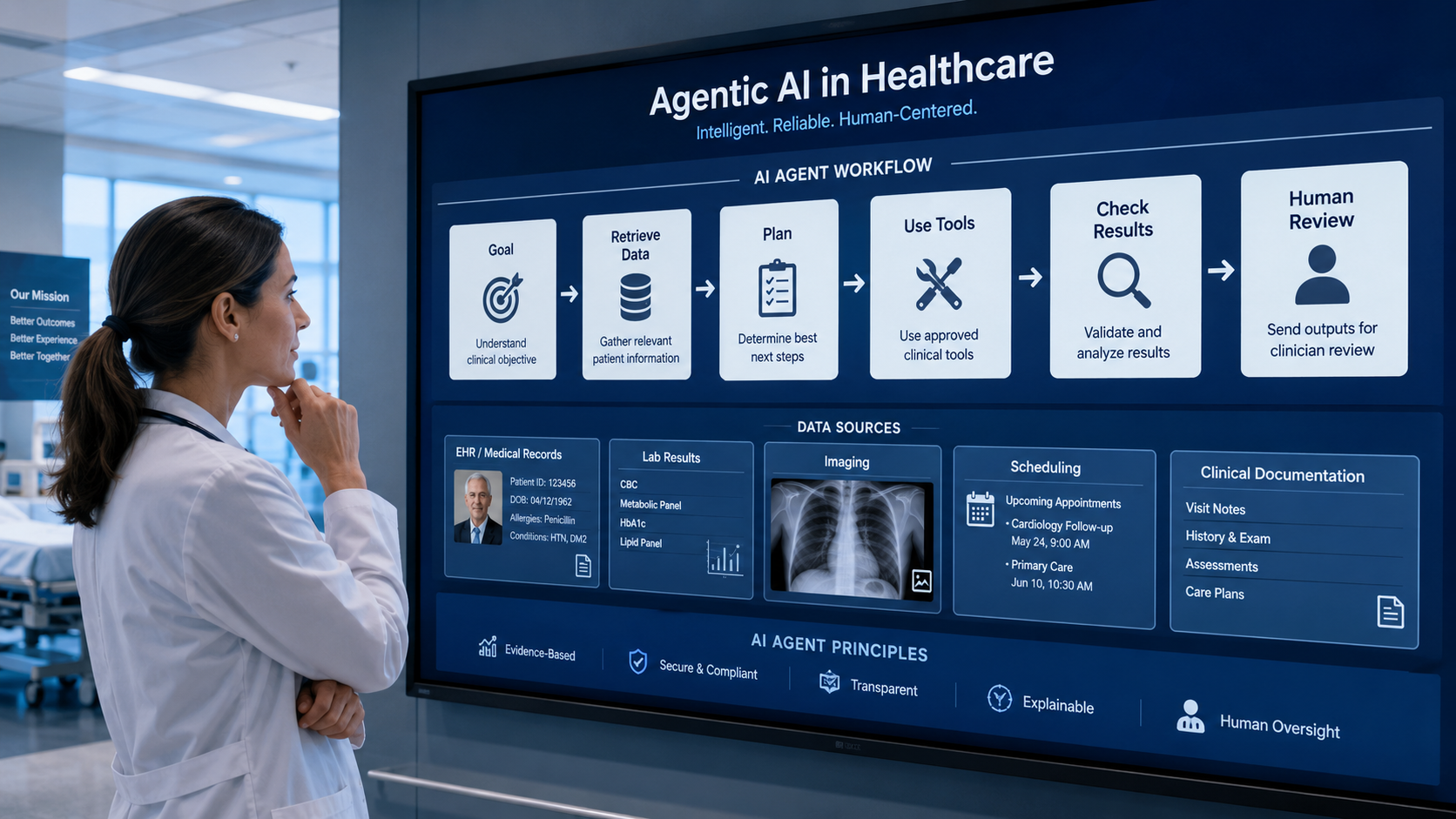
Agentic AI in Healthcare: How AI Agents Work, Uses, Risks and Regulation in 2026
Agentic AI can go beyond generating answers by planning steps, using tools and carrying out approved actions across healthcare workflows. This guide explains how healthcare AI agen...
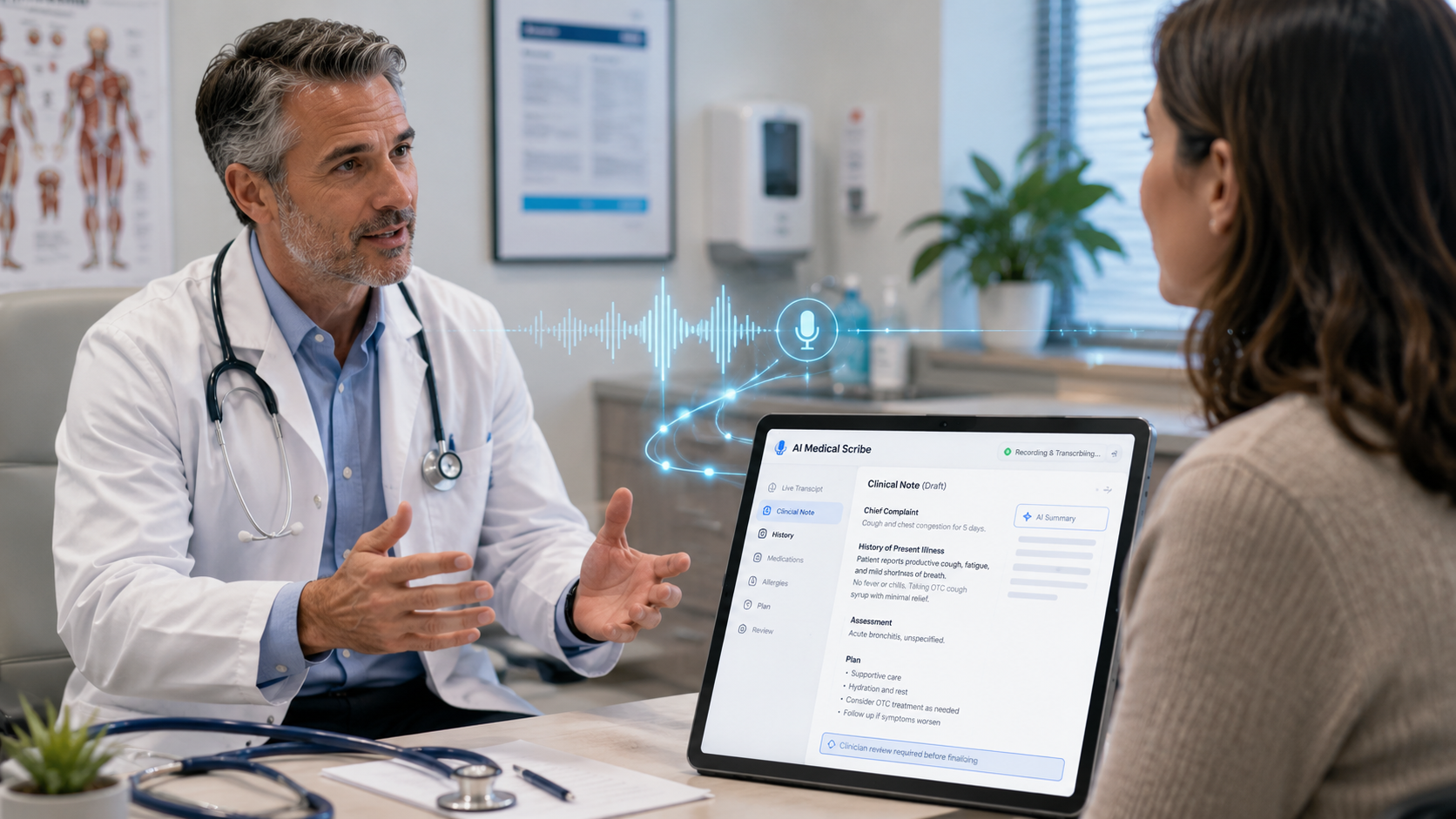
AI Medical Scribes: How Ambient AI Works, Benefits, Risks and Privacy in 2026
AI medical scribes can listen during clinical consultations and turn conversations into draft medical notes, letters and other documentation. This guide explains how ambient AI scr...
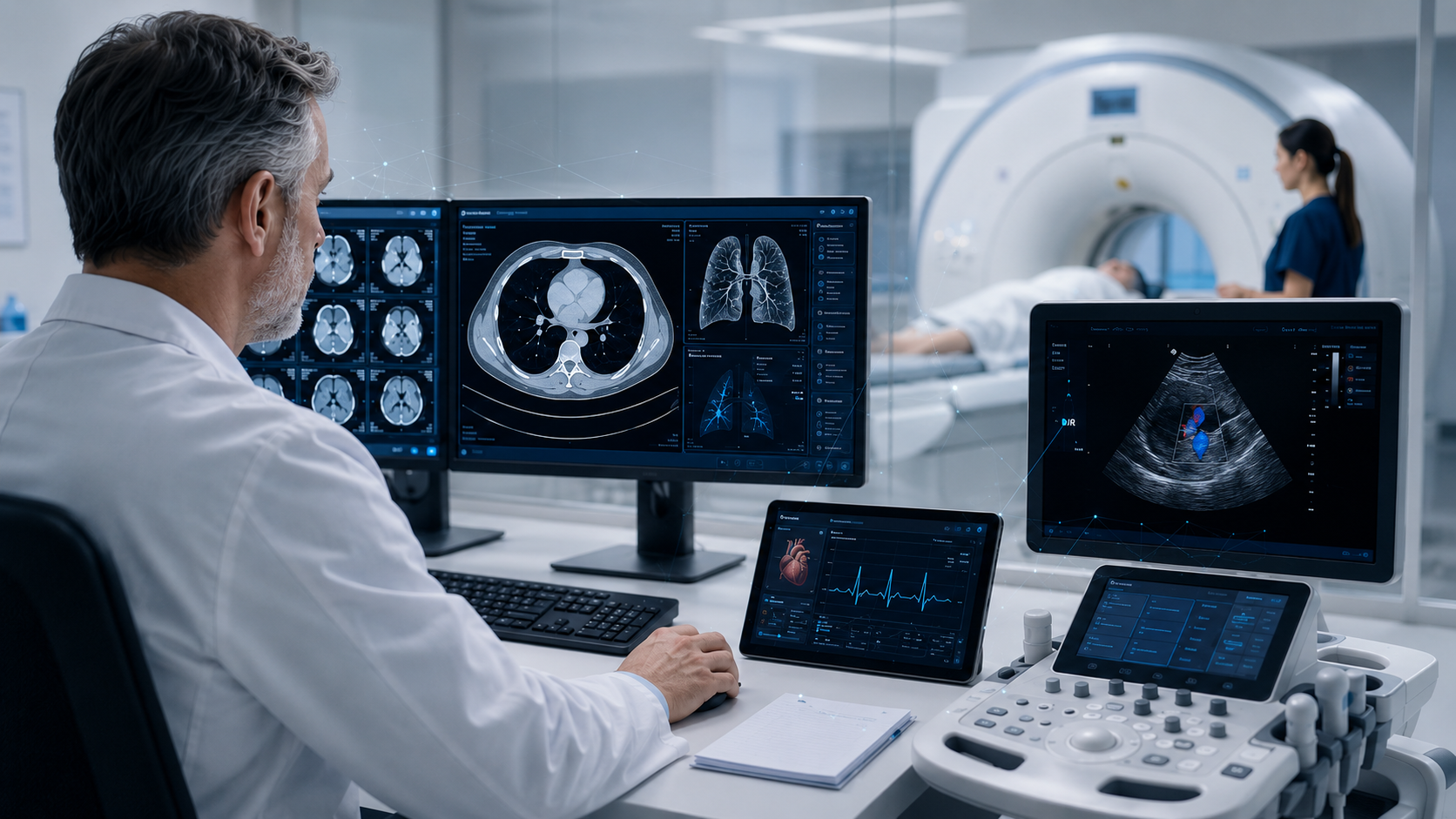
FDA AI-Enabled Medical Devices: 2026 List, Uses and Regulation
The FDA maintains a growing list of artificial intelligence-enabled medical devices authorized for marketing in the United States. This guide explains what the FDA list means, the...
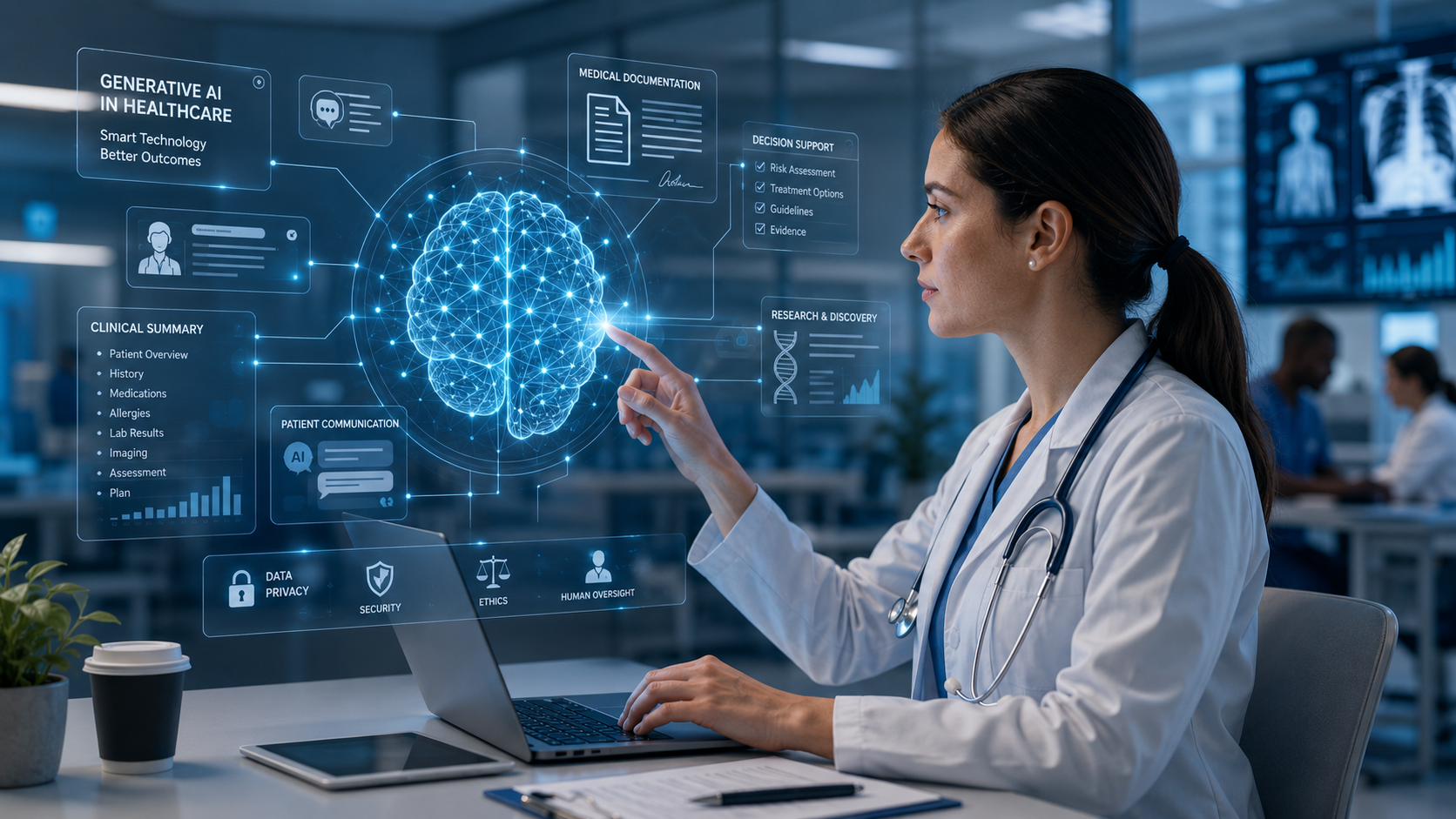
Generative AI in Healthcare: Uses, Risks and Regulation in 2026
Generative AI is moving into clinical documentation, patient communication, medical research and decision-support workflows. This guide explains how it is being used in healthcare,...
Questions & Reader Feedback
Help improve this Atlas article
Ask a general question, comment on the article, suggest a correction, or propose a new topic. Nothing is published automatically. Every submission is reviewed by the Atlas editorial team first.
Was this article helpful?
0 helpful · 0 needs improvement