AI in Drug Discovery: How Artificial Intelligence Is Changing Drug Development in 2026
Artificial intelligence is being used to identify drug targets, screen compounds, design new molecules, predict toxicity and support clinical development. This guide explains how AI drug discovery works, what generative AI can do, current clinical evidence, limitations and FDA and EMA guidance in 2026.
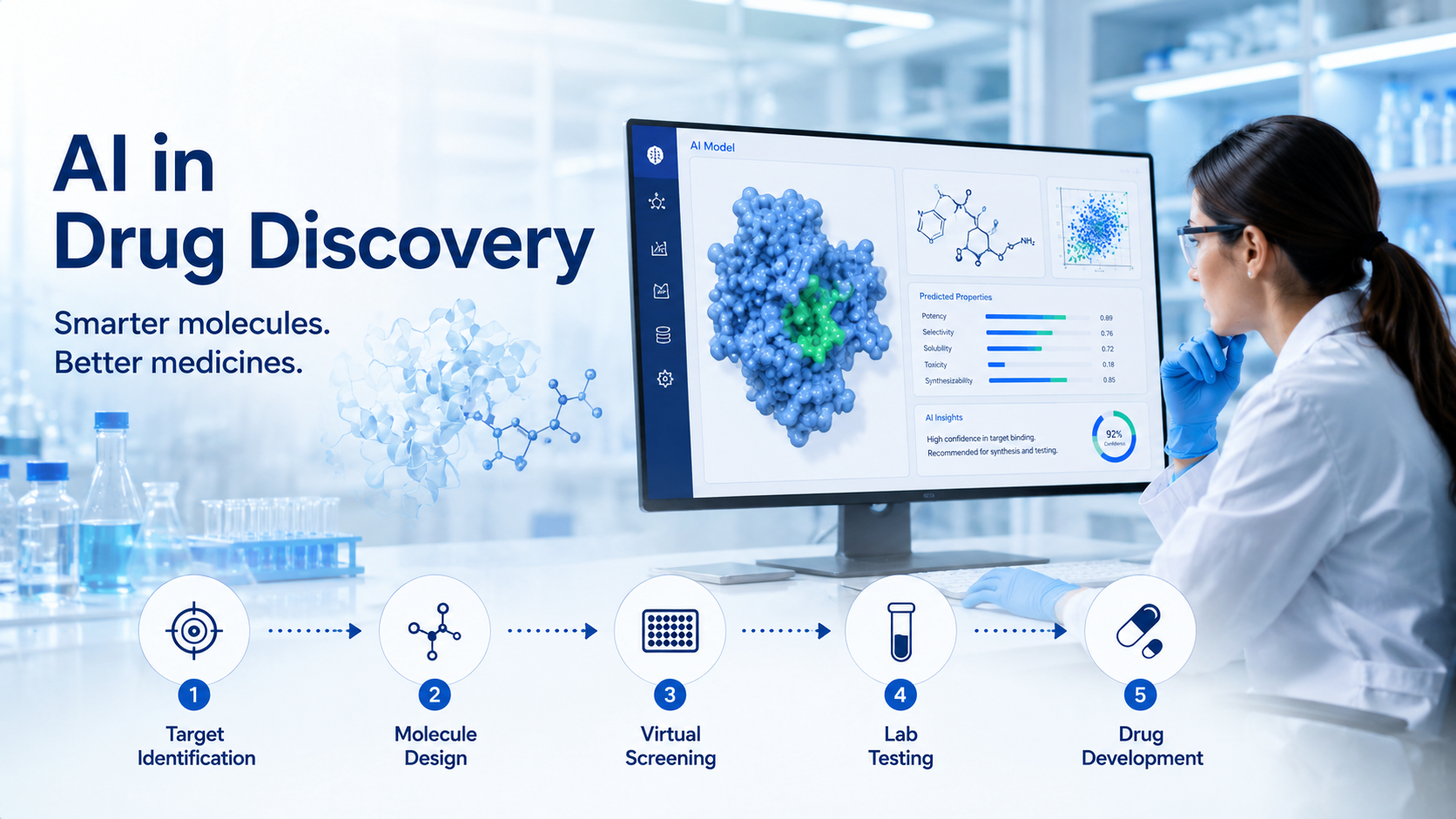
Artificial intelligence is now used across many parts of drug discovery, from identifying biological targets to designing molecules, predicting toxicity and supporting clinical development. The technology can search datasets and chemical spaces far beyond what a research team could examine manually, but that does not mean AI has solved the fundamental problem of drug development: proving that a new medicine is safe and effective in people.
This distinction is especially important in 2026. AI platforms can generate candidate molecules in days, predict protein structures, rank targets and help researchers decide which experiments to run next. Yet a major August 2026 perspective in Nature Reviews Drug Discovery concluded that evidence of clinically meaningful impact remains limited. The field has made impressive technical progress, but the ultimate test is not whether an algorithm performs well on a benchmark. It is whether AI helps deliver safer and more effective medicines to patients faster.
Regulators are also moving from broad discussion to practical expectations. In January 2026, the U.S. Food and Drug Administration and the European Medicines Agency published 10 joint principles for good AI practice across the medicines lifecycle. The principles emphasize human-centered design, a clear context of use, risk-based validation, data governance, lifecycle management and transparent communication.
This guide explains where AI fits into drug discovery and development, what generative AI can and cannot do, which parts of the pipeline have the strongest evidence, how current AI-originated drug candidates should be interpreted, and what FDA and EMA guidance means for companies using AI in regulated development.
AI in drug discovery: 2026 at a glance
Question | Current answer |
|---|---|
What does AI do in drug discovery? | It can help identify targets, predict structures and molecular properties, screen compounds, design molecules, repurpose drugs and support experiments. |
Is generative AI designing new drugs? | Yes. Generative models can propose new molecular structures or proteins with desired properties, but laboratory testing is still required. |
Has an AI-designed drug been FDA approved? | As of August 2026, peer-reviewed reviews report that no fully AI-discovered and AI-designed drug has received U.S. marketing approval. |
What is the clearest clinical milestone? | Rentosertib, an AI-discovered and AI-designed TNIK inhibitor, completed a randomized phase 2a trial in idiopathic pulmonary fibrosis. |
Does AI make the whole drug-development process faster? | It can accelerate individual discovery tasks, but evidence that it consistently shortens the full path to approved medicines remains limited. |
What changed in regulation in 2026? | FDA and EMA issued 10 joint principles for good AI practice across drug development and the wider medicines lifecycle. |
Can AI replace laboratory experiments? | No. Computational predictions need experimental confirmation, and clinical candidates still require nonclinical and human testing. |
What is AI drug discovery?
AI drug discovery is the use of machine learning, deep learning, generative models, natural-language processing and related computational methods to support the search for new medicines.
The term covers several different tasks. AI may help researchers:
identify a disease-relevant biological target;
predict the three-dimensional structure of a protein;
search large libraries of molecules;
predict how strongly a molecule may bind to a target;
generate new molecular structures;
optimize potency, selectivity or drug-like properties;
predict absorption, distribution, metabolism and excretion;
flag possible toxicity;
identify existing drugs that may work for another disease;
and support clinical-trial design or safety monitoring.
AI is therefore better understood as a collection of tools used at different points in the pipeline rather than one technology that “discovers a drug” by itself.
Drug discovery vs drug development
The phrases are often used interchangeably, but they describe different parts of the process.
Stage | Main goal | Examples of AI use |
|---|---|---|
Discovery | Find a promising biological target and candidate molecule | Target identification, virtual screening, molecule generation, lead optimization |
Preclinical development | Evaluate a candidate before human testing | Toxicity prediction, pharmacokinetic modeling, biomarker analysis, experimental prioritization |
Clinical development | Test safety and efficacy in people | Patient selection, trial design, site selection, endpoint analysis, safety surveillance |
Regulatory review | Demonstrate quality, safety and efficacy | AI-supported evidence generation, data analysis and modeling where appropriately validated |
Post-marketing | Monitor a medicine after approval | Signal detection, pharmacovigilance, real-world evidence analysis |
An AI tool may shorten one discovery step without reducing the time required for toxicology, manufacturing, clinical trials or regulatory review. This is why claims that AI “cuts drug development from ten years to one” should be treated cautiously unless the statement clearly refers to a specific stage.
Where does AI enter the drug-discovery pipeline?
AI can be used from the earliest biological hypothesis through post-market surveillance. The strongest current applications are usually those in which the model helps prioritize a manageable number of experiments rather than attempting to replace experiments entirely.
Target identification
A drug target is usually a protein, gene, pathway or other biological mechanism that researchers believe can be influenced to treat a disease.
AI can combine information from genomics, transcriptomics, proteomics, scientific literature, disease databases and biological networks to identify targets that may deserve experimental investigation.
A 2026 Nature Reviews Drug Discovery review emphasized that target selection is one of the most important decisions in drug development. AI can improve target identification and assessment, but a target is not truly validated simply because a model ranks it highly. Ultimately, the strongest validation comes when a drug acting on that target succeeds through clinical development and regulatory review.
Target validation
After a possible target is identified, researchers need to determine whether changing that target actually affects the disease in a useful way.
AI can help prioritize experiments, identify relevant biological pathways and integrate evidence from multiple sources. It cannot establish causality on its own.
A correlation between a gene and a disease may reflect a downstream consequence rather than a cause. Laboratory and human evidence remain essential.
Protein structure prediction
Many medicines work by interacting with proteins. Understanding a protein's three-dimensional structure can therefore help researchers identify possible binding sites and design candidate molecules.
Deep-learning structure-prediction systems have greatly expanded access to structural information. Newer biomolecular foundation models can also predict interactions among proteins, small molecules and other biological components.
These predictions can save time, but they should not be treated as perfect experimental structures. Proteins are dynamic, may change conformation and can behave differently in a living cell than in a computational model.
Virtual screening
Traditional screening can involve experimentally testing large numbers of compounds against a biological target. Virtual screening uses computation to rank molecules before researchers decide which ones to synthesize or test.
AI can make this process more efficient by predicting:
binding;
activity;
selectivity;
solubility;
synthetic feasibility;
and other drug-like properties.
The practical benefit is not that every computationally promising molecule becomes a drug. It is that researchers may be able to spend laboratory resources on a smaller and better-prioritized set of candidates.
What is generative AI in drug discovery?
Predictive AI asks, “What properties is this molecule likely to have?”
Generative AI asks a different question: “What new molecule could satisfy the properties we want?”
Generative models can propose molecular structures based on objectives such as:
binding to a particular target;
avoiding an unwanted target;
improving solubility;
reducing predicted toxicity;
crossing or avoiding the blood-brain barrier;
or improving synthetic accessibility.
This is sometimes called de novo molecular design.
The model is not simply searching a catalogue of known drugs. It can propose structures that were not previously tested. That gives researchers access to a much larger chemical space, but the generated molecules still need to be synthesized and experimentally evaluated.
AI-designed molecule vs AI-discovered target
These terms describe different achievements.
Term | Meaning |
|---|---|
AI-discovered target | AI contributed substantially to identifying or prioritizing the biological target |
AI-screened molecule | AI helped select a molecule from an existing set of compounds |
AI-designed molecule | Generative or optimization models helped create or substantially optimize the molecular structure |
AI-enabled drug development | AI contributed to one or more stages of development, which may include trial design, biomarkers, manufacturing or safety analysis |
A medicine can legitimately be described as AI-enabled even if AI did not invent the target or molecule. For this reason, claims about “the first AI drug” depend heavily on how the term is defined.
What is a lab-in-the-loop system?
One of the most important trends in modern drug discovery is connecting AI directly with laboratory experimentation.
A typical cycle looks like this:
AI proposes or ranks candidate molecules.
Researchers or automated laboratory systems synthesize and test them.
The experimental results are returned to the model.
The model learns from the new data and proposes the next round.
This iterative design–make–test–learn loop is often more scientifically useful than a one-time prediction because the model receives fresh experimental feedback.
Current industry platforms increasingly combine generative AI, robotics, high-throughput experiments and automated data capture. Commercial case studies can show impressive speed gains for particular tasks, but these project-level results should not be interpreted as proof that the entire drug-development process is equally accelerated.
What is agentic AI in drug discovery?
Agentic AI is beginning to extend drug-discovery systems beyond prediction and molecule generation.
Instead of performing one isolated task, an AI agent can be designed to work through several steps toward a research goal. It might search scientific information, select an appropriate computational tool, propose candidate molecules, evaluate results and decide which experiment should be performed next within defined limits.
In August 2026, a Nature Chemical Biology perspective described drug discovery as entering an “agentic era,” particularly as AI agents become connected with laboratory automation.
One of the most important applications is the development of self-driving laboratories.
In a closed-loop system, the workflow may look like this:
AI proposes a molecular design or experiment.
Automated laboratory equipment carries out the experiment.
Experimental measurements are returned to the computational system.
The AI analyzes what happened.
The system selects or proposes the next experiment.
The cycle continues until a predefined research objective or stopping condition is reached.
This can make the traditional design–make–test–analyze cycle more adaptive because each experiment informs the next one.
However, greater autonomy also creates additional risks. An incorrect assumption can influence several downstream experiments, while poorly defined optimization goals may cause the system to favor a measurable property without adequately considering biological relevance, safety or experimental uncertainty.
Agentic drug discovery therefore needs clear objectives, restricted tool access, experimental verification, audit trails and scientific oversight. A self-driving laboratory can automate parts of experimentation, but it does not remove the need for researchers to decide whether the question itself is scientifically meaningful.
For a broader explanation of autonomous AI workflows, see Agentic AI in Healthcare: How AI Agents Work, Uses, Risks and Regulation in 2026.
Drug repurposing
AI can also search for new uses for medicines that already exist.
Drug repurposing may involve comparing disease biology, gene-expression patterns, pharmacology, clinical records and literature to identify an approved or previously investigated compound that could have value in another condition.
The potential advantage is that some safety or manufacturing information may already exist. A new indication still needs appropriate evidence of efficacy and safety.
In 2026, the FDA separately sought public input on approaches to drug repurposing for unmet medical needs, reflecting broader regulatory interest in making better use of existing medicines.
Predicting ADME and pharmacokinetics
A potent molecule is not useful if the body cannot absorb it, it disappears too quickly or it accumulates in the wrong tissue.
AI models can help predict:
absorption — whether a drug reaches the bloodstream;
distribution — where it travels in the body;
metabolism — how the body changes it;
excretion — how it is removed;
and interactions with enzymes or transporters.
These predictions help prioritize candidates, but they do not replace experimental pharmacology.
Can AI predict drug toxicity?
AI can identify molecular patterns associated with known toxicities and help estimate whether a candidate deserves additional safety testing.
This is particularly useful early in discovery, when researchers may need to choose between many compounds.
However, toxicity can involve interactions among organs, metabolites, immune responses, dose, duration and patient-specific biology. A computational model may fail when the toxicity mechanism is rare or poorly represented in its training data.
In June 2026, the FDA announced that it had accepted its first in silico drug-development tool into the ISTAND program to help predict drug-induced liver injury. This is an important regulatory milestone for computational methods, but acceptance into a qualification pathway is not the same thing as approval of an AI-designed medicine.
AI and reduced animal testing
AI is increasingly discussed alongside organoids, organ-on-chip systems and other new approach methodologies as a way to make some preclinical testing more predictive and reduce unnecessary animal use.
The direction is important, but replacing an animal study requires evidence that the alternative method is reliable for its specific context of use.
AI should therefore be understood as one part of a broader move toward more human-relevant preclinical models rather than a universal substitute for in vivo research.
Biomarker discovery and precision medicine
AI can search genomic, molecular, imaging and clinical data for biomarkers associated with disease or treatment response.
This may help drug developers identify:
which patients are most likely to benefit;
which patients may be at greater risk of toxicity;
and which biological measurements could act as trial endpoints.
Biomarkers discovered with AI still need analytical and clinical validation before they can be relied on for high-stakes decisions.
AI in clinical-trial design
Once a candidate enters human testing, AI can support decisions about trial design rather than molecule discovery itself.
Potential applications include:
identifying eligible patients;
selecting trial sites;
predicting recruitment difficulties;
stratifying patients by risk or predicted response;
analyzing complex endpoints;
and monitoring safety signals.
The FDA's current AI program for drug development explicitly addresses AI across nonclinical, clinical, post-marketing and manufacturing phases, not only early discovery.
Can AI create synthetic patients or control groups?
AI and statistical models can be used to estimate how similar patients might have progressed without an experimental treatment.
These approaches may support external or synthetic controls in selected situations, but they are sensitive to missing data, population differences and unmeasured confounding.
They should not be described as a general replacement for randomized controlled trials.
Related concepts are also being studied through digital twins in healthcare, where patient-specific computational models are used to simulate possible trajectories.
AI in manufacturing
Drug development does not end when a molecule works in a clinical trial.
A medicine also needs to be manufactured consistently at appropriate quality.
AI may be used for process monitoring, anomaly detection, predictive maintenance, quality control and optimization of manufacturing parameters.
The FDA and EMA's 2026 good-AI principles explicitly cover manufacturing because AI-generated evidence and decisions can affect product quality as well as discovery.
AI in pharmacovigilance
After a medicine reaches the market, AI can help process large volumes of safety information.
Natural-language processing and machine learning can assist with:
case processing;
signal detection;
literature monitoring;
and analysis of real-world data.
Automated signal detection still requires expert review because associations in spontaneous reports or observational data do not automatically establish causation.
What is the strongest clinical example of AI drug discovery?
One of the most important published examples is rentosertib, formerly known as ISM001-055.
Researchers used generative-AI-driven discovery tools to identify TNIK as a potential target in idiopathic pulmonary fibrosis and to design a small-molecule inhibitor.
A randomized phase 2a trial published in Nature Medicine in June 2025 enrolled 71 patients at 21 sites in China. Participants received one of three rentosertib regimens or placebo for 12 weeks.
The primary endpoint focused on treatment-emergent adverse events. Safety was broadly comparable across treatment groups, although treatment discontinuations included liver toxicity and diarrhea.
Among secondary outcomes, the highest-dose group had a mean change in forced vital capacity of +98.4 ml compared with −20.3 ml in the placebo group.
These findings were encouraging enough to justify further investigation, but they do not establish that the drug is effective or approved. Larger and longer trials are required.
Has an AI-designed drug been FDA approved?
As of August 2026, peer-reviewed reviews report that no fully AI-discovered and AI-designed drug has received U.S. marketing approval.
This answer requires a qualification: FDA approval databases do not classify medicines by whether AI was used somewhere in discovery or development.
AI can contribute to:
target identification;
molecule design;
trial recruitment;
biomarker analysis;
manufacturing;
or regulatory evidence.
A medicine may therefore have benefited from AI without being an “AI-designed drug.”
The useful milestone is not simply whether AI touched the project. It is whether a candidate whose target or molecular design was substantially generated through AI progresses through phase 3 trials and ultimately demonstrates enough safety, efficacy and quality for regulatory approval.
Why hasn't an AI-designed drug been approved yet?
Drug development takes years even when the discovery step is fast.
After a molecule is selected, developers still need to complete:
preclinical studies;
manufacturing development;
phase 1 safety testing;
phase 2 efficacy studies;
larger confirmatory trials;
regulatory review;
and preparation for reliable commercial manufacturing.
The current generation of AI-originated clinical candidates is relatively young. The absence of an approval in 2026 therefore does not prove that AI drug discovery has failed. It means the field has not yet accumulated enough late-stage evidence to support the strongest claims.
Does AI really make drug discovery faster?
For some tasks, clearly yes.
AI can screen virtual libraries, predict structures and propose molecules much faster than corresponding manual approaches. Companies also report substantial reductions in the time required for specific hit-identification or design cycles.
But the harder question is:
Does AI increase the probability that a molecule becomes a successful medicine?
That remains much less certain.
The August 2026 Nature Reviews Drug Discovery perspective argues that despite extensive methods and benchmarks, clinically meaningful impact has so far been limited. The authors identify several reasons, including weak connection between model development and clinical translation, conditional and context-dependent biological data, poorly specified real-world problems and a tendency toward “technology push” rather than starting with the scientific problem that needs to be solved.
Faster candidate generation is not the same as faster drug development
This distinction deserves its own section because it is frequently blurred in commercial claims.
Claim | What it may actually mean |
|---|---|
“AI cut discovery from years to months” | A particular target-to-candidate or optimization step became faster |
“AI screened billions of compounds” | The model computationally ranked a very large virtual chemical space |
“AI designed a drug” | A model proposed or optimized the molecular structure; experimental validation still followed |
“AI improves success rates” | This requires enough comparable clinical programs to show that more candidates ultimately succeed |
“AI reduces cost” | Some computational or experimental steps may cost less, but full development still includes expensive clinical and manufacturing work |
Reducing the number of failed laboratory experiments is valuable even if it does not immediately shorten clinical trials. These less dramatic gains may ultimately be among AI's most important contributions to pharmaceutical research.
Where is the evidence strongest?
The most convincing current evidence is concentrated in tasks where AI can be checked quickly against experiments.
Examples include:
protein and molecular structure prediction;
compound prioritization;
property prediction;
experimental design;
image-based phenotypic screening;
literature and knowledge-graph analysis;
and iterative lab-in-the-loop optimization.
The evidence is weaker for the much larger claim that AI can predict which early candidates will eventually become approved medicines.
Why can AI fail in drug discovery?
Biology is conditional
A molecule may behave differently in a purified protein assay, a cell, an animal and a human patient.
Biological relationships depend on dose, tissue, disease stage, genetics, environment and other factors that may not be represented in the training data.
Training data may be biased
Public chemical and biological datasets contain measurement differences, duplicated information, publication bias and uneven coverage of chemical space.
A model trained mainly on successful compounds may not learn enough from failures.
Negative results are often missing
Failed experiments are scientifically valuable because they show what does not work, yet they are less likely to be published or shared.
This can give AI models an incomplete view of biology and chemistry.
Benchmark leakage
If closely related molecules or biological examples appear in both training and test data, model performance may look better than it will on genuinely new chemistry.
Correlation is not mechanism
An AI model can identify a strong statistical association without explaining the biological mechanism that makes it useful.
Models can be confidently wrong
Generative and predictive systems may produce plausible structures or scores that fail experimentally.
A high model score should therefore be treated as a prioritization signal, not experimental proof.
Why interpretability matters in drug discovery
Scientists do not always need a model to provide a simple human-readable rule, but they do need enough information to judge whether a prediction is scientifically credible.
Useful questions include:
Which data drove the prediction?
Is the molecule within the model's validated domain?
How uncertain is the output?
Can the biological hypothesis be tested experimentally?
Does another modeling approach produce a similar conclusion?
Interpretability can therefore speed science when it helps researchers decide which hypotheses deserve expensive experiments.
AI drug discovery still needs wet-lab science
The most productive framing is not AI versus laboratory science.
It is AI with laboratory science.
An AI system may propose 20 molecules instead of asking chemists to test 2,000. Researchers still need to synthesize those molecules, measure activity, assess selectivity, study metabolism and determine whether the biological hypothesis survives contact with reality.
Closed-loop platforms make this relationship explicit by using each experiment to improve the next computational round.
What are the FDA and EMA Good AI Practice principles for 2026?
In January 2026, FDA and EMA jointly published 10 guiding principles of good AI practice in drug development.
The principles apply across the medicines lifecycle, including nonclinical development, clinical trials, manufacturing and post-marketing use.
Principle | Practical meaning |
|---|---|
Human-centric by design | AI should support outcomes that benefit patients and users rather than optimize only technical metrics. |
Risk-based approach | The level of validation and control should match the consequence of an incorrect AI output. |
Adherence to standards | Relevant legal, regulatory and scientific standards still apply when AI is used. |
Clear context of use | Developers should define exactly what the model is intended to do and how its output will be used. |
Multidisciplinary expertise | AI development should involve appropriate scientific, clinical, statistical and technical expertise. |
Data governance and documentation | Data origin, quality, processing and documentation need appropriate controls. |
Model design and development practices | Models should be developed using methods appropriate for their intended purpose. |
Risk-based performance assessment | Performance evaluation should reflect the real risk associated with the model's use. |
Life cycle management | AI needs monitoring and change control after deployment rather than one-time validation. |
Clear, essential information | Users and regulators need enough information to understand and appropriately use the AI output. |
These are guiding principles rather than a separate approval pathway for AI-discovered drugs.
How does FDA evaluate AI used in drug development?
FDA's existing approach is based on the context of use.
An AI model used internally to rank exploratory compounds does not require the same evidentiary confidence as a model whose output becomes important evidence in a regulatory submission.
In January 2025, FDA published draft guidance on using AI to support regulatory decision-making for drugs and biological products. The agency's 2026 work builds on that risk-based framework rather than creating a rule that every AI algorithm must be reviewed in the same way.
Can AI-generated evidence be used in a drug submission?
Potentially, yes, when the method is sufficiently credible for the regulatory question it is being used to answer.
Regulators need to understand:
the context of use;
the data used;
model development and validation;
uncertainty;
limitations;
and how changes to the model are controlled.
The more important the AI output is to the safety, efficacy or quality conclusion, the stronger the evidence supporting the model needs to be.
What should pharmaceutical companies validate?
Problem definition: What scientific decision is the model supposed to improve?
Data relevance: Do the training data represent the chemistry and biology of the intended task?
Data quality: Are measurements comparable and well documented?
External performance: Does the model work on truly independent compounds or datasets?
Uncertainty: Can researchers identify when the model is outside its reliable domain?
Experimental confirmation: Are computational predictions checked in appropriate assays?
Reproducibility: Can results be reproduced by another team or workflow?
Version control: Which model generated each result?
Lifecycle management: How will updates be assessed?
Regulatory relevance: Is the model being used only for exploration or to generate evidence supporting a regulated decision?
What should readers look for in commercial AI drug-discovery claims?
Commercial platforms often report dramatic reductions in screening time, model-training time or the number of experiments needed.
Those results can be valuable, but readers should ask what was actually measured.
Useful questions include:
Was the comparison against the team's previous workflow or against an industry benchmark?
Were AI-generated candidates synthesized and tested?
Was the result independently replicated?
Did the improvement concern one discovery step or the entire program?
Has the candidate entered human trials?
Has the program shown efficacy in a randomized study?
Is the underlying evidence peer reviewed or only a company case study?
This distinction is important because technology providers such as NVIDIA highlight substantial acceleration in computational workflows and individual discovery projects. These are credible examples of operational gains, but they are different from evidence that AI has increased the overall probability of regulatory approval.
What are the ethical and legal issues?
Data ownership
Drug-discovery models may be trained on public datasets, licensed proprietary data, patient-derived information or company experimental records. Clear rights to use those data are important.
Intellectual property
AI-generated molecular designs raise questions about inventorship, patentability and the documentation needed to show how a therapeutic invention was developed.
Bias in biological data
If genomic or clinical datasets underrepresent certain populations, downstream models may perform less reliably for diseases or patients outside the dominant data.
Security
Proprietary molecular designs, experimental results and model parameters can represent valuable intellectual property and may require strong cybersecurity controls.
Will AI replace medicinal chemists and drug-discovery scientists?
AI is more likely to change the work than eliminate the need for scientific expertise.
Models can generate and rank hypotheses quickly. Scientists still need to decide whether those hypotheses make biological sense, design experiments, interpret unexpected results and make trade-offs that may not be captured in the optimization objective.
Medicinal chemistry also involves practical judgment about synthesis, metabolism, selectivity, formulation and the behavior of molecules in real biological systems.
The emerging model is therefore increasingly collaborative: scientists define the problem, AI explores possibilities, experiments test them and the results refine both the scientific hypothesis and the model.
What does the future of AI drug discovery look like?
The next phase will probably be defined less by standalone prediction models and more by integrated research systems.
These systems may combine:
biological foundation models;
chemical generative models;
protein-structure prediction;
knowledge graphs;
robotic laboratories;
high-throughput experiments;
and agentic AI that coordinates parts of the research workflow.
For background on multi-step autonomous systems, see Agentic AI in Healthcare: How AI Agents Work, Uses, Risks and Regulation in 2026.
The scientific challenge will remain the same: every computational improvement ultimately has to survive experimental and clinical validation.
The bottom line
AI has already changed how some drug-discovery teams search biological data, design molecules and decide which experiments to run next.
The clearest successes so far are practical: faster structure prediction, more efficient virtual screening, improved prioritization, shorter design–make–test cycles and better use of large experimental datasets.
The biggest claim remains unproven at scale. As of August 2026, there is still no fully AI-discovered and AI-designed drug with U.S. marketing approval, and a major 2026 review concludes that evidence of clinically meaningful impact remains limited.
That should not be interpreted as failure. Drug development is slow by nature, and the current wave of AI-originated clinical programs is still maturing.
The most useful way to judge AI in drug discovery is therefore not to ask whether a model can design a molecule. It is to ask whether AI consistently helps researchers choose better targets, generate better candidates, avoid expensive failures and ultimately deliver medicines that prove safer and more effective in patients.
Key takeaways
AI is used across target identification, molecular design, virtual screening, toxicity prediction, clinical development, manufacturing and pharmacovigilance.
Generative AI can propose new molecular structures, but generated molecules still need chemical synthesis and experimental validation.
AI-discovered targets, AI-designed molecules and broadly AI-enabled drug programs are not the same thing.
Rentosertib represents an important clinical milestone because both its target and molecule were identified or designed using generative-AI-driven approaches and it completed a randomized phase 2a trial.
As of August 2026, peer-reviewed reviews report that no fully AI-discovered and AI-designed drug has received U.S. marketing approval.
AI can accelerate individual discovery tasks, but evidence that it consistently shortens the entire path to approved medicines remains limited.
Laboratory experiments remain essential because computational predictions do not prove biological activity, safety or efficacy.
FDA and EMA published 10 joint principles for good AI practice in drug development in January 2026.
Regulatory expectations are risk-based: an AI model used for exploratory research is different from one used to support a consequential regulatory decision.
Agentic AI and self-driving laboratories are emerging as the next step in closed-loop discovery, but greater autonomy also increases the need for auditability, experimental verification and scientific oversight.
The most credible future is AI integrated with scientists, experiments and automated laboratories rather than AI replacing drug-discovery science.
Frequently asked questions
What is AI in drug discovery?
AI in drug discovery refers to the use of machine learning, generative models and other computational methods to identify targets, screen or design molecules, predict properties and support decisions during pharmaceutical research.
How is generative AI used in drug discovery?
Generative AI can propose new molecular structures or proteins that are optimized toward desired properties such as potency, selectivity, solubility or reduced predicted toxicity. These designs still require synthesis and laboratory testing.
Has an AI-designed drug been FDA approved?
As of August 2026, peer-reviewed reviews report that no fully AI-discovered and AI-designed medicine has received U.S. marketing approval. FDA approval records also do not categorize drugs according to whether AI contributed somewhere in development.
What is the most advanced published example of an AI-discovered drug?
Rentosertib is an important published example. Its TNIK target and small-molecule design were developed using AI-driven approaches, and it completed a randomized phase 2a trial in idiopathic pulmonary fibrosis.
Does AI make drug discovery faster?
AI can substantially accelerate specific tasks such as virtual screening, structure prediction and molecule generation. Whether it consistently reduces the full time from target identification to regulatory approval has not yet been established.
Can AI predict whether a drug will work in humans?
AI can estimate properties and treatment-related signals, but human biology is too complex for current models to reliably replace clinical trials. Candidates still need appropriate human testing.
Can AI replace animal testing?
AI can contribute to new approach methodologies that may reduce some animal testing, but replacement depends on whether the alternative method is sufficiently validated for the specific safety or efficacy question.
Can AI find new uses for old drugs?
Yes. AI can support drug repurposing by identifying relationships among diseases, molecular pathways and existing medicines. A new use still requires appropriate evidence and regulatory authorization.
Does the FDA regulate AI drug-discovery algorithms?
FDA's regulatory interest depends on how an AI model is used. An exploratory discovery tool is different from a model used to generate evidence supporting a regulatory decision. FDA applies risk-based principles and context-of-use considerations.
What are the FDA and EMA AI principles for drug development?
The 2026 joint principles cover human-centered design, risk-based approaches, standards, context of use, multidisciplinary expertise, data governance, model development, performance assessment, lifecycle management and clear communication.
Will AI replace medicinal chemists?
AI is likely to automate and accelerate parts of medicinal chemistry, but scientists remain necessary to define problems, evaluate biological plausibility, design experiments and interpret unexpected results.
What is a self-driving laboratory?
A self-driving laboratory connects AI with automated experimental equipment in a closed loop. The system can propose an experiment, run or coordinate it, analyze the results and use those findings to select the next experiment. Human scientists still need to define objectives, monitor safety and judge whether the research remains scientifically meaningful.
What is lab-in-the-loop drug discovery?
Lab-in-the-loop discovery connects AI predictions with repeated laboratory experiments. Experimental results are fed back into the model so that the next round of candidate designs or hypotheses can improve.
Related Biomed Atlas guides
Artificial Intelligence in Healthcare: Uses, Benefits, Risks and Examples in 2026
Generative AI in Healthcare: Uses, Risks and Regulation in 2026
Agentic AI in Healthcare: How AI Agents Work, Uses, Risks and Regulation in 2026
Digital Twins in Healthcare: How Virtual Patient Models Work, Uses, Benefits and Risks in 2026
AI Clinical Decision Support: How It Works, Uses, Risks and FDA Regulation in 2026
Sources and further reading
Bender A, et al. Artificial intelligence in drug discovery — what it is, where we stand and the path forward. Nature Reviews Drug Discovery. 2026.
Pun FW, et al. Target identification and assessment in the era of AI. Nature Reviews Drug Discovery. 2026.
U.S. Food and Drug Administration. Guiding Principles of Good AI Practice in Drug Development. January 2026.
European Medicines Agency. Artificial intelligence in medicines regulation and development. 2026.
U.S. Food and Drug Administration. Artificial Intelligence for Drug Development.
Xu Z, et al. A generative AI-discovered TNIK inhibitor for idiopathic pulmonary fibrosis: a randomized phase 2a trial. Nature Medicine. 2025.
Zitnik M. AI-enabled drug discovery reaches clinical milestone. Nature Medicine. 2025.
Zhang K, et al. Artificial intelligence in drug development. Nature Medicine. 2025.
Li D, et al. AI accelerate the identification of druggable targets by 3D structures of proteins and compounds. npj Precision Oncology. 2026.
U.S. Food and Drug Administration. Innovative Science and Technology Approaches for New Drugs (ISTAND) Program. 2026.
U.S. Food and Drug Administration. Drug Repurposing. 2026.
Vijayan RSK, Cross JB, Poongavanam V. Entering the agentic era of AI in drug discovery. Nature Chemical Biology. 2026.
Evidence reviewed: August 21, 2026. AI drug-discovery technology, clinical pipelines and regulatory expectations are changing quickly. Biomed Atlas provides general educational information and does not replace professional scientific, medical, legal or regulatory advice.
Medical information notice
Atlas content is intended for education and general information. Seek advice from a qualified healthcare professional for personal symptoms, treatment decisions, or urgent medical concerns.
How this article is maintained
Atlas uses editorial review, evidence checks, visible update dates and a public correction route. Educational content does not replace professional medical advice.
Continue reading
Continue your recent reading
Pick up another medical or biomedical article you opened earlier on this device.
Continue exploring
More medical and biomedical reading
Continue with editorially selected and category-matched articles designed to help readers explore the subject in greater depth.
AI Clinical Decision Support: How It Works, Uses, Risks and FDA Regulation in 2026
AI clinical decision support can help clinicians interpret patient information, estimate risk, consider diagnoses and review treatment options. This guide explains how AI-powered C...
Digital Twins in Healthcare: How Virtual Patient Models Work, Uses, Benefits and Risks in 2026
Digital twins are patient-specific computational models that can be updated with real health data and used to simulate possible future outcomes. This guide explains how healthcare...
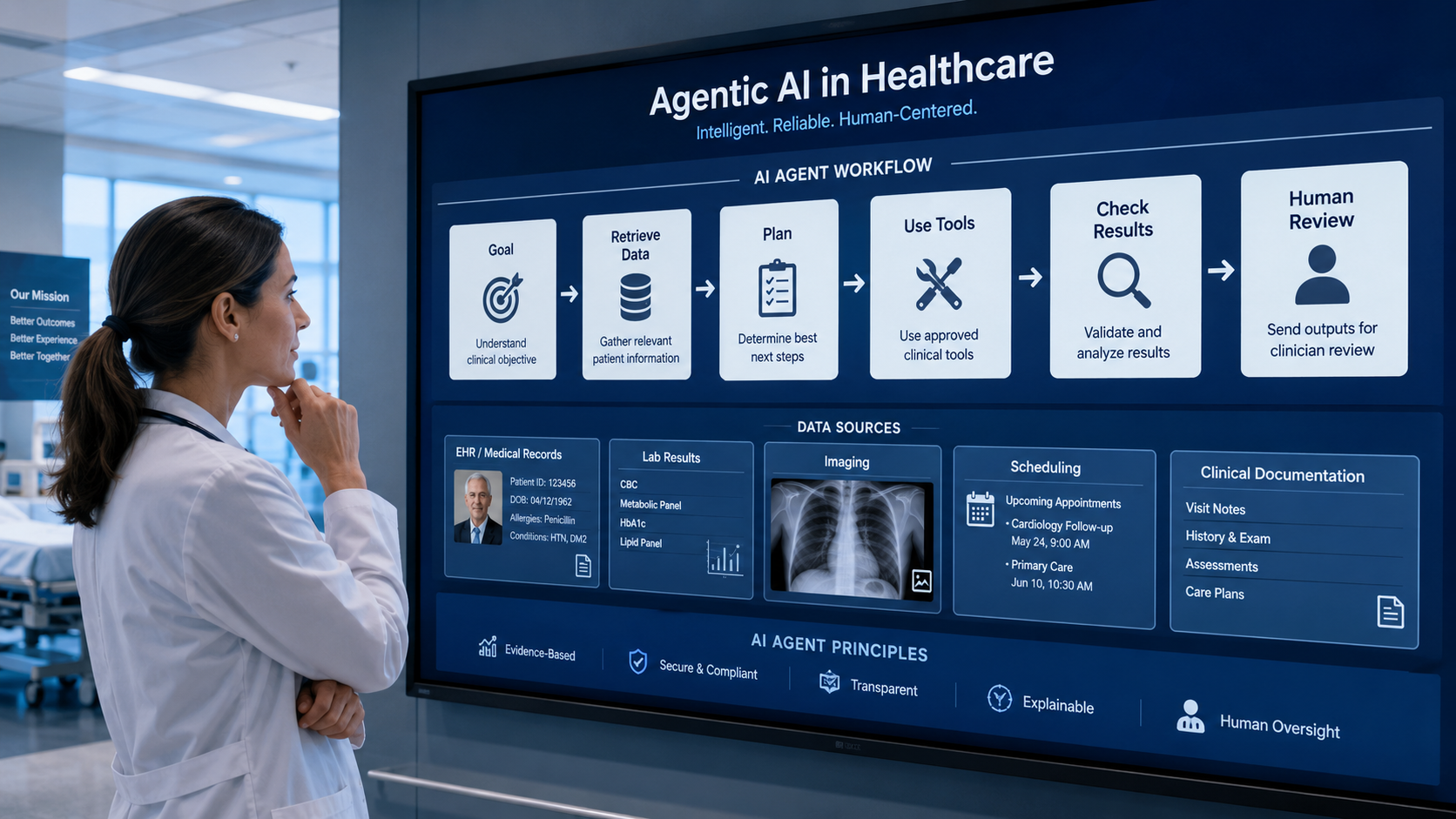
Agentic AI in Healthcare: How AI Agents Work, Uses, Risks and Regulation in 2026
Agentic AI can go beyond generating answers by planning steps, using tools and carrying out approved actions across healthcare workflows. This guide explains how healthcare AI agen...
AI Medical Scribes: How Ambient AI Works, Benefits, Risks and Privacy in 2026
AI medical scribes can listen during clinical consultations and turn conversations into draft medical notes, letters and other documentation. This guide explains how ambient AI scr...
FDA AI-Enabled Medical Devices: 2026 List, Uses and Regulation
The FDA maintains a growing list of artificial intelligence-enabled medical devices authorized for marketing in the United States. This guide explains what the FDA list means, the...
Generative AI in Healthcare: Uses, Risks and Regulation in 2026
Generative AI is moving into clinical documentation, patient communication, medical research and decision-support workflows. This guide explains how it is being used in healthcare,...
Questions & Reader Feedback
Help improve this Atlas article
Ask a general question, comment on the article, suggest a correction, or propose a new topic. Nothing is published automatically. Every submission is reviewed by the Atlas editorial team first.
Was this article helpful?
0 helpful · 0 needs improvement